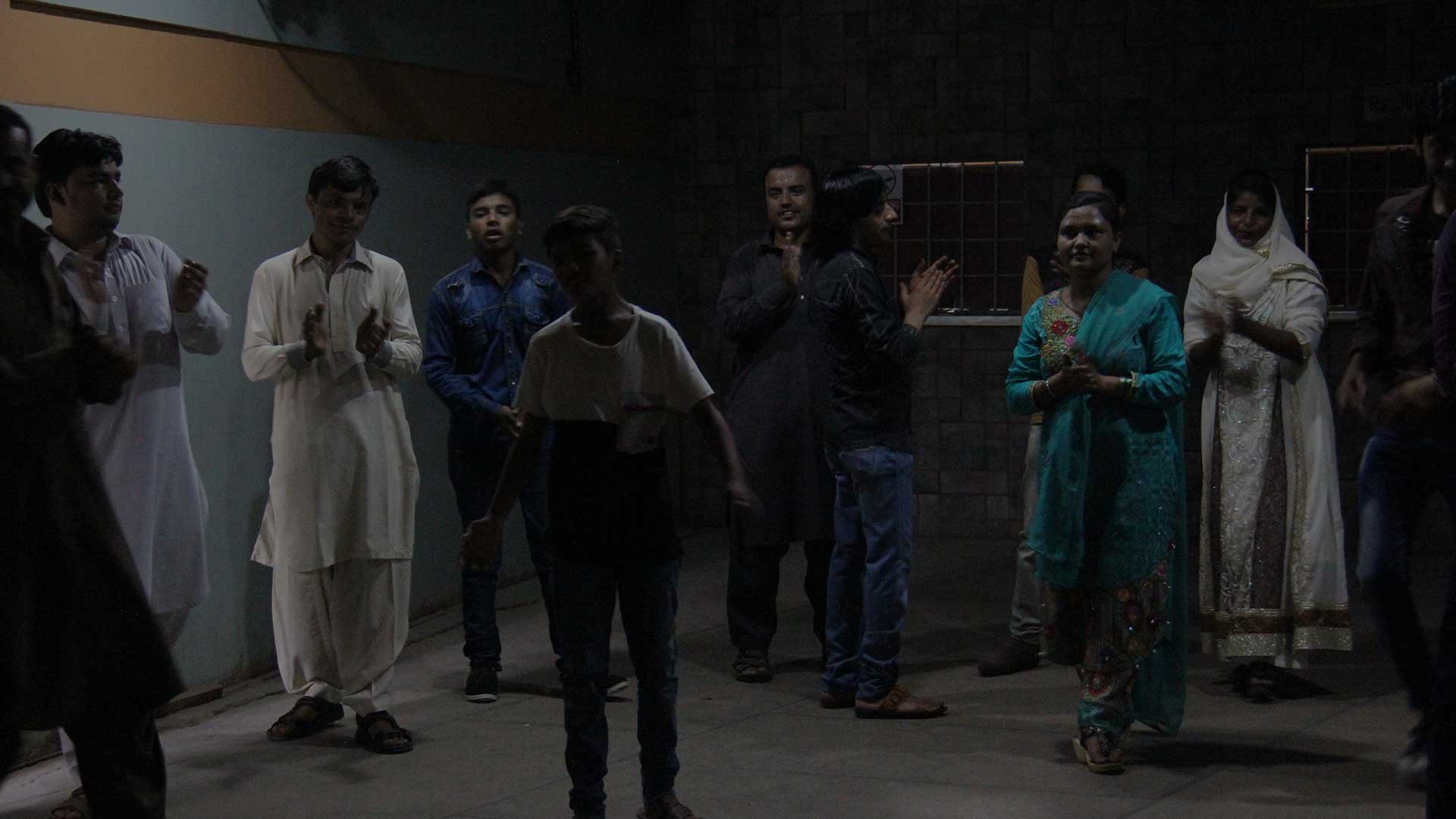
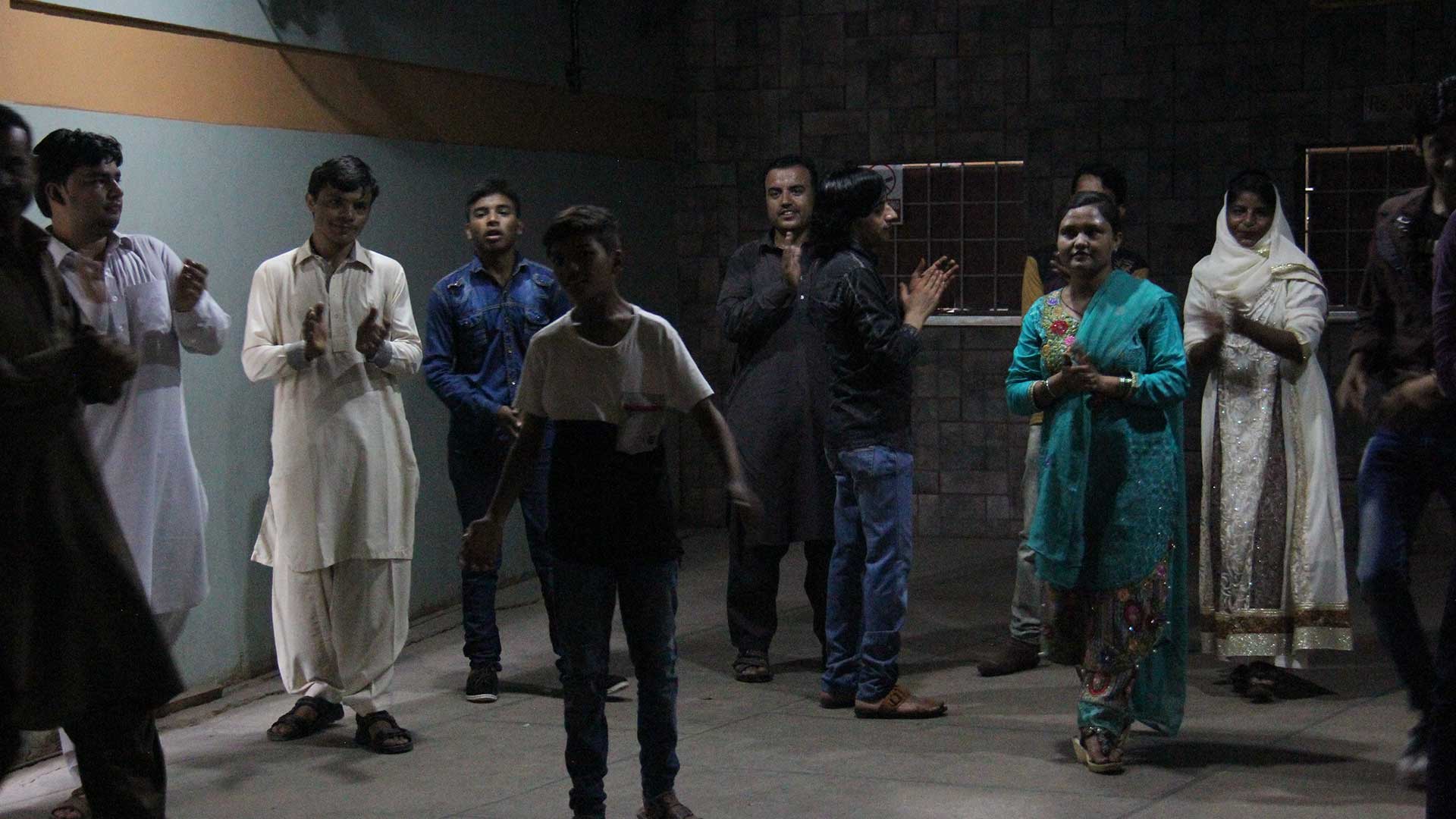
Althea Thauberger, Pagal Pagal Pagal Pagal Filmy Dunya, 2017.
Pagal Pagal Pagal Pagal Filmy Duniya or Mad Mad Mad Mad Filmy World is the exhibition of Althea Thauberger’s 2017 single-channel video work by the same name, at the Contemporary Art Gallery in Vancouver.
Entering the dark BC Binning Gallery through the CAG’s naturally-lit foyer, one’s eyes adjust to reveal that the gallery is a nearly empty volume — save for a projector screen on the far wall and a provisional-looking set of plywood bleachers near the entrance. Built-in to the middle of the bleachers is a digital projector mount and a sound board below. After choosing a seat (balcony) I let my eyes adjust some more and can tell that the projector screen is curved and made out of plywood, much like a cyc backdrop in a photo studio.
The story of Thauberger’s work, set in Karachi, Pakistan, revolves around a single-screen cinema called the Capri. As an audience, we are introduced to the Capri through a montage of monologues, interviews, and role-playing exercises performed by ‘participant-actors’ — people who, according to the exhibition’s statement, have agency in the project and the direction that it eventually takes. Men walk quietly up and down an open-plan staircase, while uniformed schoolgirls sit in the dark cinema lit only by the reflected light of the screen. A group of what seems like nearly one hundred people role-play in a chaotic scene of simultaneous arguments and consolations in the grand entrance hall. Back in the auditorium, cinema patrons and employees respond to off-screen prompts, giving inspired and meandering statements about how the cinema in which they are sitting means so much to them. “We are physically present here, but our mind goes somewhere else in the darkness”, says a woman. A man describes the Capri’s ‘zero-angle’ cinerama screen and its modernist concrete construction as significant contributions to cinema culture in Karachi; the cinema is designed to ensure that every seat receives the sharpest possible picture, regardless of the ticket price. A group of projectionists chirp over one another to describe how they make ‘fast films’ by physically cutting-out frames from film prints in the scenes they find slow. Another describes the creative licence they take to deliver a film’s audio: in some scenes, certain speakers have the volume turned up or dialed back ‘by hand,’ to enhance the cinematic experience. We also hear that the Capri has endured hard times. Besides the usual economic struggles of a single-screen movie theatre, workers have had to deal with load shedding (regular power outages) and a 2012 city-wide riot over an anti-Islam film where an angry mob broke into the Capri and burned down its screen. Thanks to the community (and possibly its modernist concrete architecture) the Capri has survived and still shows films today.
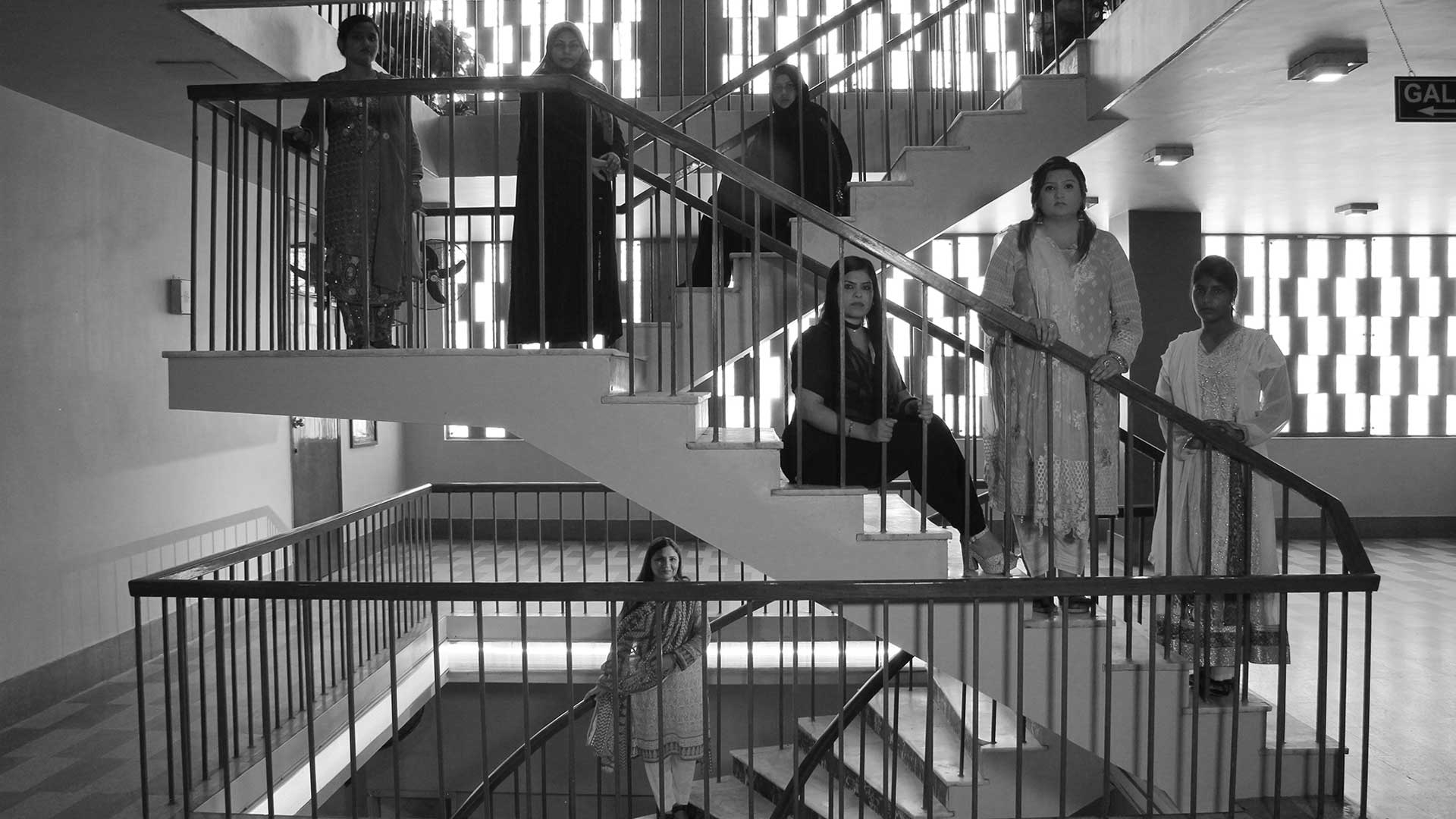
Reflecting on Thauberger’s work, I’m compelled to return to the workers’ ‘labour of love’ in delivering the cinematic experience. Instead of how large multiplex theatres tweak variables of capital like immersive sound-systems, satellite distribution networks, and digital projection technologies, at the Capri (and in other capital-scarce theatres around the world) the creativity and labour of individuals fills-in to mimic technology unavailable to them. In Pagal, that same passion and creativity of the workers crosses-over onto the ‘production side’ of the cinematic equation: as they perform and share their own stories, they shape the work in which they are featured. And this ‘bottom-up’ way of making a work, by providing the space for participants to tell their story through a process rooted in collaboration, is set-up by design. As the credits roll we can see that five co-directors are listed on the project alongside Thauberger, who is credited as the work’s ‘director/producer.’ This subtle shift in organizing principle distributes decision-making power to the co-directors and participant-actors, which in turn de-stabilizes any traditional aspect of ‘documentary filmmaking’ one might expect to find in this work. Perhaps Pagal is not only about the Capri Cinema and the participant-actors, but also the entire constellation of individuals who came together to make the work. Through their collective effort, the real-life class and labour divisions that would otherwise separate them become temporarily dissolved, and on-screen, we get a nuanced sense of how each group of individuals is connected to the whole. This sense of connection, of how the participants relate to each other, approaches a version of events that feels authentic but is not a set of ‘facts.’ The different styles and perspectives in Pagal nudges its mode of storytelling into an abstract space somewhere in-between documentary and fictional modes. In this space, we the audience get to decide: who or what is the subject of this work?