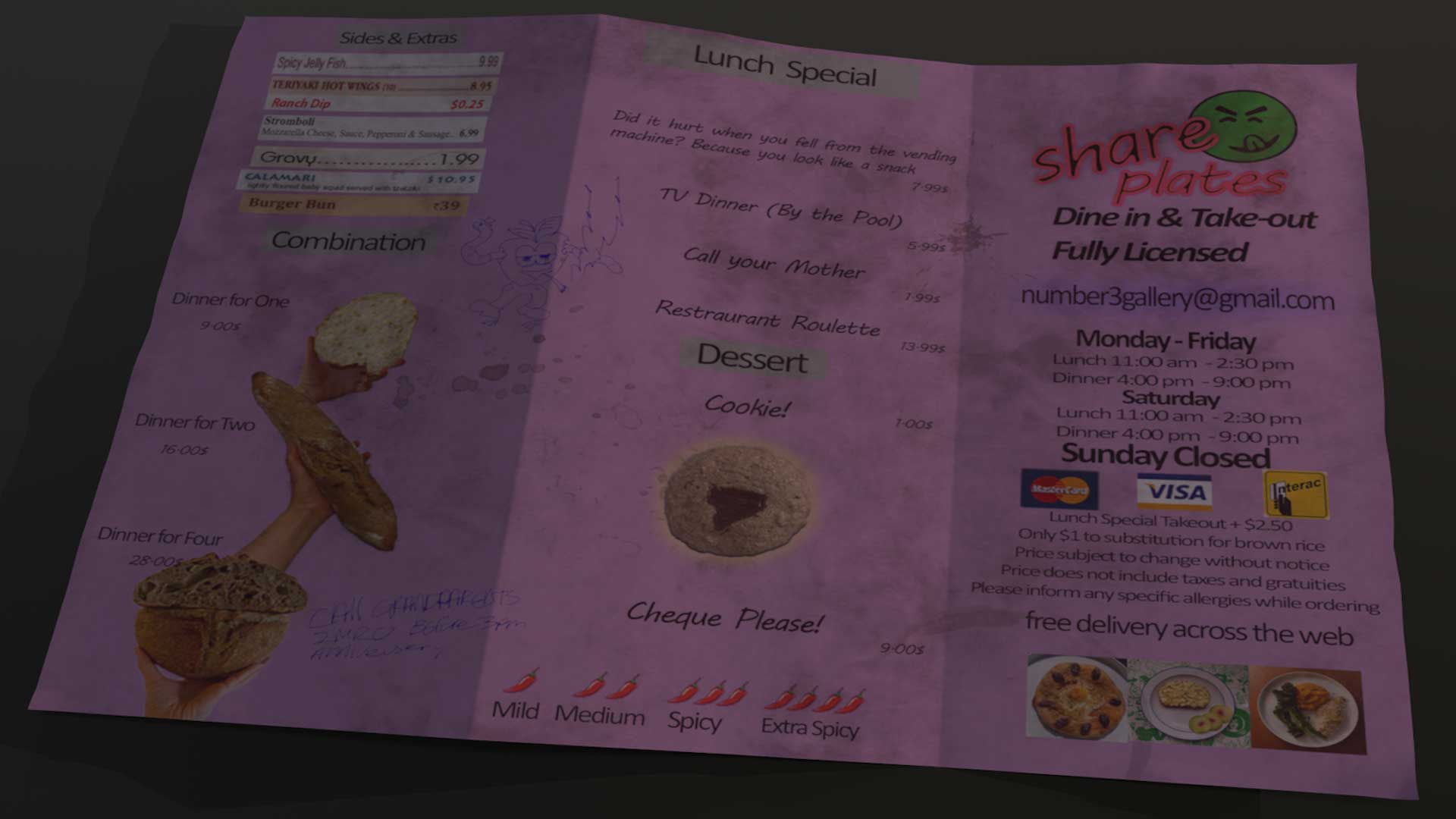
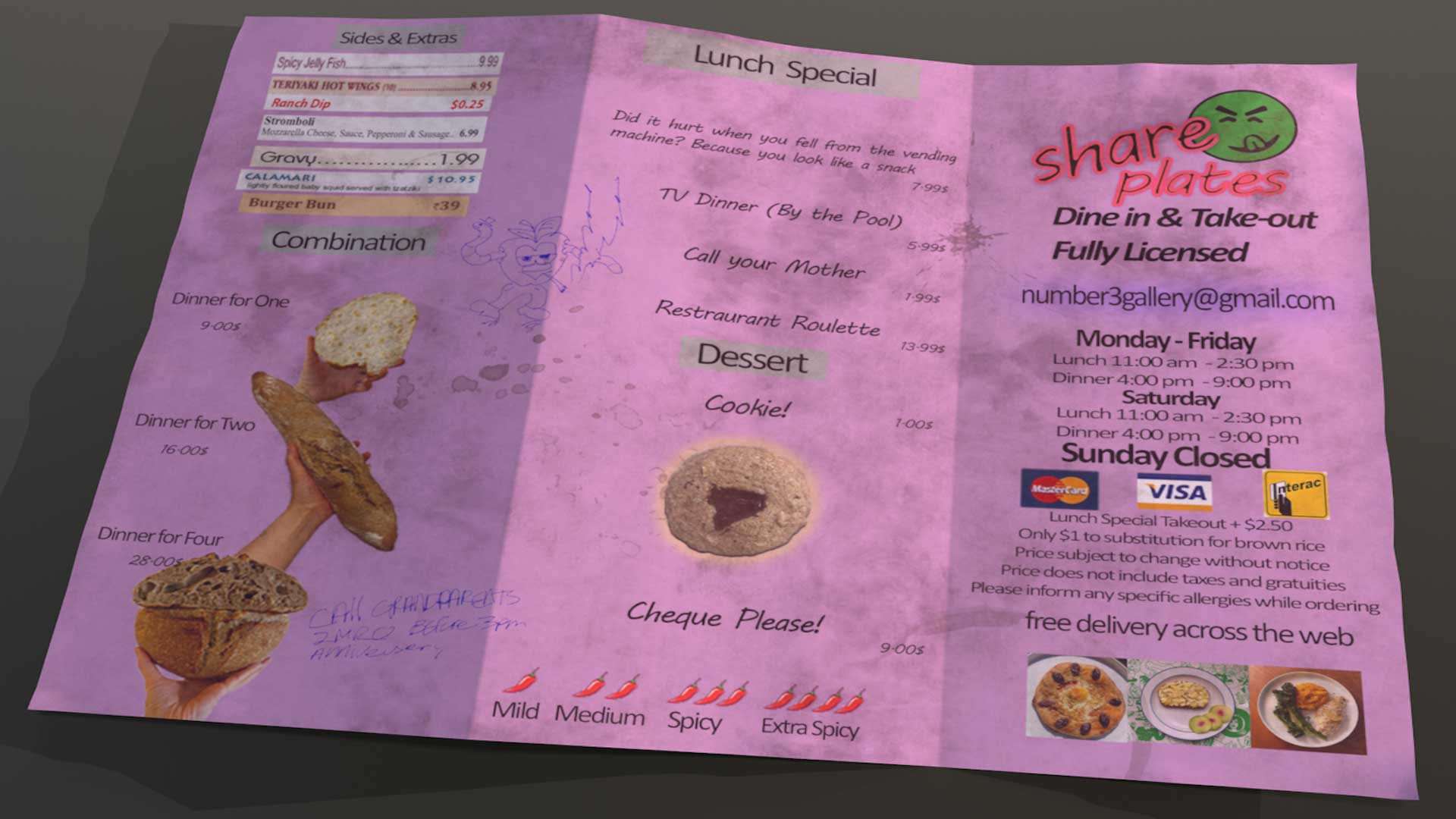
Share Plates is an assemblage of recipes, collaged images of food, links, and narrative tidbits arranged by Michael Lachman and Lyndsay Pomerantz. Rather than being mounted as an in-person exhibition, the project was released as part of Number 3 Gallery’s SPAM, a Special Presentation Art Mail program, running monthly since the pandemic. Share Plates is, in essence, about the social and aesthetic aspects of food, and food sharing: the connections we make over a dinner party, family recipes passed down through generations, the kind of intimacy we experience when meals can be enjoyed together — and, in lieu of in-person connections, shared even via email.
The ongoing email-based art series SPAM is a pandemic-friendly project from Number 3 Gallery in Vancouver, which in itself already functions in a way that is easily adaptable to distancing protocols: the gallery has never inhabited a physical space but instead was conceived as a mobile curatorial project. This non-permanent-place approach is partly a response to the city’s unaffordability and rapid gentrification, but is also a way to let the content dictate the form. Past projects have included a “group-show” artist calendar featuring the work of numerous local artists, a temporary sculptural installation set up in the artist’s own home, and a blog-style exhibition featuring works from artists adapting to the pandemic’s social restructuring.
I mention these previous exhibitions because in many ways, Share Plates fits into this category of roaming, non-spatial art presentation — it does, after all, exist purely online as a shareable web page. But Share Plates also defies this kind of distanced, arms-length viewing experience. There is a tension between both the digital disconnect and the very intimate and in-person nature of food sharing. The image of shared plates in particular conjures up a tapas scenario, where small plates of food meant for sharing are spread on a table for guests to graze over an evening of conversation. It is this gap between intimate and often cross-cultural sharing, and the complete inability to actually share this or any food in person during the pandemic, that makes Share Plates a compelling study in our relationship to eating.
The experience of viewing Share Plates begins through an emailed, clickable menu, a graphic digital object that references the kitschy, three-fold paper take-out menus found in family-run restaurants. Lachman studies computer graphics with a focus on created environments, and the humble take-out menu is an apt entry-point for the kind of environment that Share Plates inhabits. Inside, there is a list of clickable links leading participant-viewers to pages of eating-adjacent experiences. Click on “cheque please!” and be led to a page where, alongside a brightly-lit Google Image photo of a point-of-sale debit machine, viewers will find further links to local food sharing initiatives. These initiatives include Potluck Catering, which provides both healthy meals to those living in the Downtown Eastside and jobs to those same communities; the Downtown Eastside Women’s Centre Kitchen Program; the Aboriginal Front Door Society Food Bank; a list of Vancouver community fridge locations; and A Loving Spoonful, a society that provides food to people living with HIV in the metro-Vancouver area.
The philanthropic nature of this first page points to the community-strengthening impact of food sharing, and also indicates that the aim behind Share Plates goes beyond aestheticizing food and dining via early-aughties digital collage practices: the intentionally-naive, Windows 98-esque webpage is used as an aesthetic strategy to open up conversations about who has access to food and in what ways it should and can be shared. This design nods to earlier days of the web when it was believed that its primary purpose was to distribute information. Graphics were simple, text was readable, and the internet was heralded as an accessibility tool, a non-hierarchical method of knowledge sharing. In our current moment, this aesthetic is a nostalgia trip for millenials who remember Flash and learning to code on MySpace. Share Plates appeals to our nostalgia and urges us to think of food sharing as a mode of democratic agency in our moment of pandemic isolation and in the face of big data.
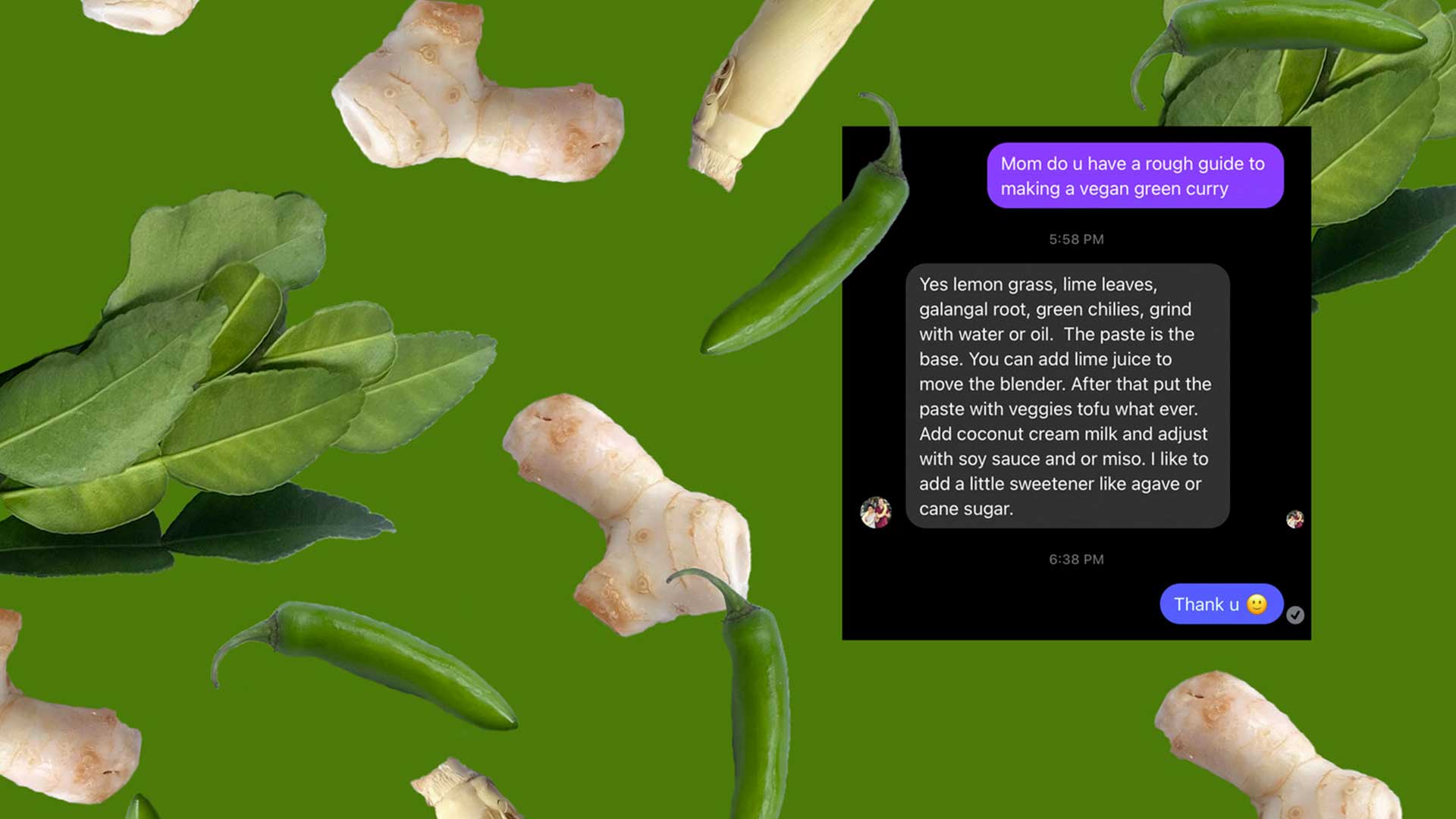
On a whim I decided to make the cookie recipe from the “dessert!” page. The “golden hour chocolate and rye sunflower seed butter cookies” have a decidedly cake-like texture, and I upped both the vanilla and chocolate content for personal preference. This experience felt like an intimate engagement akin to getting a recommendation from a friend, though a step removed from actually making the cookies alongside someone else. I get a similar feeling from the “call your mom” page, where collaged images of ginger root and lemongrass are overlaid with a snippet of a text conversation between Pomerantz and her mom. Her mom’s recipe for a vegan green curry is more of a rough guide than a step-by-step, but the feel-as-you-go, no-measurements-needed style of cooking feels on par with the way that family dishes can be passed down between generations. It’s a peek into a private family dynamic — a welcoming into the fold via curry paste and coconut milk.
“tv dinner (by the pool)” is an assemblage of food-centric images from film and TV, an ode to the weird finger sandwiches, thickly-icinged cakes, and toad-in-the-hole toasts that feel as much a part of the cast as the actors themselves. This scroll-through collection, reminiscent of the feed in one’s social media apps, is less about how delicious everything looks — truthfully, most of it doesn’t look that appetizing — and more about how food can be a connecting agent, a means to commune. This imagined sharing of both food and film is an extension of Pomerantz’s practice, where sharing images and videos of food on her social media is a way to connect with an online community.
Much of the exhibition is rooted in feeling: in the memories that food conjures, in the distinct familiarity of the recipes and the graphics, and in the way it feels to enjoy food with other people. Share Plates merges Lachman’s and Pomerantz’s practices to reimagine experiences we have been so longing for. Through the kitschy digital aesthetic experience of collage, found image, and interactive participation, the artists gesture towards the ways in which food sharing, both real and imagined, bridges a gap and fosters community. Sharing food won’t fix all our problems, but it will make us feel less alone and fill our bellies, if but for a moment.