The concept of the home, both as a place and character, gave shape to the program “Home When You Return,” which screened at Deluge Contemporary Art in Victoria on October 24th as part of the 2022 Antimatter Media Art Festival. Featuring works from Canadian, American, and Brazilian artists, including Sherri Wills, Barry Doupé, Kimberly Burleigh, David Curtis, Lilo Pirdoni, and Carl Elsaesser, the films in the program oscillate between analogue film and computer-generated media, thematically investigating materiality, dreams, and our relationship with our environments.
The program commenced with Sherri Wills’ SEAM, a short Super8 film. The film uses layered imagery to create an ephemeral quality; as described by the artist, it “explores the everyday hauntings” and the “margins of experience.”1 The film’s audio track consists of outside ambience mixed with excerpts from a wax cone recording of Sylvia Plath’s “Tulips” — the main line, “I am aware of my own heart,” bringing to mind the awareness of mortality and humanness. So too then, do the visible film edges and film qualities of the Super8 draw attention to the materiality and the raw qualities of the sequence.
The second film was Barry Doupé’s Red House, a computer animated hand-drawn film using an AMIGA computer console and Deluxe Paint IV.2 Doupé describes the film as playing with “metamorphosis in relation to the stability and structure of housing” through the “reconfiguration of images, characters and forms.”3 Interestingly, towards the end of the film, there is a long clip of a peaceful and picturesque landscape drawing amid the unstable chaos — picturesque enough to something contrived to it. Much tamer and significantly shorter than Doupé’s last visit to Antimatter in 2019 for the world premier of his 4.5 hour long erotically psychedelic Distracted Blueberry, Red House is still a four minute fever dream.

The third film in the program, Jealousy by Kimberly Burleigh, also explores the architecture and character of a house — this time the plantation house as meticulously described in the 1957 novel La Jalousie by Alain Robbe-Grillet through a 3D rendered animation.4 In the novel, the protagonist is suspicious of his wife cheating on him; the description of the environment is linked to the obsessive mindset of the novel’s protagonist. Burleigh’s film is a faithful visualisation of the scenes of the plantation house described throughout the novel. Jealousy continues the program’s visual themes of surreal and dream-like imagery, from paving stones that float midair at the opening of the film, to an underwater dining where a centipede melts into the wall. This also plays with the medium itself, the computer-generated imagery often referencing its own rendering — in a later sequence, an empty room constructs itself into a living space from basic forms, each object becoming more and more complex as the details render.
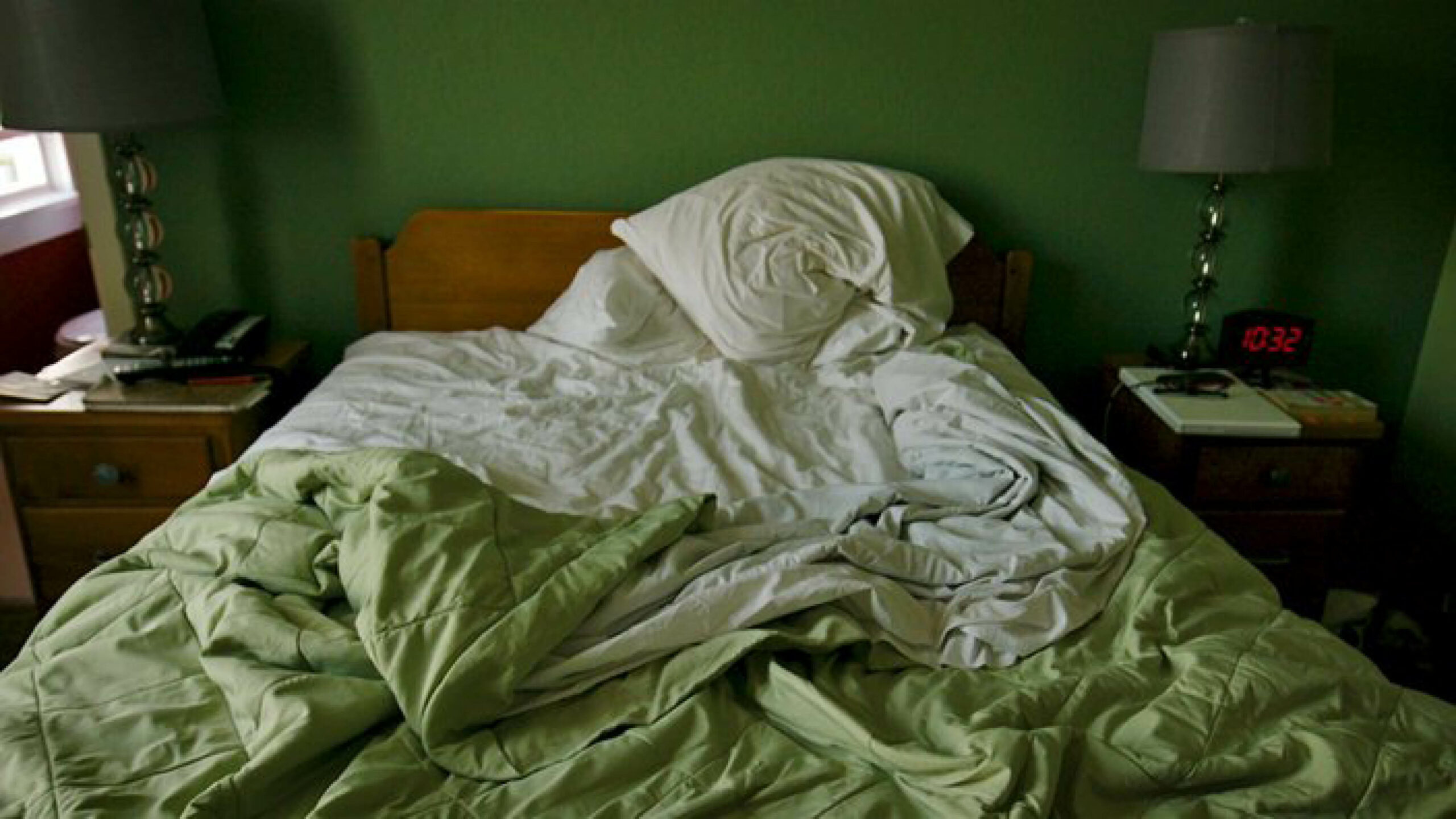
The fourth film of the program, David Curtis’ Hotel, enters into both the “interior and interiority” of a hotel occupied by a sole inhabitant during a pandemic;5 there is a palpable inwardness and reflexiveness about the film’s cinematography, achieved by the long, meditative shots of the still lifes around the hotel. Resonating with Jealousy, Hotel conveys an overwhelming sense of loneliness from reflecting Curtis’ own state of mind while producing the film, as the hotel’s sole occupant, during arguably the most lonely years of many of our lives.
In The Perfect Room by Leonardo Pirondi, a slow rendering of an “impeccably constructed computer generated image of an out of sorts room” is a rigorous exercise in self-reflexivity.6 The computer-generated image was filmed on 16mm film, hand processed, and then scanned; the rendering, which resembles the photograph of a table and chairs, with items strewn on a table, was created in a sterile digital process of a somewhat ‘imperfect’ ordinary scene. There is a connection with the previous two films here as well; all being meticulously rendered/recorded — like a still life — but having a sense of loneliness or sombreness to them. Perhaps their pristineness comes at a cost of human connection.
The interplay between sterile digital precision and the imperfections of hand-processed 16mm film and its subject matter brings a strong emphasis on the conditions of moving-image making in our current moment. Together with the other shorts, this awareness runs through the program, bringing us to the feature of the evening, Carl Elsaesser’s Home When You Return.
Home When You Return is a visually beautiful and moving piece depicting the process of grieving — both for the loss of a grandmother and for the loss of a family home following her death. Through documentary and melodrama, Elsaesser explores these “psychogeographies of mourning;”7 the emptiness of the home becomes a metaphor for the loss of the family’s matriarch, as well as a metaphor for the transformation of a lived-in family home to an uninhabited and lonely space.
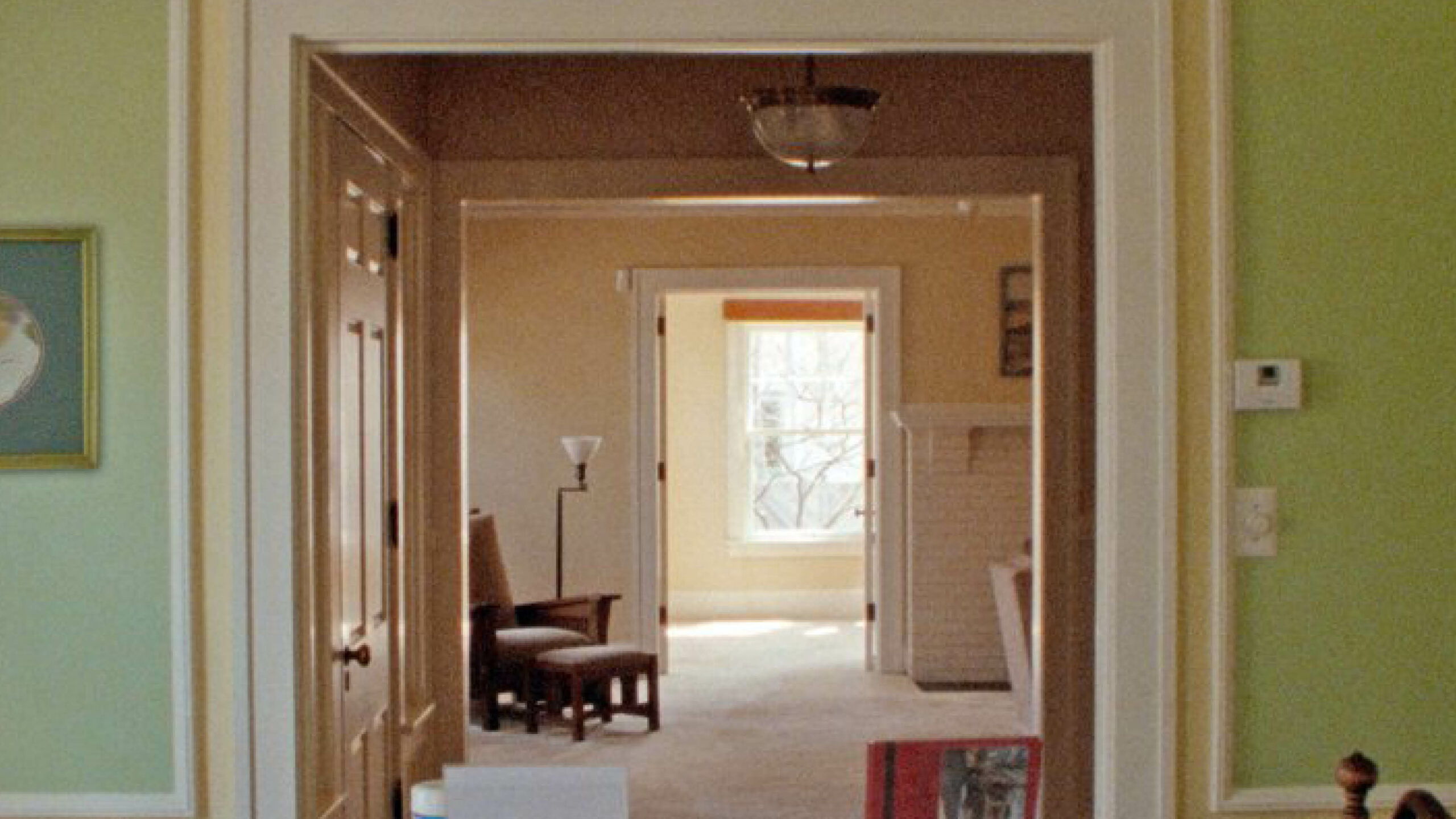
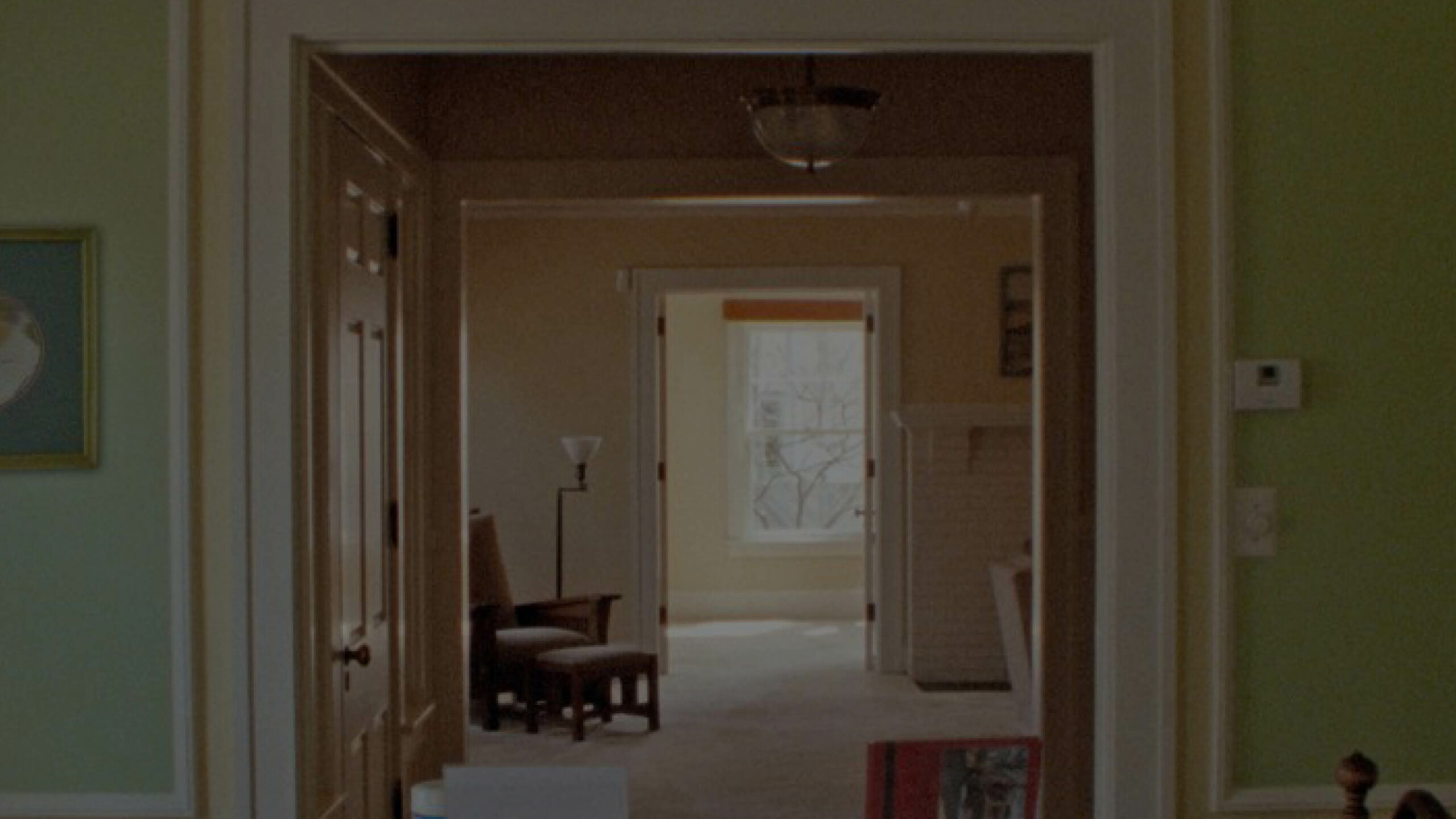
Filmed on 16mm, Elsaesser layers two narratives: the story of his late grandmother, and of amateur filmmaker Joan Thurber Baldwin (born 1927), whose film, A Change of Scene, is embedded into Elsaesser’s work throughout. Slow, meditative shots — like those used previously by David Curtis — move us through the home. Like in Hotel, the scenes feel empty and quiet, with furniture missing, and neatly-made empty beds. There are repeating dream-like qualities throughout, from the soft-focus scenes inside of the home towards the beginning of the film, the blurred faces of the filmmaker and the grandmother, and a virtual walkthrough of a shadow figure.
The passing of the grandmother is told through the ‘reading’ of a letter written from the point of view of a parent writing to their child, reminiscing and describing the grandmother’s final moments. The words are superimposed over the changing of the seasons, from fall into a harsh winter; the weather growing more severe as the letter suddenly cuts off and restarts at the moment the grandmother passes. The type cuts off before the handwritten note ends, but the remainder can still be read: “But we should be home when you return.” Several still photographs follow this scene of the grandmother in her hospice bed; she looks stiff and frail with pain.
The emptiness of the house is emphasized through a series of shots showing the imprints of missing furniture in the carpet throughout the living spaces. This gives way to a realtor giving a tour of the home. Much of his description of the home focuses on the family’s unwillingness to change the property in any way to prepare it for sale, describing this decision as detrimental or counterproductive to the process. This disposition counters the sentimentalism of the importance of the house to the family, and how the home as an environment has grown and changed with the family through the years. Elsaesser questions here how we relate to our home and environment — is a space still a home when the signifiers of its inhabitants are nowhere to be found? The camera wanders away from the realtor and upstairs, and the tour of the house transforms into a projection. A person’s shadow appears overlaid on the projection, moving through the house, turning off the lights. At one point, the figure even sits at a desk overlooking the room, sketching it in a sketchbook.
Points of departure and return are sewn throughout Elsaesser’s film; the title, referring directly to the mother’s letter to Carl written at the time of his grandmother’s passing, is also echoed in the artist returning to the family home. And in the final scene of the embedded A Change of Scene, the protagonist rushes off into the distance, and the sound of a plane is heard overhead. Both narratives beg the question of where in this context the protagonist’s home is — are they returning, or departing?
“Home When Return” was a striking addition to Antimatter’s 2022 programming, with Elsaesser’s titular film taking the spotlight as a moving piece which beautifully encapsulated the themes of materiality, dreams, and our relationship with our environments that rippled throughout the program. From Doupé’s Red House, to Elsaessar’s Home When You Return, to Burleigh’s Jealousy, these films reveal the ways in which people’s environments change as they change; and how the more we inhabit these spaces, the more they come to reflect — and even embody — us.
Notes:
- Sheri Wills, “Films & Videos | Sheri Wills.” SHERI WILLS. Accessed October 23, 2022. http://sheriwills.net/border_galleries/82/
- Barry Doupé, “RED HOUSE.” BARRY DOUPÉ. Accessed October 23, 2022. http://www.barrydoupe.ca/videos/red-house
- Ibid.
- Kimberly Burleigh, “Jealousy_ProRes_MASTER.” Vimeo, January 2, 2020. https://vimeo.com/382451154
- Antimatter. “Tuesday | Oct 25 | 6pm.” Antimatter [media art]. Accessed October 23, 2022. https://antimatter.squarespace.com/tuesday-oct-19-2021
- Leonardo Pirondi, “The Perfect Room.” LEONARDO PIRONDI. Accessed October 23, 2022. https://www.leonardopirondi.com/the-perfect-room
- Carl Elsaesser, “Home When You Return (2021).” Carl Elsaesser. Accessed October 23, 2022. https://www.carlelsaesser.com/Home-When-You-Return-2021