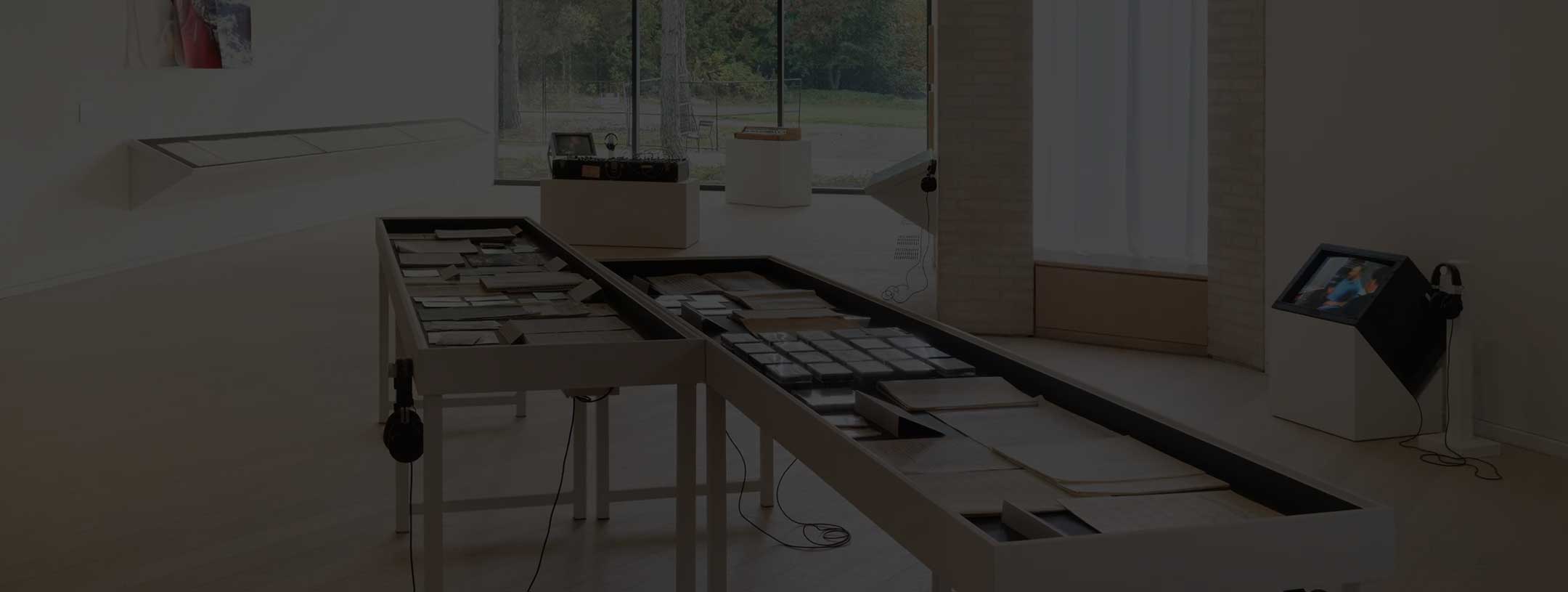
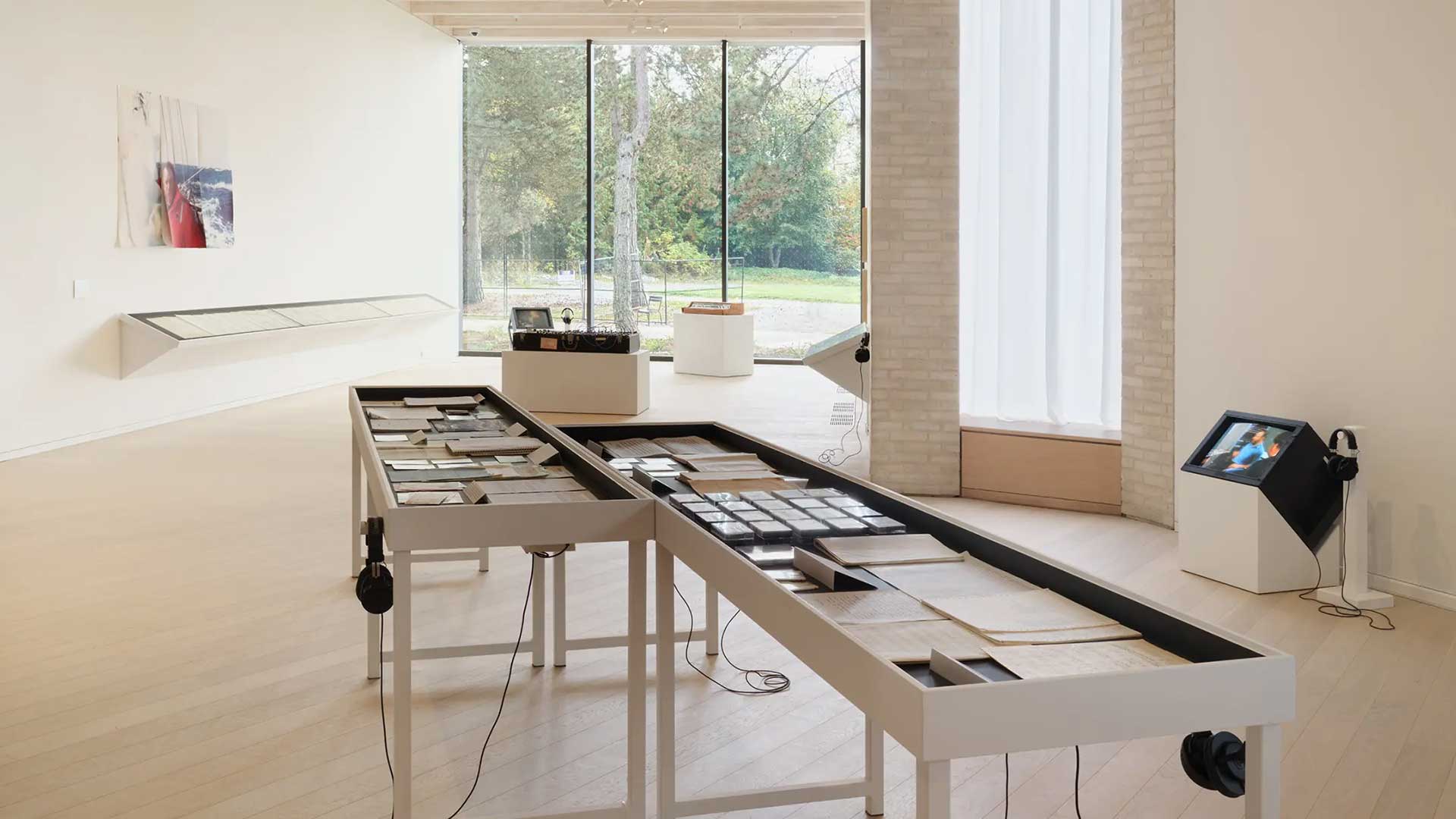
This fall, the Marianne and Edward Gibson Art Museum at Simon Fraser University presents an exhibition devoted to Martin Bartlett, the electro-acoustic composer and professor whose work was central to Vancouver’s experimental music scene. The exhibition, Martin Bartlett: Begin Anywhere (Oct 3, 2026-Feb 14, 2027), returns Bartlett to the university where he taught, surrounded by the things that survive in his archive: compositions, drawings, photographs, notes, his hand-built analogue modular synthesizer known as the Black Box, and a rare Buchla 400. The timing of Bartlett’s return to SFU gives the exhibition a particular historical weight. Having opened just over a year ago, the Gibson is still defining what kind of institution it wants to be, and an exhibition like this becomes part of that process. To look back at Bartlett is to cast our gaze at one of SFU’s formative histories, but it also means looking outward, toward the wider network of musicians and artist-run spaces that made Vancouver’s experimental culture what it is today. Bartlett was a co-founder of the Western Front, established the Vancouver Community Gamelan, and introduced Indonesian musical traditions into SFU’s School for the Contemporary Arts. He worked with computers, handmade synthesizers, experimental tunings, and improvisation, and was among the first openly gay composers of his generation.
One of the composers-in-residence for Begin Anywhere is Justin Devries, who wrote his thesis on Bartlett’s work in the History Department at SFU in 2023. Devries has approached Bartlett from two directions, first through his archive and now through the instruments, making new sounds with the machines Bartlett built and used. This gives the exhibition a curious temporal quality, where Bartlett’s work is largely being reconstructed and re-imagined from what he left behind in his archive.
In this interview, we talk about Bartlett’s place in Vancouver’s experimental music history, his relationship to technology and improvisation, and the particular character of the Black Box. We also discuss what Devries discovered while researching Bartlett, other artists who have engaged with his work, including Luke Fowler—who made the film, Electro-Pythagorus (A Portrait of Martin Bartlett), in 2017—and the challenges of making an exhibition about experimental music and composition.
Andrew Witt (AW): Maybe we should start with Martin Bartlett himself. There is much to be said about his role in the development of Vancouver’s artist-run culture and at SFU, his relationship with John Cage, and his place as an openly gay composer who died from AIDS-related causes. Those biographical details establish his personal and historical context, but they also don’t quite capture the strangeness of his work, the otherworldly quality of his compositions. We can’t get a biographical crib sheet to explain away his compositions. His work resists that one-to-one relationship. Perhaps the more interesting question is what kind of artist emerges when we move beyond the biography and into the work.
Justin Devries (JD): It is very true that Bartlett’s work is tied to aspects of his identity but isn’t simply reducible to his biography, and I think that friction forms a compelling aspect of his compositional universe. There is a breadth and idiosyncrasy to his work which defies any unifying description but which is brought together by the sheer force of his personality. It quickly becomes apparent that he was an artist who refused compromises and was unwavering in his commitment to his own vision, wherever that took him. And so in the course of his career he found himself writing chamber works, programming microprocessor computers to interact with live instruments, devising elaborate pitch organizing schemes, coordinating Indonesian teachers to lead Gamelan workshops, hooking cooking implements up to his handmade synthesizer to turn the preparation of a cauliflower curry into a composition, and on and on. His curiosity seemed inexhaustible, extending in so many directions that one can only wonder what else he might have pursued had his life not been cut short.
AW: Neither of us knew Bartlett personally, so we can’t really reconstruct his life from memory or anecdote. Some people in Vancouver’s music community knew him well, and you have spoken with people who worked closely with him. For the rest of us, however, Bartlett exists at a slight remove, through the archive he left at SFU, his compositions and recordings on display in this exhibition, and the institutions and histories that remain after him. I’m interested in what an exhibition can make visible from that archive, and what inevitably remains occluded, particularly when the work is so varied and so resistant to a definition of ‘experimental music.’
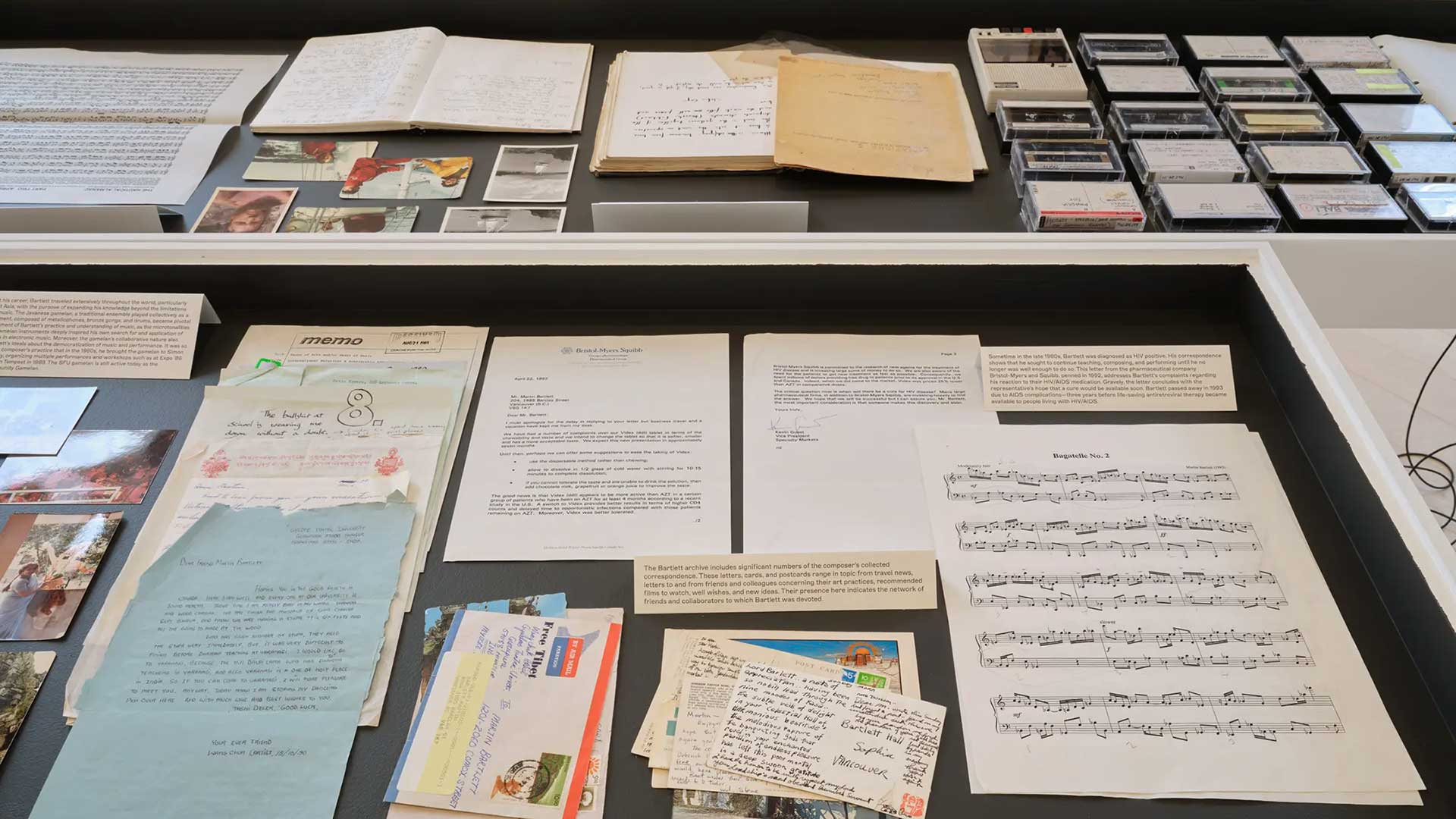
JD: That’s a question that I thought a lot about while working on my thesis on Bartlett at SFU. I spent many hours in the archive, trying to get my hands on literally every piece of paper, photograph, and ephemera in the collection. What became legible to me was less Bartlett’s particular accomplishments, which speak for themselves outside the archive. Instead, I began internalizing and becoming acquainted with who he was as a person… it was in many ways a relational experience. There is a striking intimacy that can be found in his archives—personal correspondences, photographs of possible lovers, relationships pursued and left to languish, frustrations, hopes, and schemes. Curators Charles Colbourne, María Estrada Piñera, Blqees Zuhair, and David MacWilliam did a great job drawing on the archive to create an exhibition that enables the viewer to have that experience for themselves, to build their own portrait of his life, and to exist even for a few moments in dialogue with that.
“Spending time with the instruments was important for him, and playing and experimenting within the ever-evolving (and breaking) sonic landscape of his instruments was a big part of his practice.“—JD
AW: I heard your interview with the CBC, and recall that what first drew you to Bartlett was his mutual interest in experimental music and Indonesian musical traditions. What emerges from Bartlett’s later life is his role as a conduit for the transpacific cultural encounters that shaped Vancouver’s experimental music scene, particularly through his engagement with Gamelan. What did experimental music make possible as a site for working through competing ideas about culture, transpacific exchange, and the political and economic transformations reshaping Vancouver?
JD: Martin Bartlett was in many ways an exemplar of the 1960s counterculture, and like many of his contemporaries, he looked across the Pacific Ocean to Asia for inspiration and solutions to artistic, social and cultural issues. For him, Western art music models were based on an authoritarian, top-down structure, from conductor to orchestra, while music like the Indonesian gamelan seemed to offer a more egalitarian model of communal music-making. Similarly, Western music was traditionally confined to the 12 tones of the equal-tempered scale, whereas Southeast Asian music proposed a variety of tunings and timbres which seem to liberate the composer from the structures of the European tradition.
In one of those strange and unpredictable turns of history, Indonesian music suddenly gained a political and economic valence in 1980s Vancouver. Local and federal governments were looking to increase investment from around the Pacific Rim and began putting on cultural festivals as part of that effort. This meant that from 1984 on, Indonesian music suddenly gained a much greater presence in Vancouver, which obviously interested Bartlett. For example, the Indonesian pavilion at Expo 86 featured three Indonesian ensembles comprised of some of that nation’s finest musicians for over five months.
Bartlett and his community saw an opportunity to leverage this economic and cultural diplomacy to their own ends, building connections between Indonesian musicians and the local music scene and eventually secured one of the sets of instruments to be held at SFU, which was used to foster a community based around the study and performance of Indonesian music in Vancouver.
AW: I’m curious about the electronic instruments too, particularly the Black Box. It has acquired a kind of mythology over the years. What happens when you actually spend time with his instruments? Do the machines tell you something about Bartlett that the scores and photographs don’t?
JD: Yeah, I mean it feels almost inevitable for a sort of mythology to end up growing around such rare or literally singular instruments. The Black Box is a modular synthesizer that Bartlett started building around 1972, using skills picked up from his time in San Francisco where he became friends with Serge Tcherepnin, Don Buchla, and other groundbreaking early electronic instrument makers. It is a living document of that early tradition in the anti-consumerist and experimental ethos of grabbing a soldering iron and building your own instrument from the ground up.
There’s a great composition that Bartlett performed in 1982 at the Western Front called “Accumulator,” and in that piece he sings over his bubbling synthesizers in his idiosyncratic way about how, in his own words, the “intimacy of handcraftedness softens the technological anonymity” of his instruments, making “each instrument a topography of uncertainties with which we become acquainted through practice.”1 Spending time with the instruments was important for him, and playing and experimenting within the ever-evolving (and breaking) sonic landscape of his instruments was a big part of his practice.
It’s fascinating to patch together the Black Box and make a sound which suddenly illuminates one of his compositions—I was playing around with it a few days ago when a sound reminiscent of one of compositions emerged. That piece suddenly felt less abstract and more tangible and tactile—I had the sound under my fingers. Playing the instrument removes some of the mystique of the instrument and places it back on the player, and spending time playing his instruments has only further impressed upon me the singular nature of Bartlett’s musical vision. The instruments sound incredible and are irreplaceable pieces of our local cultural history, but the beauty of the sounds they make are, importantly, about who is guiding and shaping the music as it emerges from them.
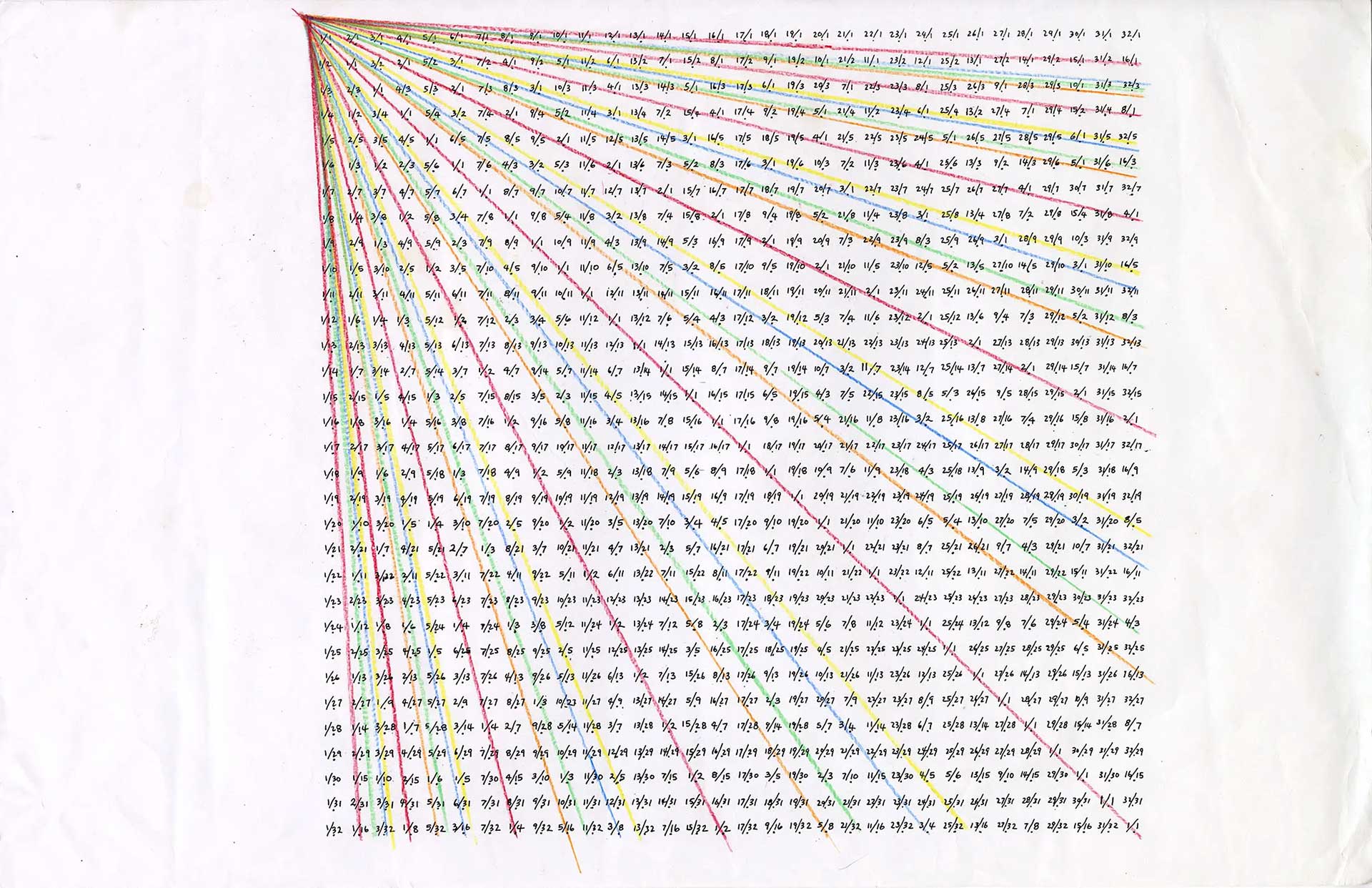
AW: Curatorially, such works which rely on graphic notation or are idiosyncratically engraved might be almost irresistible to feature in the gallery setting. Bartlett certainly had many pieces like that, but he also made situational and improvised works which specifically emphasized the immanent and transient qualities of sound, qualities which continue to defy the archival-focused space of the gallery. In that sense, I appreciate how the exhibition takes Bartlett’s example as a prompt for commissioning new work, allowing contemporary artists to respond by creating new pieces to be performed and experienced within the gallery space.
JD: Definitely, and I think that is also why it was important to me to find artists who could work with his instruments who hadn’t necessarily extensively encountered his music before, or don’t work in the same direct lineage, but in many ways have connections to his work. To be a living tradition and a living conversation, there needs to be new energy to critically reevaluate, reapproach, and re-situate his work, and that’s why I asked Robyn Jacob and Kiran Bhumber to join—they both bring a fresh and relevant perspective through which to re-evaluate his life and work, and I’m excited to see what they create.
“We encounter a person through the things that remain around him: the work he made, the people he encountered, the communities he helped form, and the traces his life has left behind.“—AW
AW: I feel Vancouver is going through a particular renaissance of experimental music right now. A lot of interesting music is being made, with a real sense of community around it. At the same time, the city hasn’t always done a very good job of fostering the spaces where experimental culture develops, or protecting the venues and infrastructures that these practices need. I could cite the relatively recent closure of the venue Paradise, or the shuttering of the experimental music label Hotham Sound, to name just two examples.
I wonder if these circumstances point to a larger problem of historical continuity. Vancouver has produced extraordinary cultural work over several generations, but the connections between those histories and the present can feel surprisingly tenuous. I know you’ve spent a lot of time thinking about Bartlett in relation to Vancouver’s musical communities, and my own research has focused more broadly on the city’s arts community. Where do you see him fitting within the larger cultural landscape of 1970s–1990s Vancouver? There are the inevitable connections with the Western Front, but is there a larger conversation happening? Does anything in this exhibition prompt linkages with contemporary cultural production, either in music or other areas?
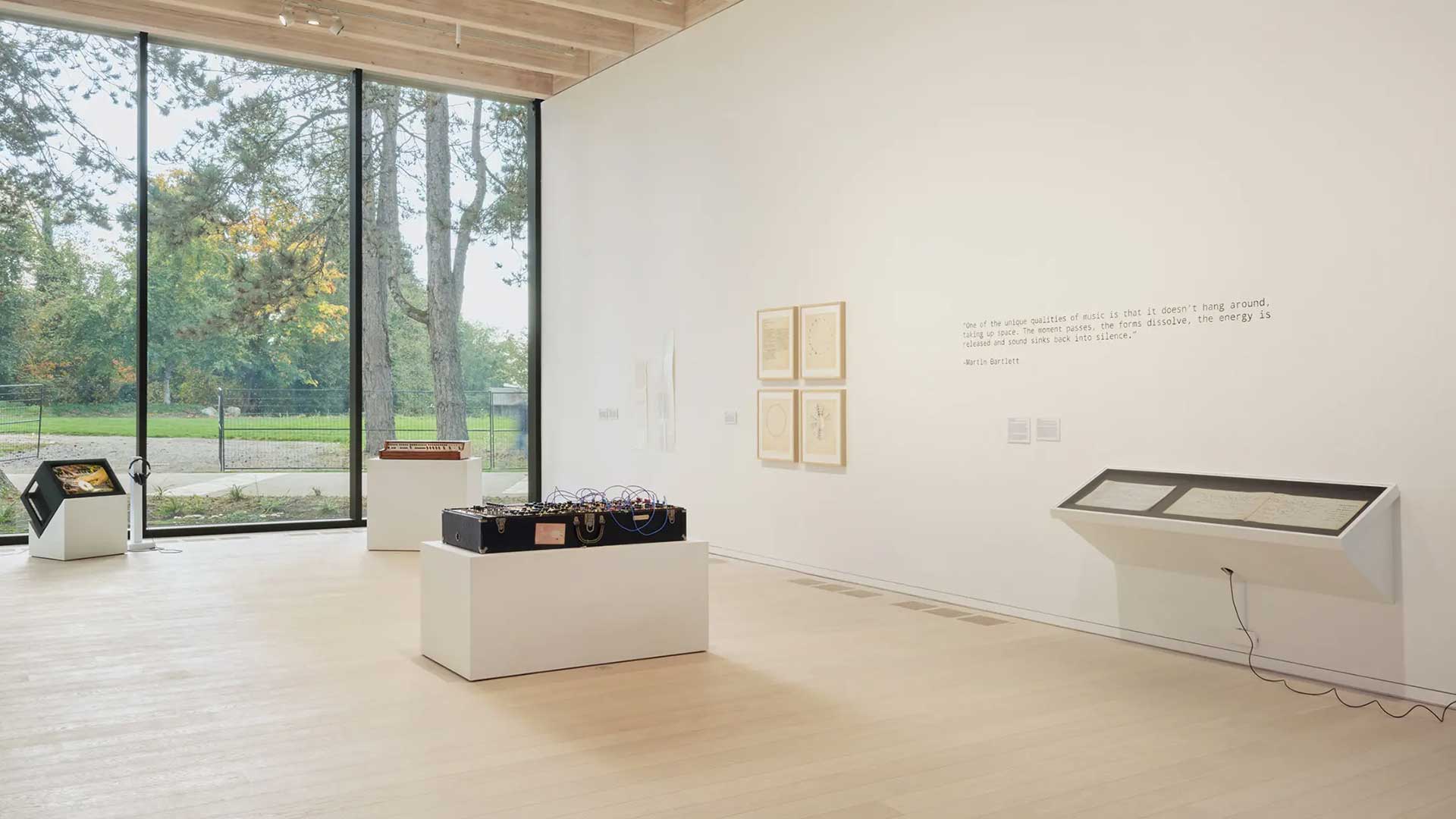
JD: I definitely think we lack a historical awareness, or a sense of connectedness with what came before, and this leads to a sense of nothing ever having happened, and consequentially, a feeling that nothing ever happens. It feels like a strange responsibility to recover this tradition, but it isn’t one that only I hold. Many of Bartlett’s friends and students are still working and sharing, and there are other people who are interested in collecting his stories and retelling them. This exhibition is a wonderful opportunity to centralize some of those things, and hopefully some more work will come out of it. Some kind of publication would be great, for sure, a book has been on my mind for some time now.
A big part of the issue comes out of the fact that his work was often specifically designed to be transient. Early in his life, he was specifically interested in the ephemeral nature of performance and in eschewing the idea of an eternal master work. This is why he has all these graphic scores, text-based scores, improvised performances—everything is indeterminate, and if it wasn’t recorded, it was simply gone. To my knowledge, there aren’t any official studio recordings of his work specifically designed for wider release until the 1980s. That became more important to him when he knew that he was dying and began to think more about posterity. So, there’s this entire section of his life where there’s only a few cassette recordings of his work beyond the written descriptions and images. This presents a challenge for musicians attempting to reinterpret his work, but in some ways it ends up being a bit of a boon in that there is no fossilized recording that becomes the one exemplary performance of a composition, but rather a corpus of thought which functions as inspiration or a challenge or an instigation.
AW: That leads to my next question. The central work in the exhibition is a film by Luke Fowler. I first encountered Fowler’s work when he was nominated for the Turner Prize in 2012, and saw his extraordinary portrait of R.D. Laing and the experimental psychoanalytic movement in Britain during the 1960s and 70s. The film draws on BBC footage and other archival sources. Much of it centres on Laing and the micro-communities that formed around his experimental approaches to group psychology and psychoanalysis. Fowler uses this material to reconstruct a historical moment through the people, institutions, and social experiments that gathered around Laing.
Experimental documentary is perhaps the closest designation for the film. There is no voice-over, no omniscient narrator directing our understanding of what we see. The narrative accumulates through fragments, moving between biography, archival research, and found footage. As the film unfolds, so does Laing’s psychological state. Moving from a confident and expressive analyst to a figure increasingly unravelling, losing his hold on the world around him. In many ways, we’re lucky to have Fowler make this work about Bartlett. He brings a particular sensitivity to Vancouver and to a history that can be difficult to narrate. What do you respond to in Fowler’s films? What does his way of working with archival fragments make possible for the telling of Bartlett’s story?
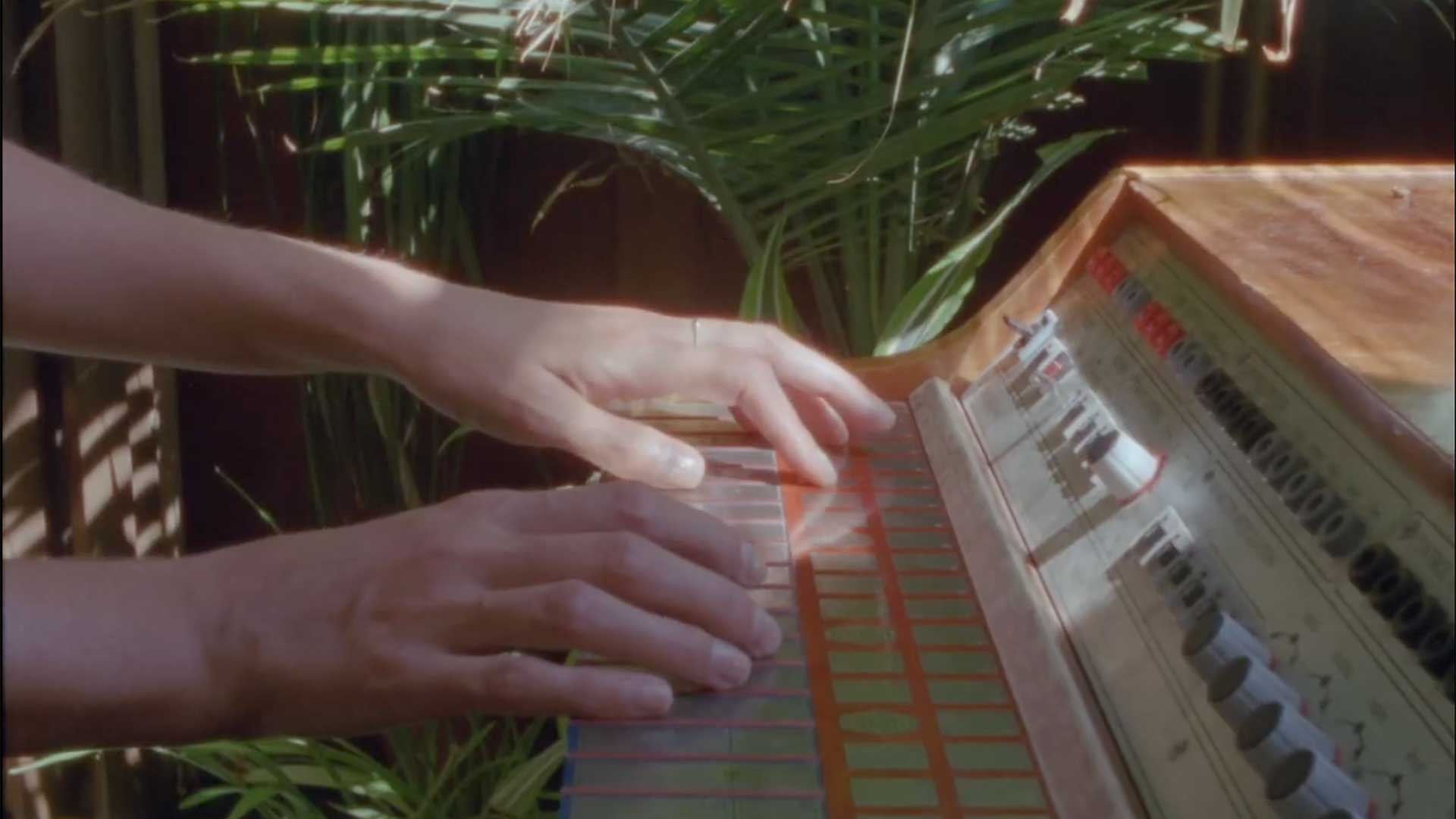
JD: Fowler‘s film is incredible. He really captures the feel, the graininess, the analogue distortion and the beautiful mess of Bartlett’s work. His work also focuses more on the personal side of Bartlett‘s life and mind, and especially on his queerness and his battle with AIDS. He does it with such incredible and inspiring sensitivity, deeply humanizing, and showing the humorous and lively side of Bartlett. I know you’ve seen more of Fowler’s work—what are your thoughts on the film in relation to Fowler’s work in general?
AW: I think it bears noting that Electro-Pythagoras occupies a singular place in Fowler’s career as his first portrait of an individual. His previous films focused on community, or micro-community formations. With this film, he confronts a different problem: how to give aesthetic form to a single life. From the outset, he acknowledges the impossibility of documenting a life in its full complexity, with all its contradictions, fluctuations, relationships and experiences. For him, a life always exceeds the forms available to represent it.
Fowler approaches Barlett through fragments and traces. The result is an impressionistic portrait—a portrait of what a life leaves behind. The fragments never cohere into a complete picture, and that incompleteness becomes central to Fowler’s method. We encounter a person through the things that remain around him: the work he made, the people he encountered, the communities he helped form, and the traces his life has left behind.
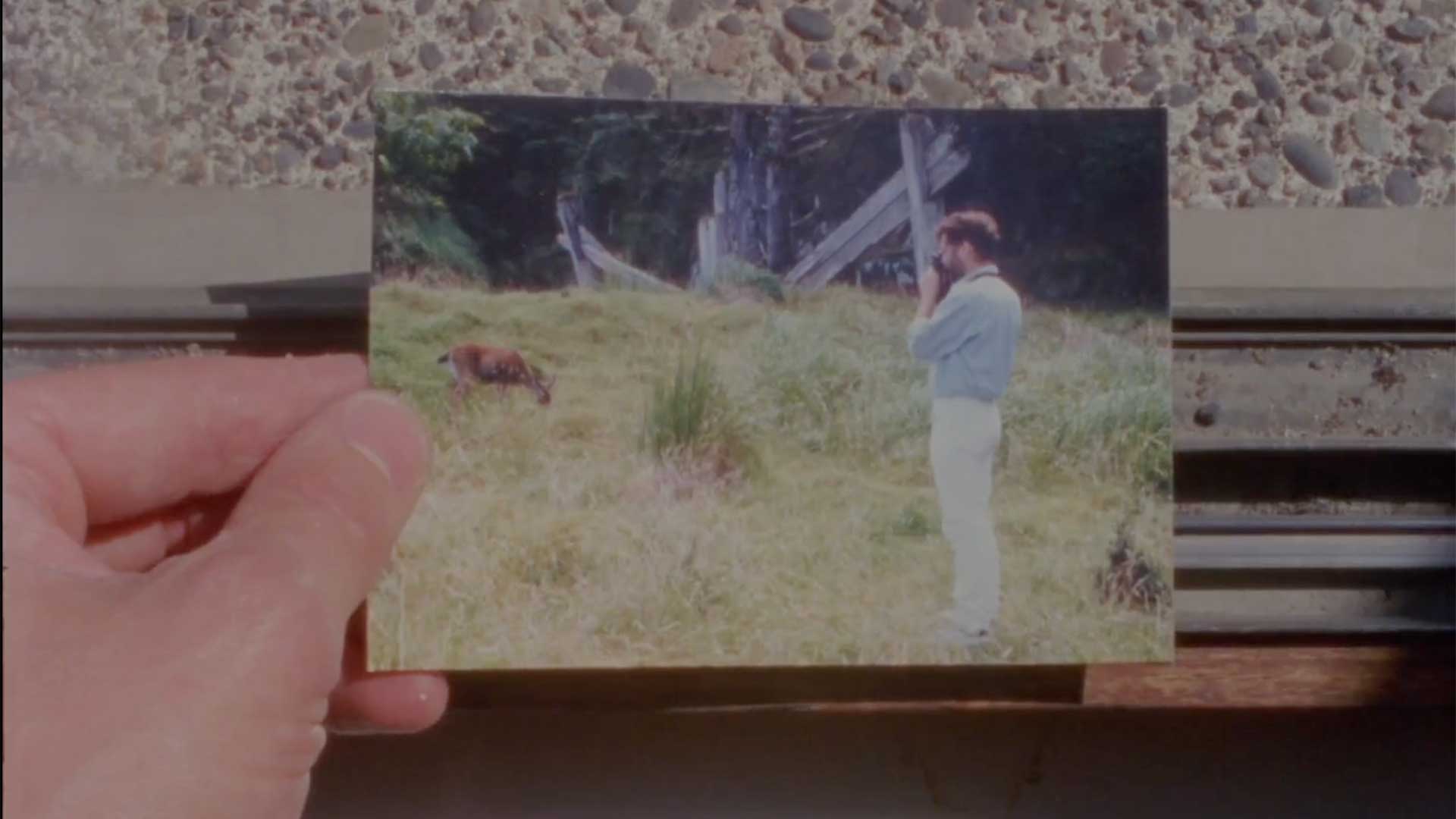
Watching Electro-Pythagoras, one becomes increasingly aware of the synthesizer as a historical object, and perhaps even as a means of imagining time. Cultural theorist Mark Fisher, in his writing on electronic music and popular culture, argued that the exhaustion of musical futurism reflects a broader loss of our capacity to imagine the future as a site of radical difference. This account has become influential in discussions of electronic music, where the sounds once associated with futurity have acquired the patina of history. I think Fowler’s film complicates Fisher’s position.
Fisher was interested in the way electronic music could make the future perceptible, from Kraftwerk’s synthesizer compositions to the utopian possibilities associated with later dance music. The future appeared as a horizon: strange, technological, and still waiting to be reached. In Ghosts of My Life, Fisher argues that this sense of futurity had largely collapsed under late capitalism. The forward movement that once invested culture with a sense of possibility had given way to recurrence, to what he calls the “slow cancellation of the future.”2
Bartlett’s work emerges from an earlier moment, when electronic sound still carried many of these promises of an unrealized future. Fowler returns to that history through the synthesizer, approaching it as a vehicle for reconsidering the possibilities that once gathered around the technology, when its sounds remained associated with futurity and the anticipation of forms yet to come.
JD: There’s something very interesting in there as well about Bartlett’s relationship to the past and future, because although we might imagine that his music would have seemed futuristic in the 1970s and 80s, he imagined his hand-made instruments to be in some ways analogous to the hand-made instruments of folk traditions around the world. One performance featured in the Gibson exhibition even has the title card “ethnotechnological music”! So his imagined future was also deeply connected to, if not a return to the past, at least a greater desire to be connected to it.
AW: Interesting, and I think Fowler gives us a way of drawing on those aspects of Bartlett’s work to think through Fisher’s argument from another direction. Fowler is using Bartlett’s music to get at a much larger cultural and historical question. He is looking back at a moment when the relationship between technology and artistic production was still open, and when musicians were inventing many of the systems they would later work within.
Fowler describes this as a “sub-utopian moment,” a period when the future has not yet been foreclosed, when the conditions of cultural production remain open to invention. Stan Douglas has a related idea when he talks about critical conjunctures in history, moments when history could have gone one way or another. Fowler sees the early period of computer music as one of these conjunctures. Composers were writing their own programs and developing their own software, so that technology was still part of the compositional process—almost an extension of the score. The systems had not yet hardened into standardized commercial tools, like Ableton or Pro Tools, that musicians were expected to use.
JD: For sure, and Bartlett was certainly dismayed as he saw electronic instruments become ubiquitous consumer goods which simply sought to replicate what had already been done: the keyboard, equal temperament, and so on. He was more interested in the relational and processual aspects of music-making and instrumental practice than the end result, the product, the masterwork, whatever. Fowler wrote a wonderful little piece in the Glasgow-based publication, The Burning Sand, where he notes that Bartlett’s work provides an important counterpoint to the increasingly standardized and commercialized modes of electronic music-making we find so often around us today.3 And I think it also continues to provide a thoughtful challenge in the age of AI, which is extremely product-focused.
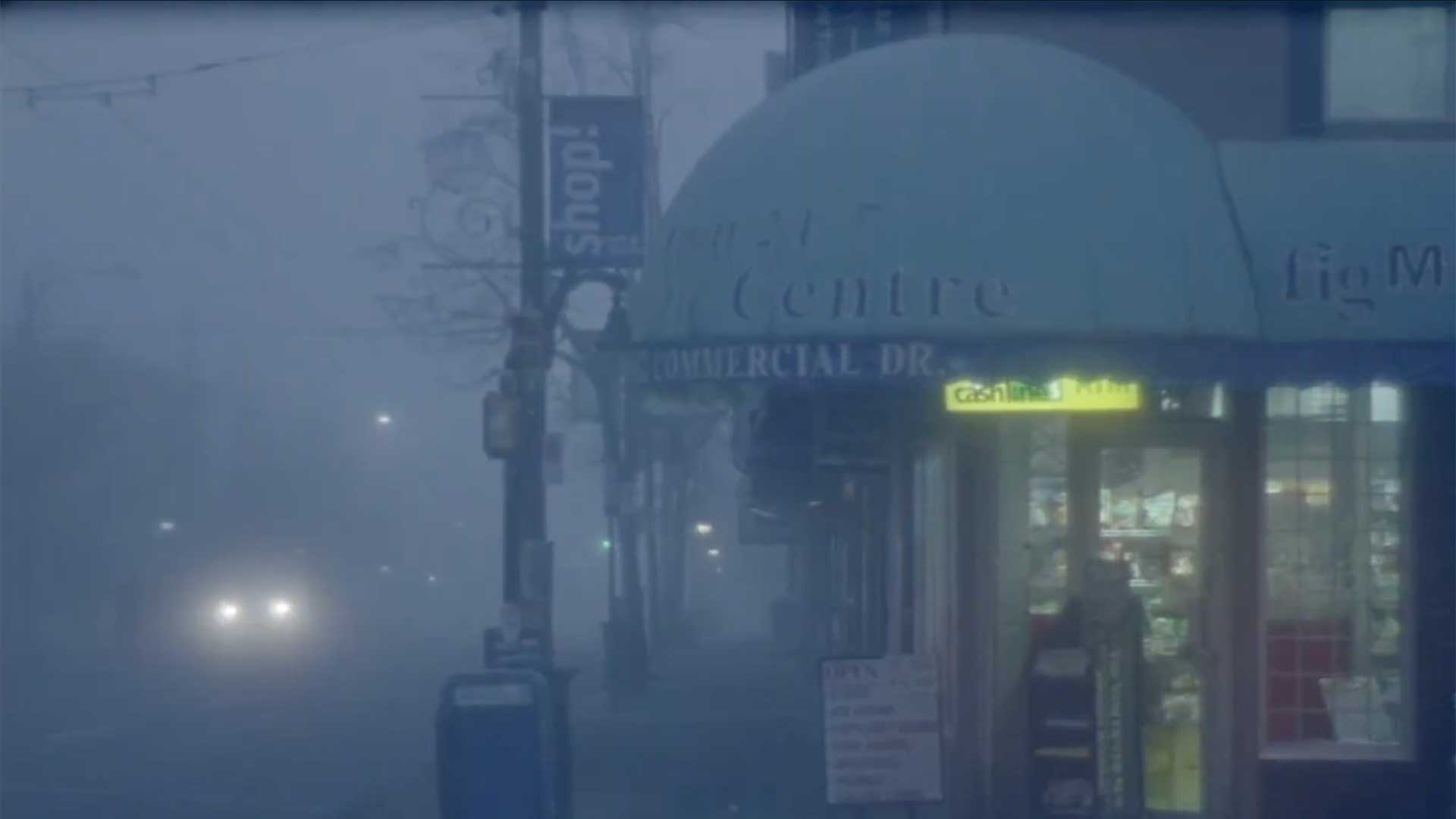
AW: That is where I think Bartlett’s work, and the synthesizer more generally, gives Fowler a way of pushing against Mark Fisher’s formulation. The past can remain available as a set of possibilities. They are lodged in the technologies and experiments of earlier work and the synthesizer becomes a vehicle for activating those possibilities. There’s something almost counterintuitive about that. You’re looking backward in order to recover a sense of the future, and, that is felt in the film with his use of a Bolex camera. The graininess of the image immediately recalls the material conditions of an earlier cinema. This historical effect is intensified by the film’s repeated return to Commercial Drive in the early morning, where the streets are shrouded by a thick haze of winter fog. The city seems withdrawn from the present tense, its contemporary streets appearing as though they belong to another historical register. The effect is especially anachronistic because the film was shot in 2017.
But Fowler’s subjectivity here is equally important to the way this history takes shape. He stresses his own presence as the person doing the looking, sifting through these fragments and deciding what to bring forward. He might pick out a snippet of text or a photograph and hold it up to the camera, almost as if to say, “This thing matters. Look at it.” We may not immediately understand why we are looking at this or that particular image, or what Fowler has recognized in it. The act of selecting it tells us that the fragment has caught his attention. His presence becomes part of the historical argument. The archive passes through his particular way of looking, and the film makes that process visible.
JD: This is why it was important to me to reactivate Bartlett’s instruments by creating new works for them. The question we are exploring is how historical material can become active again through making. History is about representing the past, sure, but it is also about shaping the present, which can’t be done without also imagining some sort of desirable future. Bartlett’s work with his electronic instruments was both tied to the past and focused on creating new forward-looking instruments, software, tuning systems, melodies, and so on, which did not yet exist. Fowler’s film builds another opportunity for that lifetime of work to reside in, and I hope that our [Jacob, Bhumber, Monk] compositions are able to provide more places for Bartlett’s work to live in the present and future.
Notes:
- Bartlett and Friends: Ethnotechnological Music, performed by Martin Bartlett, Dan Scheidt, and Doug Collinge (1982; Vancouver: Western Front Archives, 2019), Film.
- Mark Fisher, “The Slow Cancellation of the Future,” in Ghosts of My Life: Writings on Depression, Hauntology and Lost Futures (Winchester: Zero Books, 2014), 2-29.
- Luke Fowler, “Martin Bartlett and the Poetics of Live Electronic Music,” in The Burning Sand 3 (April 2014).