The artistic production of Image Bank, a collaborative project by artists Michael Morris and Vincent Trasov, anticipated current uses of social media for entrepreneurial, personal branding as far back as 1970. Their vaunted Vancouver-based mail art network, which elicited contributions from across North America and Europe, prefigured present-day social media right down to the memes. The materials gathered at the Belkin Gallery for the sweeping overview of Image Bank’s nearly decade-long existence are not digital files, however, but postcards with funny captions scrawled by hand. Along with the postcards, copious behind-the-scenes documents are presented in vitrines throughout the gallery, illustrating the extent to which Morris and Trasov’s pseudo-institutional entity legitimized and supported itself through the production of administrative materials. These documents were partly occasioned by the necessities of the resolutely material social media network of mail art. Calls for contributions, publicity brochures, and curated collections of artist submissions in the form of “Postcard shows” fall into this category. Still others, most notably Image Bank’s Annual Report from 1972, are case studies for what Benjamin Buchloh memorably termed the “aesthetic of administration.”1
The exhibition draws extensively from the holdings of the Belkin itself, which has collected and preserved the legacy of Canadian West Coast artists like Morris, Trasov, and their milieu under the 32-year tenure of Director and Curator Scott Watson, who retired from his post last month. It took a deft curatorial sense to orchestrate the volume and nature of material on display. It is no easy task to present such a profusion of items, along with sheafs of typewritten documents, and have it hang together. I gained some experience with the archives that form the basis for this show when I studied under Watson at the University of British Columbia. I can confirm that the exhibition’s overall cohesiveness could only be achieved through deep knowledge of the artists and materials, as well as their social and historical circumstances.
The aforementioned Annual Report might be the quintessential item on display. It is the only report of its kind created during Image Bank’s existence from 1970 to 1978. Conceived as a submission to the Canada Council for the Arts, the introductory message written by Michael Morris described the formation of Image Bank in the preceding years, made a case for why it should continue, and, implicitly, why it deserved funding. In language familiar to anyone who has written a Council application since, but which documents like this were instrumental in cementing, he plays up Image Bank’s achievements to-date, how it dovetailed with other institutions, and the importance of expanding its future capacity. He concludes on a telling note:
We are confident that these proposals will enable us to realize the job potential created by our activity that will enable us to expand our role as artists by allowing us to be self-sufficient without selling our time to non-productive labour.
1972 was squarely in the heyday of Canada Council funding, still carried by the momentum of the massive state investment in public infrastructure and nation-building that was the 1967 Centennial celebrations. Intermedia — a loose art collective that coalesced in the late 1960s — with which Morris, Trasov, and Gary Lee Nova worked to establish Image Bank, were famously awarded a $40,000 yearly operating budget by the Council in 1967 without even applying for it.2 Still, the emphasis on “job potential” betrays a nascent shift within the state arts funding apparatus towards encouraging entrepreneurship.
In the coming years, the Council would increasingly make their funding outcome-based. Entities like Image Bank and individual artists would come to be thought of as akin to startups, who would ideally parlay government largesse into market opportunities. Artist and writer Jamie Hilder identified this shift “from an artistic vanguard to a corporate vanguard” by comparing the public-facing openness of early artist initiatives like Intermedia to the entrepreneurial model ushered in by the N.E. Thing Company, and continued by the Western Front.3 The economic framing of an “annual report” produced by Image Bank to tout “job potential” for its financial backers reveals how Morris and Trasov’s project fits into this emergent cultural dynamic, even if it is tongue-in-cheek.
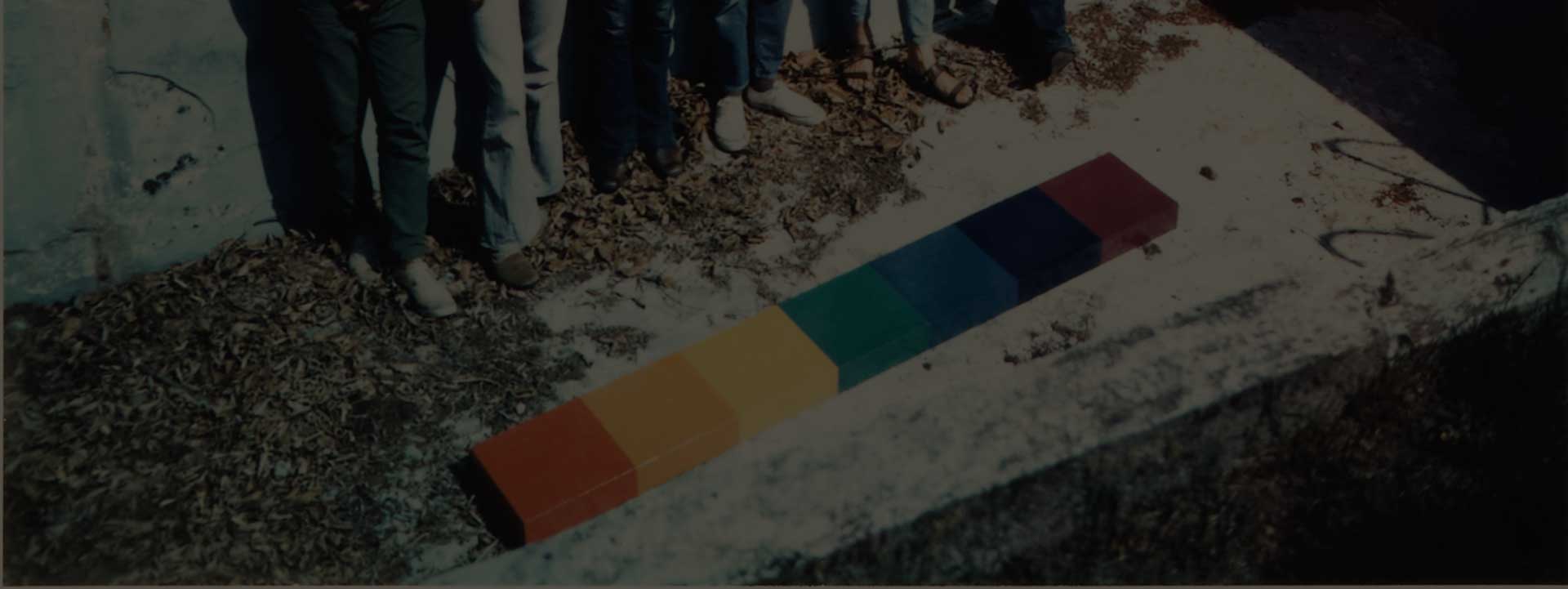
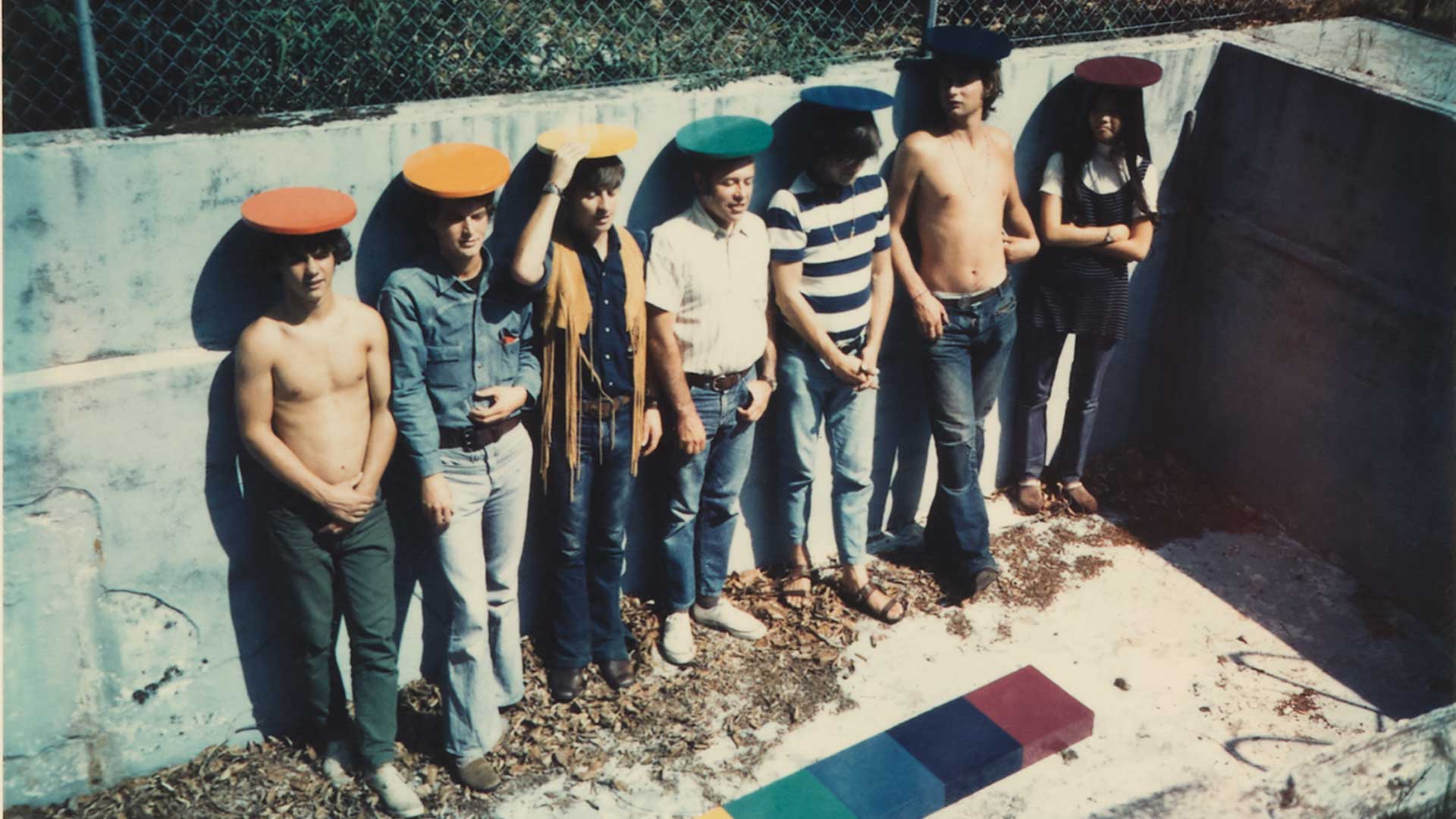
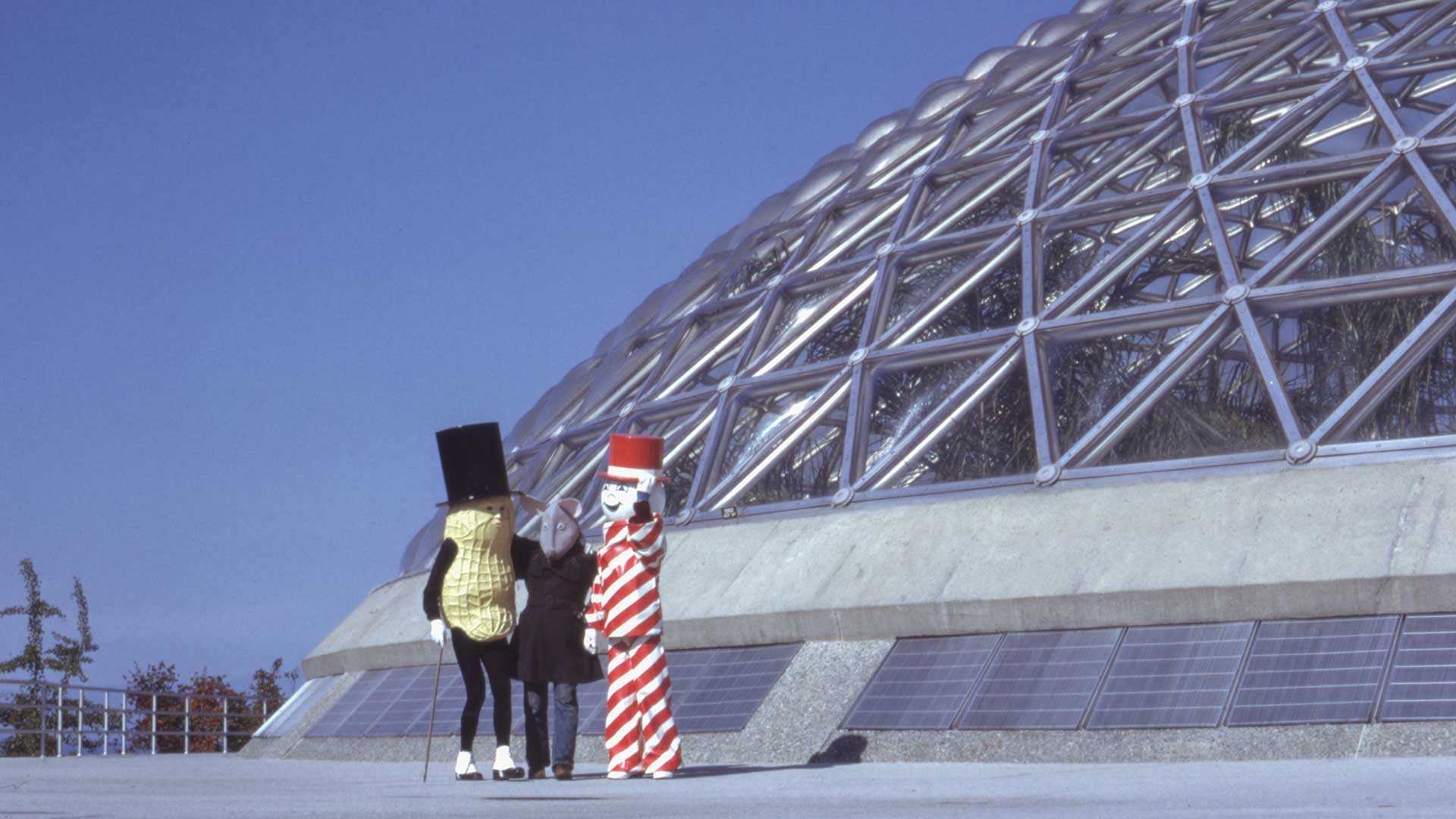
Buchloh wrote about how conceptual art’s mimicry of administrative, bureaucratic forms, indicated the final erosion of art into rationalization. In hindsight, however, even the highly irrational activities of Image Bank and its collaborators have proven portentous about the collapsing of everyday life, art and the market that we view as normal today. This was enacted through the tried and true tactic of undermining artistic forebears. The “Colour bar” research conducted by Image Bank, for example – which combined sculptures, paintings and filmed performances – strips away the avant garde’s high-minded aspirations of aesthetic autonomy. Colour bars for this generation were now synonymous with the absence of content between television shows. For the Mr. Peanut mayoral campaign in 1974, Trasov donned a papier-mache outfit that would not have been out of place at the interwar events of Cabaret Voltaire. In a break from their Dada precursors, however, Trasov and the cohort of friends who joined him for campaign events inhabited the personas of corporate ambassadors. In the exhibition catalog, Watson describes the (often homophobic) reaction within Vancouver’s artworld against Image Bank and their fellow travelers that pushed for a return to stable, traditional art commodities like painting and sculpture.4 In the mid-70s, a contingent of collectors on the board of the Vancouver Art Gallery successfully redirected the institution’s priorities back to “canvas and Corten steel” and away from performance and special events.5 The artworld cachet of Image Bank and their co-conspirators may have suffered as a result, but their unique blend of camp performance, networking, and entrepreneurial acumen was prescient about the changes to come in our everyday lives. One Mr. Peanut campaign brochure predicted that “Life was politics in the last decade/Life will be art in the next decade.” In the current atmosphere of building personal brands and influencers hawking real estate consultations while dressed as mascots on TikTok, this turns out to have been a major understatement.
Notes:
- Benjamin H.D. Buchloh, “Conceptual Art 1962-1969: From the Aesthetic of Administration to the Critique of Institutions,” October, no. 55 (1990): 105–43.
- Adjusted for inflation, that number would be close to $300,000. Jamie Hilder, “Vancouver as a Going Concern: Artists’ Spaces, Public and Non,” Canadian Literature, no. 235 (2017): 2.
- Ibid., 3.; Intermedia (1967–1972), N.E. Thing Co. (1967–1978), Western Front Society (1973–present).
- Scott Watson, “In the Image Bank,” in Image Bank (Vancouver; Berlin: Morris and Helen Belkin Art Gallery, UBC; KW Institute for Contemporary Art, 2019), 23.
- Ibid.