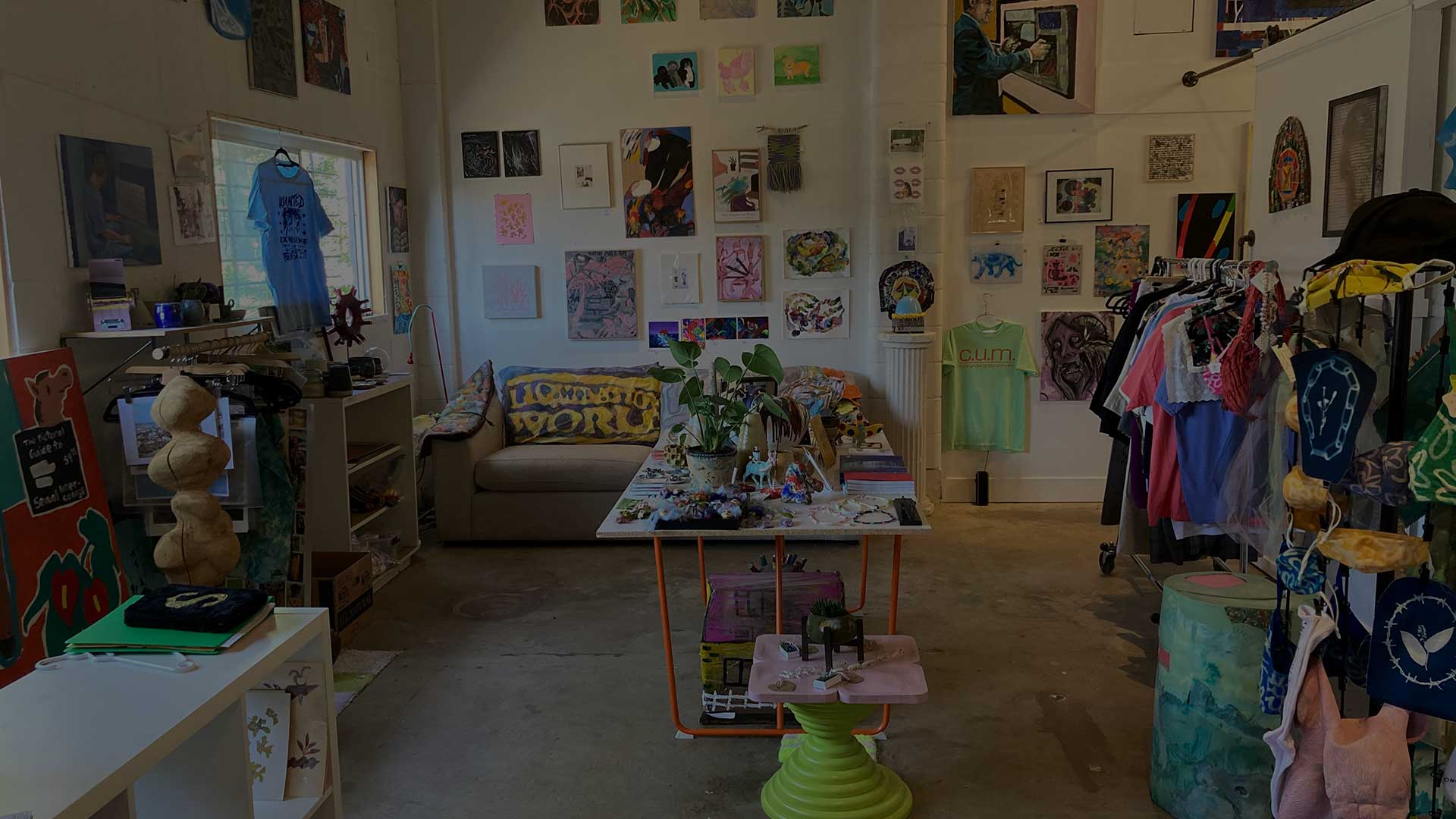
“We take everything and everything must go!”
– Liquidation World submission policy
“A house is a thing to which other things are added.”
– Peter Culley, as quoted by Christian Vistan
“Time is liquid. One moment is no more important than any other and all moments quickly run away.”
– Kurt Vonnegut, Bluebeard
1. Random non-place
There was a time, a time pre-Olympics not so long ago, when Vancouver was romantically waxed upon as the Terminal City. A wet, gritty, affordable, random “non-place…a bit like every place.”1 A livable place, where not every high-density street was metered, a community of squat boats populated False Creek around Science World, and $5 could get you two slices and a pop. The mainstream cultural narrative of this city, one I was familiar with growing up through the ‘90s and ‘00s, presented Vancouver as “a utopian mixture of radicals and mandarins, disinclined to battle physical and financial colonization and transformation.”2
I think about this past, not as ‘the good old days’ — the romance of a wet, gritty, utopian non-place brings up different memories, associations, and struggles for different folks — but as a time when I was younger, naive, and believed the hype. Now in hindsight, this self-reflexive grooming of an art-elitist attitude3 totally correlates to how now, once again in 2021, Vancouver ranks as the country’s most expensive city in which to live.4
But, to return to the physical terminus. As the “end-of-the-line hinterland and transnational nexus,”5 this terminality has always meant a break from history, and stages an invitation for us to envision something different in the present moment.6 The end is never really the end, and ‘random’ can mean the possible discovery of the specific, even when alienated in a sea of empty signifiers.
A key factor in the interpretation of this terminal randomness is affordability. Affordability for the majority of people working towards some semblance of middle class, and for a particular subset of that majority — artists and cultural workers who can thrive creatively with very little. Only, the cost of living in this city to survive, has so steeply ballooned much too high for most artists to realistically thrive.7
2. What practice longs for
During the hours when my life is work as an artist-arts-worker-art-person, I exist in a very specific environment. I interact with a small community of people, and we work on things together to reach deliverables for projects and programs that are sustained by various public funds. In the hours outside of work, I move from here to there in and around the city. While commuting from one place to another throughout the pandemic, I am struck by how yes, random-non-placey this city feels. Random, as there is so much change that it is difficult to remember what was there before it started. Random, in that I feel alienated from what appears to be a growing population, with the added barriers of masks and plexi-glass. There seems to be ever the more cranes appearing in the skyline — perhaps the same cranes moving from one development to the next — towers building upwards while the streets look relatively empty. Businesses shuttered, fences up around whole blocks of boarded up Vancouver Specials, big placards announcing soon to be Pleasantville condo communities. Where do communities even gather now?
Sustaining a community is about locating specificity amidst the random, the generic, the replicable, and to be able to hold space for that specificity over time. How do artists learn community in a city where the only way to thrive is to professionalize? To be able to come together within the framework of the community is an essential part of being an artist, as pandemic isolation has reminded us. As introverted and as professional as we all can be, our practices long to chill in conversation with one another.
3. Immediate Opportunities
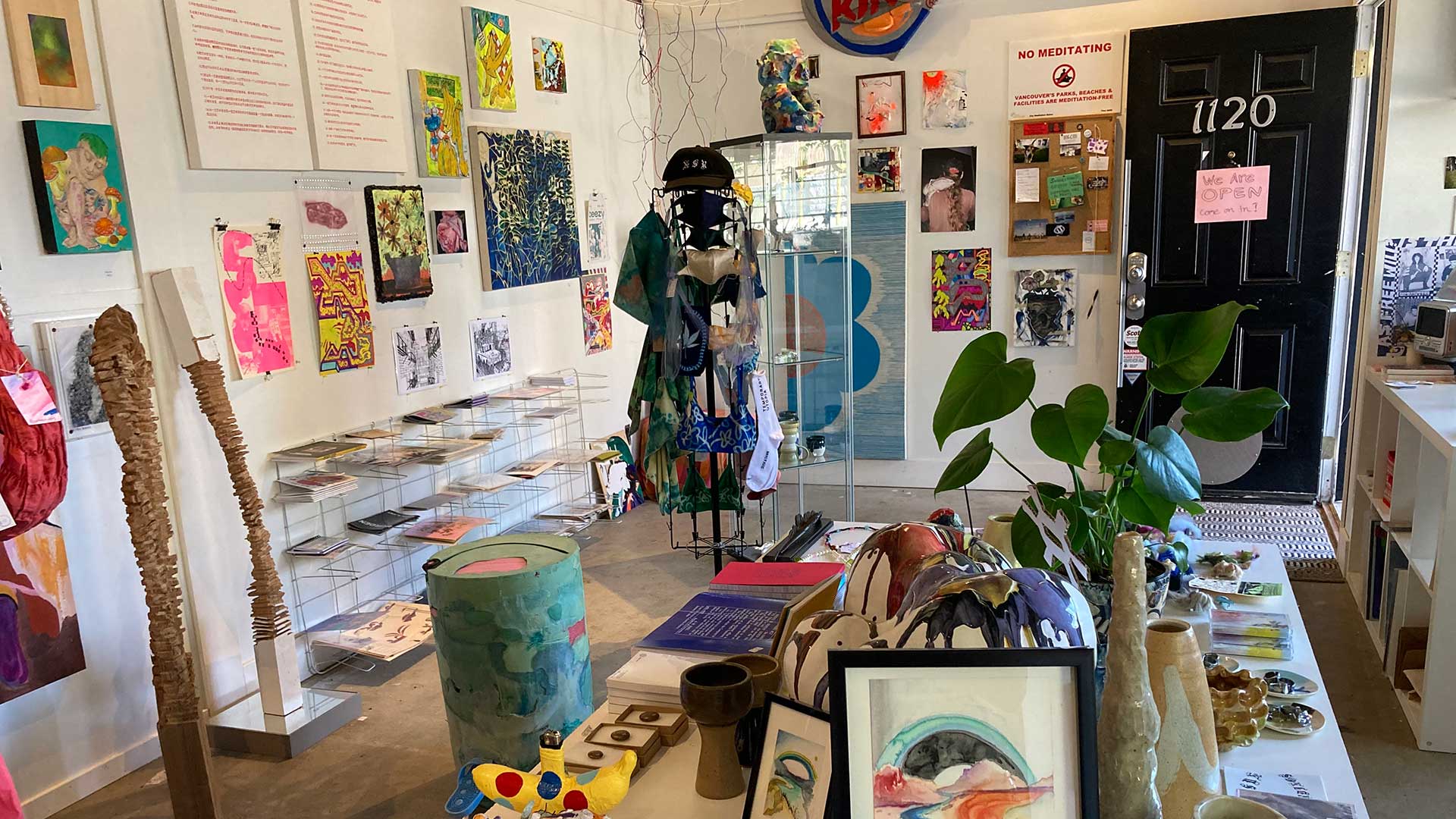
These thoughts swirl to form some kind of base upon which I reach out to two local artist-run-spaces in the truest sense of the terminology: artists running spaces without boards of directors and operating assistance from arts councils. “Not to be beholden to responsibilities of artist-run-centres, we adopt from those contexts but question those structures,” is what Christian Vistan says about his collaboration with Aubin Kwon, dreams comma delta, a gallery space located in the basement suite of Vistan’s family home in Delta. The second, Liquidation World, is a temporary art consignment store and project space run by Maya Beaudry, Dave Biddle, and Katayoon Yousefbigloo. Liquidation World holds their lease from May until the end of July in a soon-to-be-developed light-industrial building in Strathcona. dreams comma delta is ongoing, while Liquidation World “are scouting for a more permanent location…keeping this adaptable, fluid model going until we find a space that works.”8
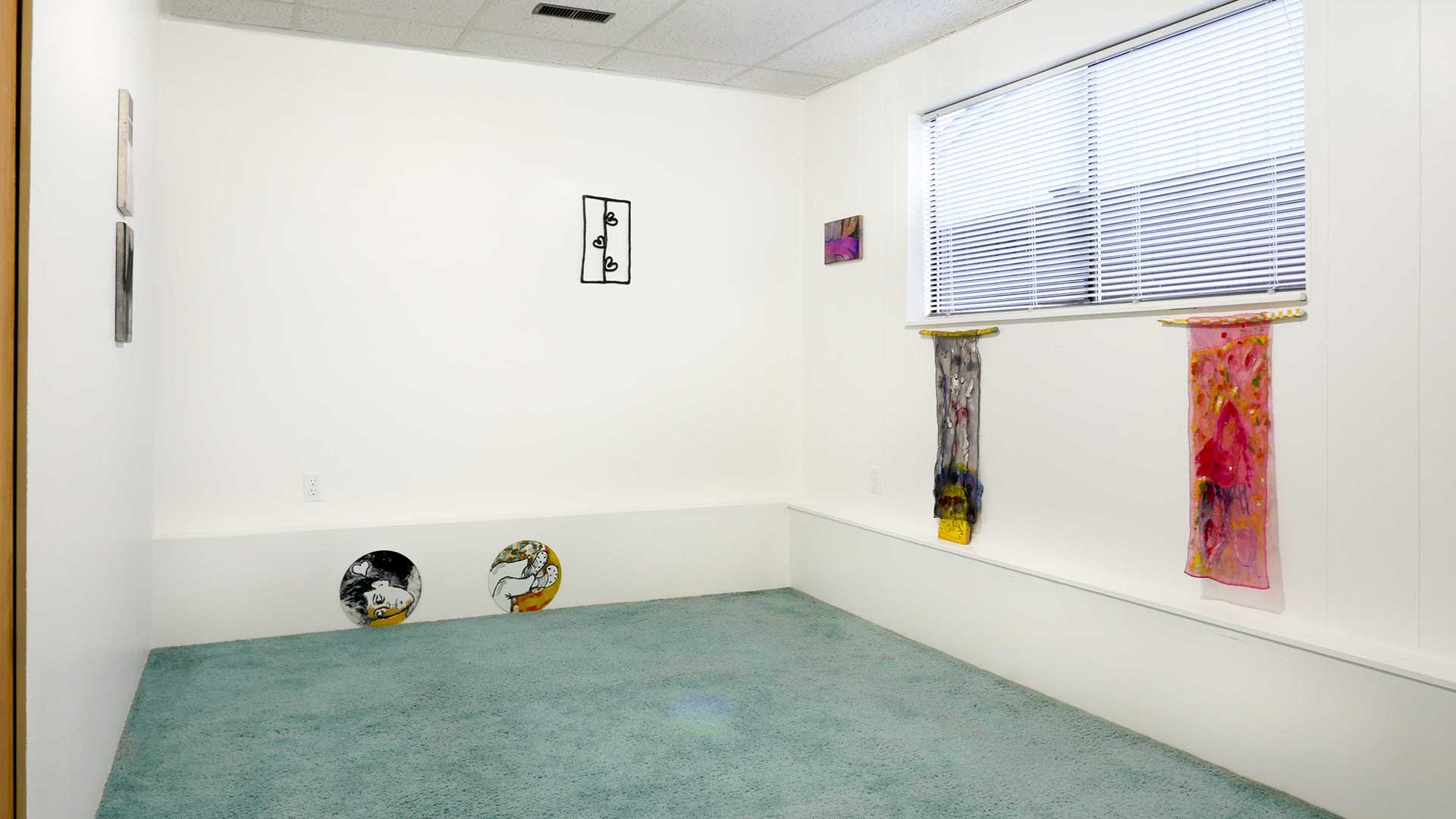
I gravitate to thinking about these two spaces in tandem, as they are dissimilarly related artist-projects which enact complementary approaches to maintaining a diverse, multi-faceted artistic ecosystem in face of gentrification. How these spaces came to be is through the responsiveness of their creators; the combination of strategic timing, luck, and recognizing the “immediate opportunity,”9 put these two projects into action. Liquidation World came into being during the first wave of COVID-19 when Beaudry, Biddle, and Yousefbigloo noticed that “shopping was one of the only semi-social public activities that people felt comfortable doing, and [from that] the idea emerged to have an art consignment store.”10 Similarly for Vistan and Kwon, dreams comma delta arose from a first-wave vacancy of the basement suite, some extra time at home, and some extra funds through CERB. Though forced to slow down and adapt to a year of lock-down, both projects acknowledge the continuous need to make, move, and share in a time of a global crisis.
4. In dreams
In my separate conversations with Liquidation World and dreams comma delta, both spoke to dreaming. “Artists dream about running a space,” Kwon reflects as he recounted his collaboration with Vistan in 2020, when the duo created a series of 2D works which they curated into the show Flat Feelings — a sequel exhibition to an earlier iteration at Kwon’s family’s restaurant Yum Yum in Airdrie, Alberta.
“Uhm-ma asked me to fill walls at her fried chicken restaurant. She says, you do whatever you want, but do it nicely, with your friends.”11
“A big part of dreaming up the space was not having a fixed vision that excluded any possibilities we hadn’t considered.”12
“I imagine occupying the wall space in this restaurant.”13
*
Seemingly random, there is currently no full explanation to why we dream, but all science points to neurological consolidation processes, ways through which we transform events and emotions into memories, meaning, and learning.14 In a recent interview with the Guardian, neuroscientist David Eagleman shares a kind of revelation he had, that our senses compete for control of our brain. Because our civilizations privilege vision and “because the planet rotates into darkness, the visual system alone is [then] at a disadvantage, which is to say, you can still smell and hear and touch and taste in the dark, but you can’t see any more….[D]reams are the brain’s way of defending that territory.”15
Dreams as a way to defend our visions…
…and in defense, we manifest our dreams into action.
5. Time is liquid
In my waking dream, the streets are garbled, excavated, sutured but spilling, jackhammered and bright, roadworked into rubble. Real estate jargon permeates the everyday through signage; nouveau typography and unctuous renderings of inhospitable towers distort the imagination of what should be possible. It is easy to feel lost in this place, despite its geographically modest size. As the terminus, there’s nowhere else to grow, except up.
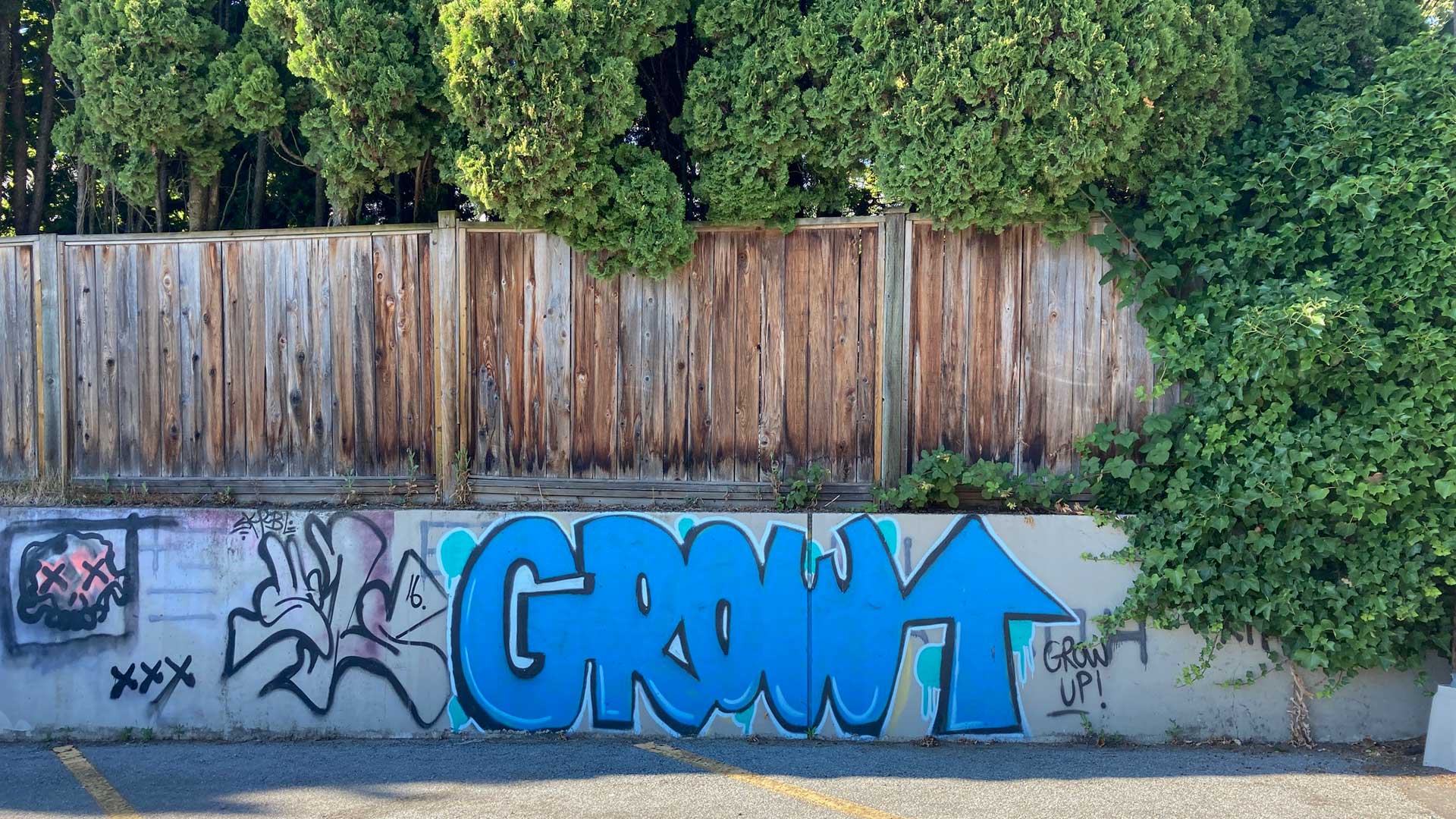
“We are in the process of losing our entire architectural history as artists in this city. This fact is so well known among our communities, it has become mundane. The constant scurrying around between buildings on the verge of being unnecessarily demolished contributes to an exhaustion and low morale among the people in the city who try to take on the task of building and maintaining spaces that don’t fit neatly inside a commercial economy. Liquidation World is an attempt to create an alternative economy of artists investing time, energy and resources to support each other’s practices.”16
Vistan’s words about how artist-space projects can adopt from outside contexts resonates with what the Liquidation World team are working towards. Whether it’s their mandate or their vibe, the outcome is a welcoming break from versions of the real world in which systemic challenges often undermine the most noble intentions.17
“If it’s just sitting in your studio locked away it’s not doing any good to anyone. Bring it down to Liquidation World, where we turn your art into cold hard cash!”18
While their call plays off of the gauche pragmatism of real-life liquidation sale events, where “Everything must go!” earnestly blasts from the sound system in a warehouse that draws both the curious weekend shopper to seasoned bargain hunters, this version of liquidity thinks of itself as a community garden. Buildings awaiting their demise are “often concessioned by landlords or developers to allow for unprofitable activities to temporarily take place and soften the blow of gentrification. At the same time, they reimagine spaces unfit for traditional uses and speak to the resourcefulness of the community to not only make things happen but to mobilize when the opportunity arises because time is liquid.”19
6. Wheel of fortune
When I think back to the artist-run spaces I know, a few have moved on to become non-profit spaces while the majority of others live on in archives, memories, and lore. And while I think it would be self-sabotaging to say that our current moment nears the outro in the swan song of artist spaces in Vancouver (and its surrounding, commutable cities), I do think much of the freedom that artists experienced from earlier generations, which came from living in a much more affordable city, is no longer in reach for most of us. I don’t know of anyone who can sustain a practice, however temporarily, by scamming welfare or squatting, and it is certainly impossible to buy a house for $1. I wonder if running an artist space today means that you have to run it not just like a business, but as a business.20 What if artists ran the restaurant in which they exhibited work by their community? I pine for the art bar (or art restaurant) that no longer exists. Across from the Rize development, there used to be Rhizome Cafe, “a café, community space and social justice hub” that hosted community events, performances, and workshops in addition to regular meal service.21 There was also the former iteration of La Bodega (on Howe Street), where visiting filmmakers and the local arthaus crew would end up after a screening at the Cinematheque; VIVO’s Video Bar when the centre operated on Main Street; the Solder and Sons speakeasy; Julia Freyer’s project-cum-exhibition, the Poodle Dog Ornamental Bar,22Geoffrey Farmer’s Every Letter in the Alphabet, and Instant Coffee’s Light Bar.23 These are only a few, the ones I remember.
From my conversations with Liquidation World and dreams comma delta, I’m left wondering what it would take for larger scale community projects like this — where space and rent are involved — to sustain and be sustained by its community. Historically, it seems like where artists have gone, gentrification has surely followed. While we have lived in the dream of critique — that through repeated efforts, critique could raise us above the struggle — real estate deals were made in favour of all we were critiquing. The struggle has gotten more difficult for artists living in this city, but we have grown, and continue to grow more resilient over time, as we transform our critique into the creation of alternative spaces. No matter their longevity, these initiatives teach us how to organize and resist, both in and beyond the coveted urban core. As we lose sense of time, through the slippages of age, experience, development, and erasure, the wheel inevitably reinvents itself, though never the same wheel twice.
dreams comma delta is located at 4565 53rd Street, in Delta, BC. The next exhibition will feature works by Mitch Kenworthy and Kiyoshi Whitley, opening in mid-August. Follow @dreams_comma_delta and visit dreamscomma.com for more information.
Liquidation World is located at 1120 E Georgia Street in Vancouver, BC. Follow @liquidationw0rld and sign up to their newsletter.
Notes:
- Trevor Mahovsky, “Radical, Bureaucratic, Melancholic, Schizophrenic: Texts as Community,” Canadian Art (Summer 2001): 50, as quoted in “Adventures in Reading Landscape” by Marina Roy, in Vancouver Art & Economies, eds. Melanie O’Brian, Vancouver (Arsenal Pulp Press: Artspeak, 2007): 72.
- Ibid. Current discourse via Indigenous Sovereignty and Reconciliation has now outdated this posture.
- Melanie O’Brian writes that “the international success of a handful of Vancouver artists has set a benchmark for interested outsiders as well as for subsequent generations of Vancouver artists” in her “Introduction: Specious Speculation”, in Vancouver Art & Economies, 16.
- Kurtis Doering and Hana Mae Nassar, “Vancouver most expensive city in Canada (again), according to new ranking,” CityNews 1130, June 23, 2021, https://www.citynews1130.com/2021/06/23/vancouver-expensive-city-ranking/.
- Ibid.
- For instance, Kitt Peacock traces the history of the Chinese community renting land from xʷməθkʷəy̓əm along the Fraser River and dominating the agricultural market after finishing work on the CPR in “What used to be the marsh: “Food sovereignty and cultural work in Chinatown,” ReIssue, July 7, 2021, https://reissue.pub/articles/what-used-to-be-the-marsh-food-sovereignty-and-cultural-work-in-chinatown.
- The cost of living in Vancouver is $20-$21, whereas minimum wage is $15.20. Compare Vancouver City Savings Credit Union, “What is a Living Wage?” accessed July 10, 2021, https://www.vancity.com/AboutVancity/VisionAndValues/ValuesBasedBanking/livingwage/ to Province of British Columbia, “Minimum Wage,” accessed July 10, 2021, https://www2.gov.bc.ca/gov/content/employment-business/employment-standards-advice/employment-standards/wages/minimum-wage.
- Liquidation World, in an email interview, July 6, 2021.
- dreams comma delta, in conversation, July 6, 2021.
- Liquidation World.
- Aubin Kwon, Flat Feelings exhibition text, https://files.cargocollective.com/c938494/Flat-Feelings.docx.pdf.
- Liquidation World.
- Flat Feelings.
- Linda Geddes, “Weird dreams train us for the unexpected, says new theory,” The Guardian, May 14, 2021, https://www.theguardian.com/science/2021/may/14/weird-dreams-train-us-for-the-unexpected-says-new-theory.
- Andrew Anthony, “Interview: David Eagleman,” The Guardian, June 12, 2021, https://www.theguardian.com/science/2021/jun/12/david-eagleman-the-working-of-the-brain-resembles-drug-dealers-in-albuquerque.
- Liquidation World.
- For instance, The Mount Pleasant Community Art Screen (programmed by grunt gallery), is a tiny claim secured by the artist community in face of the recently completed 21-storey RIZE condo, The Independent, at the Kingsway-Main Street corridor.
- Liquidation World.
- Ibid.
- O’Brian notes that “the arts (like housing, health care, and numerous other social services) are not well supported at the federal, provincial, or municipal levels, while corporate models for running public institutions as business are encouraged” in Vancouver Art & Economies, 15.
- Rhizome Cafe, accessed July 16, 2021, http://rhizomecafe.ca/.
- Michael Turner, “The Poodle Dog Ornamental Bar and Vancouver’s Subtracted Future,” Website blog, December 19, 2010, accessed July 12, 2021, http://mtwebsit.blogspot.com/2010/12/as-part-of-their-postscript-series.html.
- Funded by Cultural Olympiad money, both projects were perhaps the art community’s last hurrahs before the developers seized control. That stretch of Blood Alley, where the Light Bar was located, is now the backside of a Westbank development. The Every Letter in the Alphabet space is now a couple of eateries.