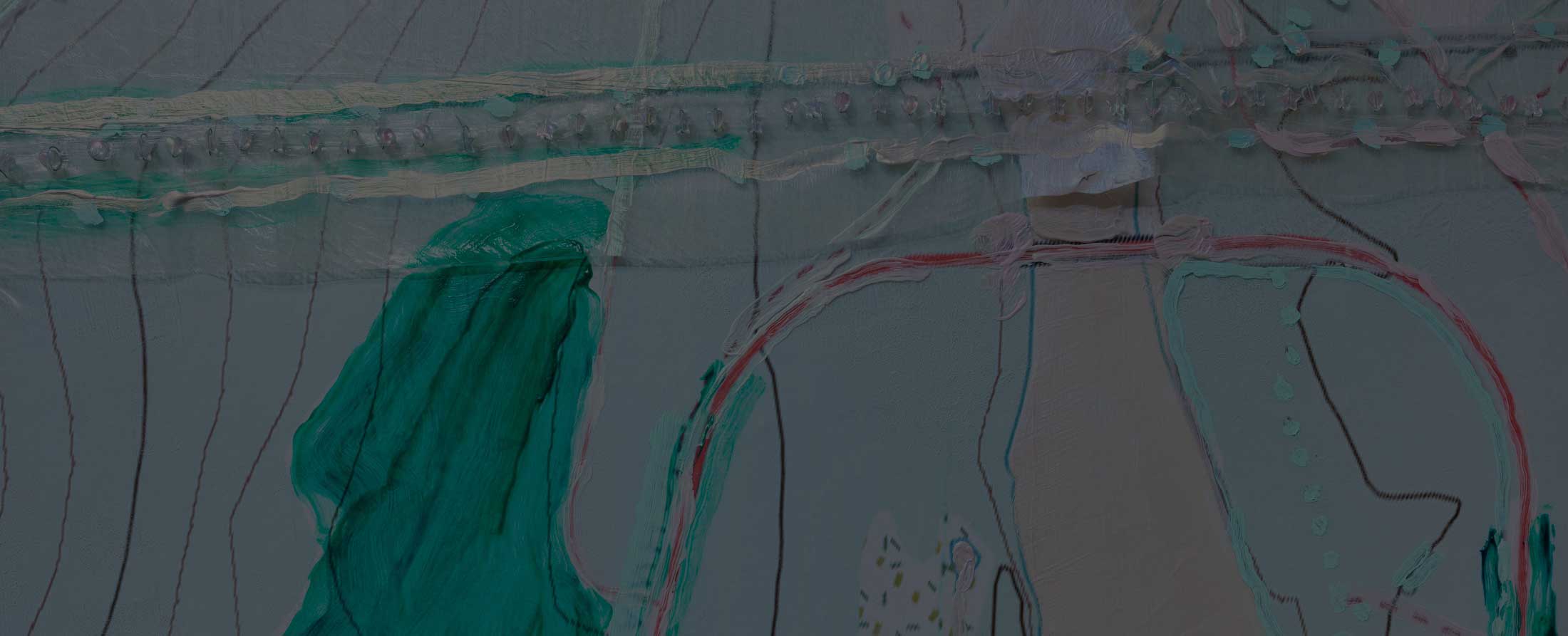
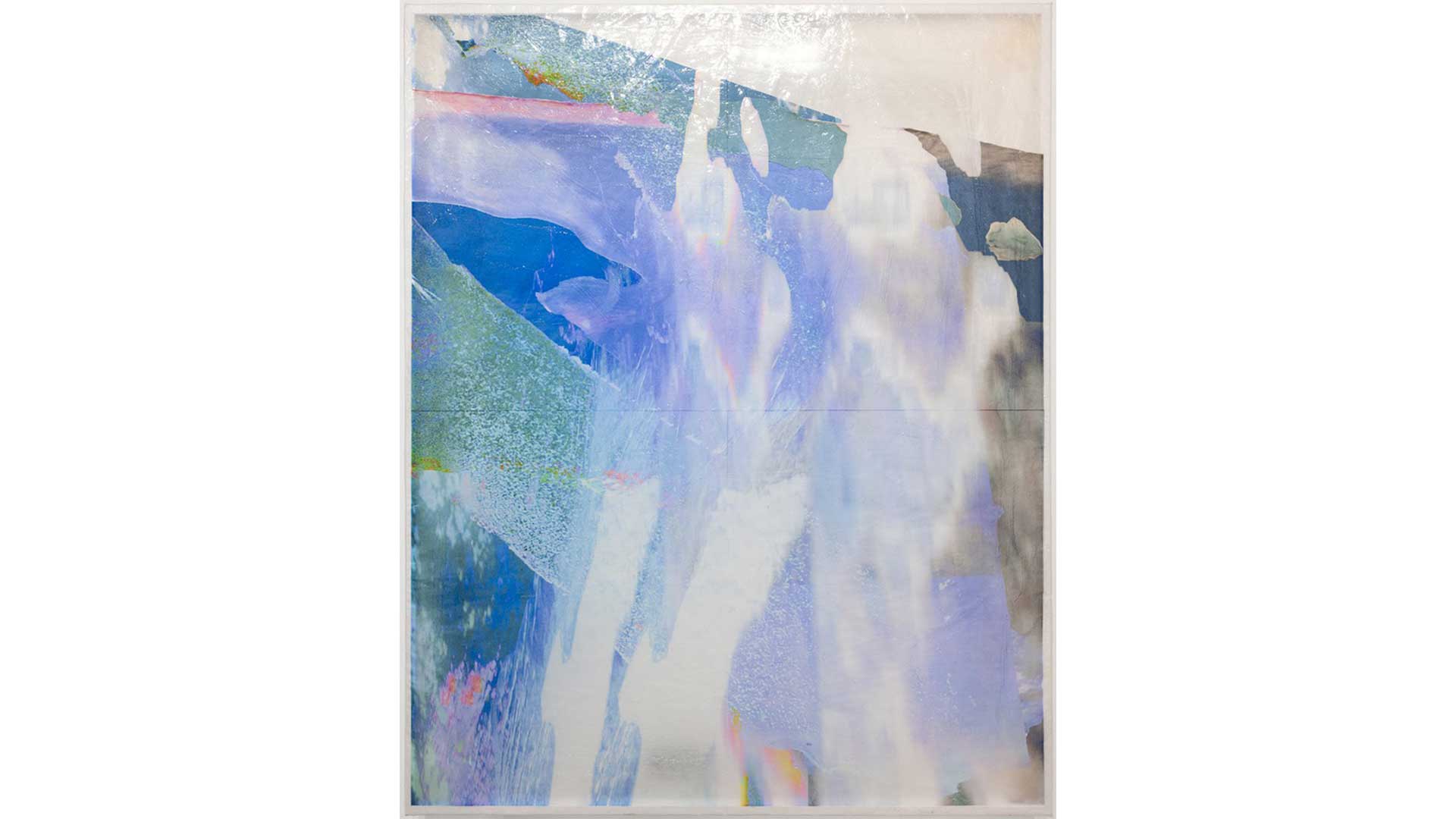
The day the show opens, you and I are caught up in a web of relations — or, more precisely, we are standing in a loading bay 14 kilometres due west of Gallery Gachet, eavesdropping on a conversation between two geologists. Speaking quickly, back from field camp in the long stretch of winter, the taller of the two is lamenting some catastrophic computer failure: I’ll have to ground-truth the whole thing over again. Straight to the dictionary, sideways on the web. He’s probably talking about ground-truthing, the process of matching a rough satellite reading onto the sharp, real contours of the land. In a military sense, he could be referring to ground-truthing as the first-hand, tactical reporting when boots hit contested ground.1 Or perhaps it is the third definition he reaches for, the one we found in the paperwork handed to West Moberly First Nations in the early years of the contested Site C dam: a promise from BC Hydro to “ground-truth traditional land use information”2 by plotting Indigenous relationships to the land on an imperial map of the project area. A ground-truth, then, is embodied knowledge transformed and mapped by a colonial gaze — and it is ground-truthing which comes undone through Dion Smith-Dokkie’s latest body of work. In This Will Be The First of a Thousand Worlds We Give Life To, twelve ethereal, mixed-media works invite us to sink below the surface of the satellite map, conjuring atmospheric experiences of land and place on West Moberly territory.
When we finally visit, Gallery Gachet resembles a soft-hued survey office in disarray. Pastel-edged topographic charts and fragmented aerial photographs are pinned to the walls, with translucent skins pulled taut over each image, an array of agar plates poised to grow new life. The reflections of gallery lights skid over the surfaces like imminent weather patterns, catching on networks of clear plastic beads — some hearts, some stars — as they traverse the troubled maps below. And indeed, each map seems to be caught in the midst of a semiotic breakdown. In Water Futures, pixelated textures twist uneasily over virtual terrain; in an untitled work a few paces away, colonial place names (Williston Lake, Pine River, Lone Prairie) are digitally printed in reversed type. It’s as if we were lying down on the land when a great map was set over us, gazing up at the backward silhouettes of the letters against the sky.
Cultural ecologist Macarena Gómez-Barris once wrote about such a skyward gaze.3 A submerged perspective, she calls it, a demand to see and feel alongside the fish, frogs, and other creatures whose lives are forfeit under extractive projects. Gazing upward alongside these creatures reveals a particular figure haunting the sky: the satellite, an instrument of extractive colonialism capable of transforming land and all its relations into a commodity. “Modernized states,” Gómez-Barris writes, “coordinate with multinational corporations, using reconnaissance systems to collect large data sets, acquire surface reading of the Earth, and produce high-resolution maps that are deployed to build extractive infrastructure on the ground.”4 Grid lines convey the new boundaries of this terrain, slicing lakes and mountains into uniform parcels like the ones carefully traced in periwinkle blue over Locative Operation: Moberly Lake. In British Columbia, mineral prospectors stake resource claims remotely via online mapping services, purchasing extraction rights by the rectangular cell without ever setting foot on the land.5 The satellite image, the topographic map, and the grid line serve as efficient colonial proxies, severing relational networks as they prepare the land for extraction.
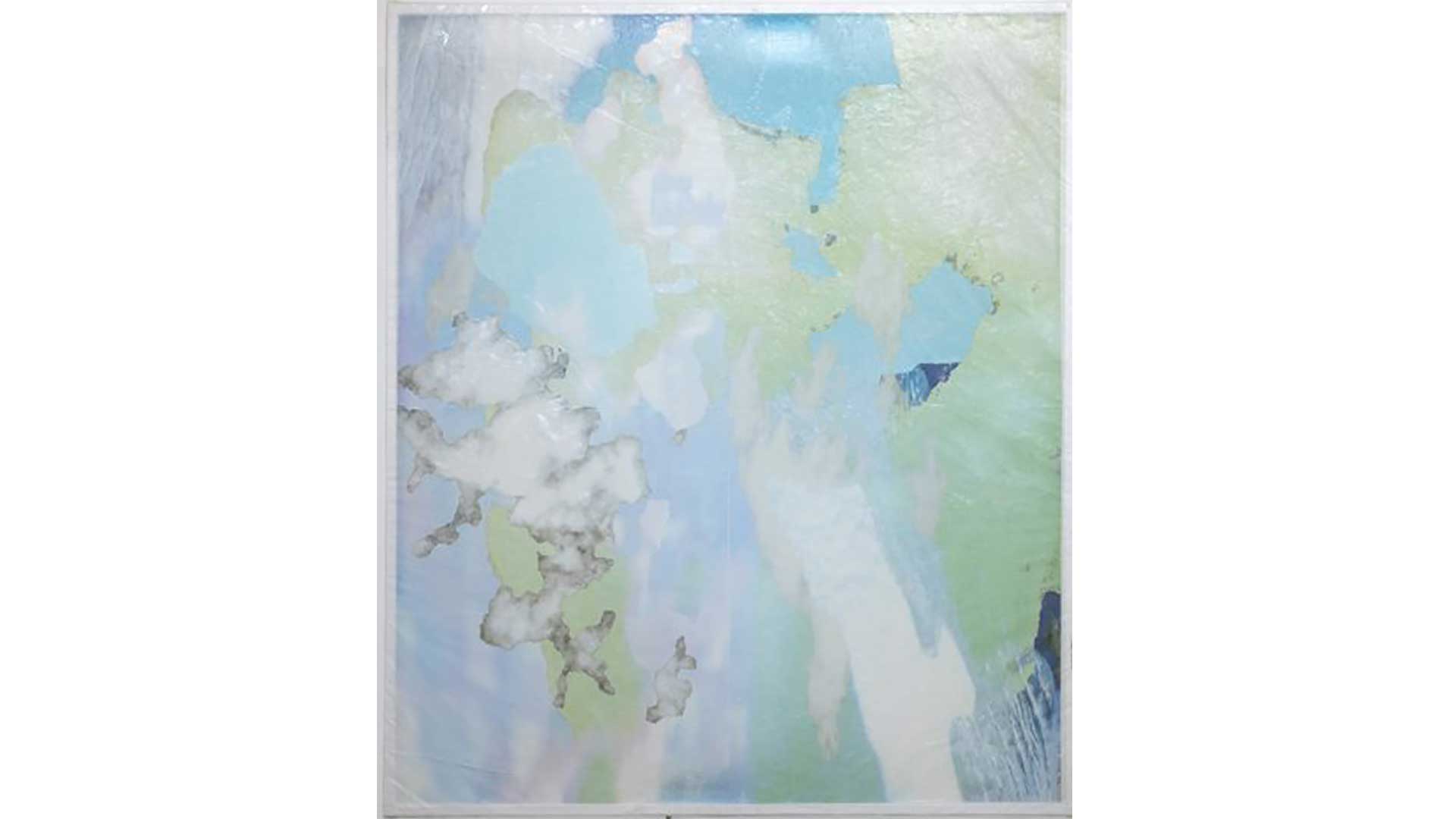
This Will Be the First of a Thousand Worlds We Give Life To places us in this anticipatory moment, gazing back at the satellite images as they process and manipulate the land. As bell hooks describes, “the ability to manipulate one’s gaze in the face of structures of domination that would contain it, opens up the possibility of agency.”6 In our case, opposing the gaze of the satellite reveals a particular failing of colonial visuality. Consider the aerial imagery collected in Source 2: landforms and waterways are captured at the scale of resource extraction, obliterating anything smaller than a pixel. Entire relational networks — plant, animal, human — are made invisible, leaving behind terra nuillius, empty land, primed for extraction. But, of course, there is something looking back from these images: a fugitive7 subject, whose relational world is restored by Smith-Dokkie. The glittering bubbles in the acrylic and the heart-shaped beads tending to each seam demand that we press close to the work, attending to details too small for a satellite image to capture.
As we align our perspective with that of the fugitive subject, our vision becomes blurry, watery, fragmented. Maps defract into pearlescent pigments, gallery lights ripple as if we are gazing up from the bottom of a swimming pool. In Treaty 8 territory, such a perspective is uncomfortably close to being realized. At the end of this year, the contested Site C dam system is projected to be brought online, flooding 128 kilometres of the Peace River Valley to create a major hydroelectric reservoir.8 I cannot shake the feeling that we are watching the waters rise through the eyes of the valley floor.
But these works are no eulogy. By slipping under the water, Smith-Dokkie’s subject evades the satellite’s gaze and exploits a foundational flaw in the spatial logic of colonialism: if subjects cannot be located, they cannot be controlled.9 As they drop off the face of the map, they invite us to join in alliance with the more-than-human elements of the valley floor — frogs and fish, yes, but also plants, medicines, and ancestral stories that are intrinsically connected to the land. In the protective embrace of the water, surrounded by kin who have resisted extraction and colonialism for hundreds of years, we are free to imagine a different cartography. Where there once was a map, there is a membrane. A cluster of heart-shaped beads marks a web of relations on the land. Come autumn, when water vapour rises off the new reservoir, we will watch it gather in wide clouds — may they one day block out the satellite’s view.
Notes:
- Iain H. Woodhouse, “On ‘ground’ truth and why we should abandon the term,” Journal of Applied Remote Sensing 15 no. 4 (2021): 3.
- BC Hydro, Site C Clean Energy Project Community Summary: West Moberly First Nations, (Vancouver: BC Hydro, 2013), 15.
- Macarena Gomez-Barris, The Extractive Zone: Social Ecologies and Decolonial Perspectives, (Durham: Duke UP, 2017), 15.
- Ibid, 7.
- British Columbia Mineral Titles Branch, Introduction to Mineral Titles Online, Jan 12 2005, https://www2.gov.bc.ca/gov/content/industry/mineral-exploration-mining/mineral-titles/mineral-placer-titles/mineraltitlesonline/about-mto/introduction-to-mto.
- bell hooks, Black Looks: Race and Representation, (Boston: South End Press, 1992), 116.
- Fugitive in the spirit of: Fred Moten, Stolen Life, (Durham: Duke UP, 2018), 131.
- Sarah Cox, “BC Hydro apologizes for $128 million Site C dam data error,” The Narwhal, Aug 30 2023.
- Gilles Deleuze, Foucault, trans. Seán Hand, (Minneapolis: University of Minnesota Press, 1988), 34.