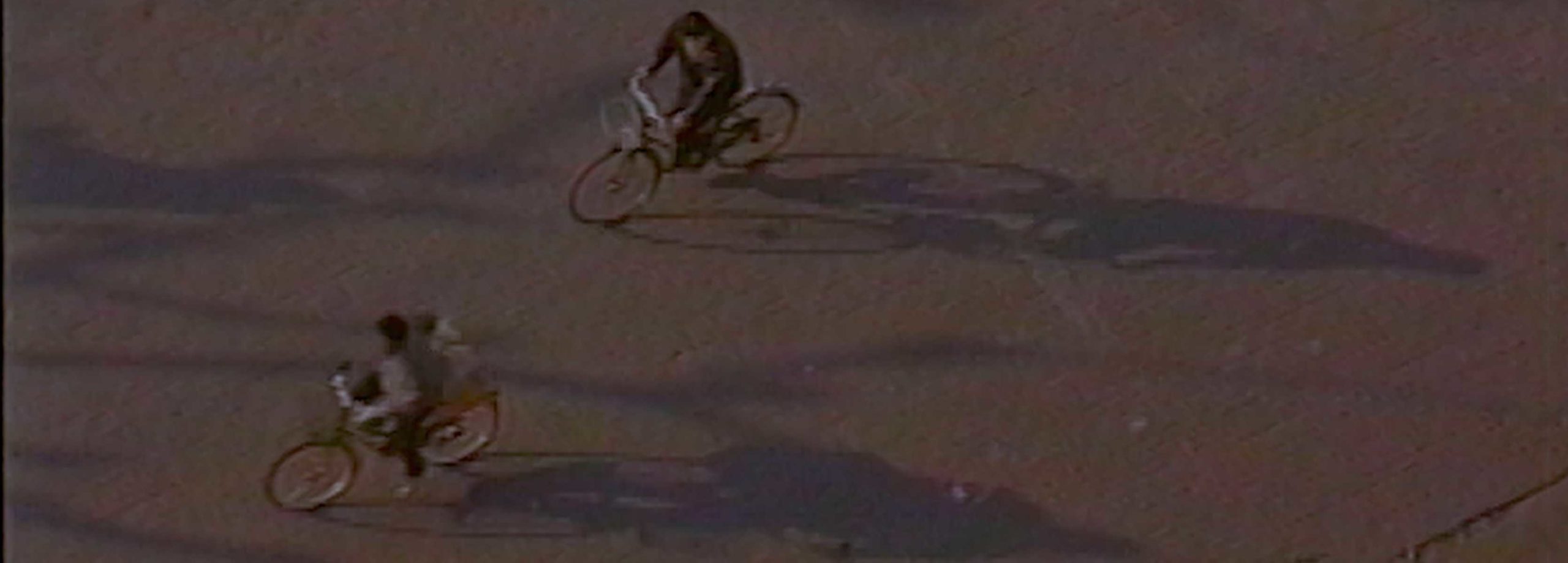
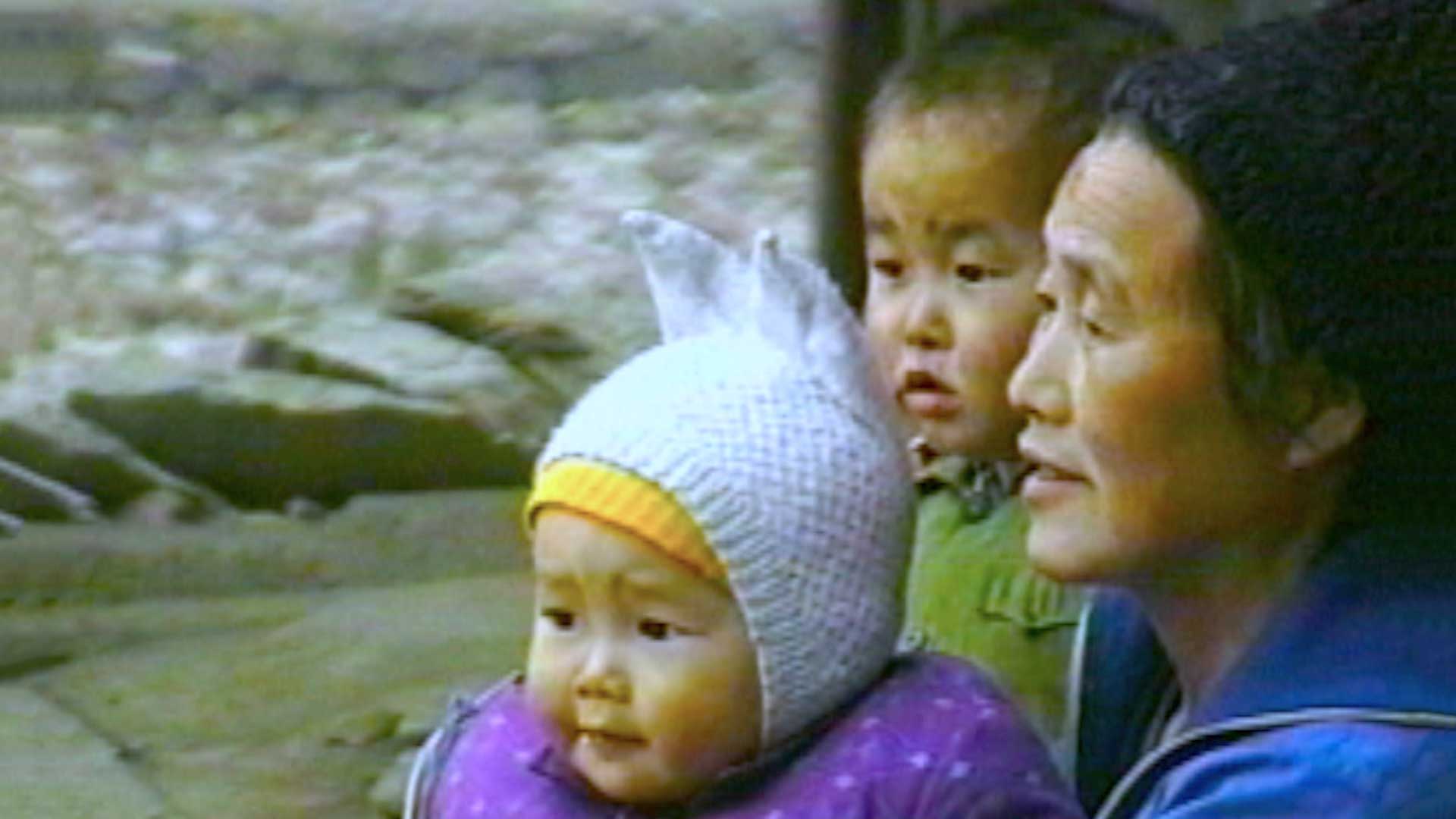
“Whose China? China when? China how? Why? What about China?…Why is China calling me now?” Trinh T. Minh-ha’s soft rhetorical beckon drives her latest 173 minute film, What About China? (Part 1 of 2). Moving images shot during 1993-1994 “in provinces linked to the origins of Chinese civilization”1 — circular walled villages of the Hakka Han peoples; courtyard dwellings of Hui muslims, stonework still standing from the Ming and Qing dynasties — are woven together with still images, collected folk songs, original compositions, and narrated voice-overs, in what Trinh describes as an “index of the disappearing and the disappeared.”2
Initiated by NTU CCA Singapore, and co-commissioned with Rockbund Art Museum in Shanghai, What About China? deftly combines Trinh’s anti-ethnographic aesthetic with the poor image and the archival image. ‘Low res’, “grainy, blurry, and ill-defined, in tune with the dirt of life”3 Hi-8 footage presents the everyday routines of families who live without electricity and running water. Children play, crouched women beat their laundry by the riverbank, and men smoke through long cigarette holders in the courtyard. These vignettes from thirty years ago are contextualized with narration by Trinh, acclaimed writer and director Guo XiaoLu4, a somewhat anonymized ‘Yi Zhong’, and poetry by Shan XiaoYue5, interwoven with a score that resists categorization. Jazzy bass are plucked underneath folk woodblock clangs and zithering melodies. The tangy, spacious tonality of traditional Chinese music intermingling with modular warbles fills in the gap left open by the low res image. A woman’s voice states thematic nouns in English and then stretches their Mandarin translations into echoing, harmonizing notes. ‘Harmony/和谐/Héxié’ is the film’s thematic linchpin, a word repeated throughout as song. As a seemingly unattainable goal at the current stage of China’s ‘social progress’, Trinh states that Chinese painters have realized harmony through their work since the mobile perspective6 achieved in brush painting over a thousand years ago during the Song Dynasty. Such painting would be regarded as an activity of the corrupt bourgeois during the Cultural Revolution, in a time when peasant values and physical labor were championed by the state. Now, those millions upon millions who built up the country are once again being utilized by the government as a part of its “massive urbanization drive.”7
Pointedly, the film asks, what is it about rural life that scares the leadership? In 2018, 41% of Chinese people still lived a rural life, despite China’s “great uprooting” plan which made international headlines in 2013 “to move 250 million rural residents into newly constructed towns and cities over the next dozen years.”8 China’s ‘One China’ policy, which aims to return Hong Kong and Taiwan back to the motherland, also has a domestic component. In the last few years, mainstream media has covered the Hong Kong protests and the cultural genocide of the Uyghurs in Xinjiang. Shan’s emphatic voice recalls, “I saw myself at a table not talking….my father said, ‘What will happen to China?’”9
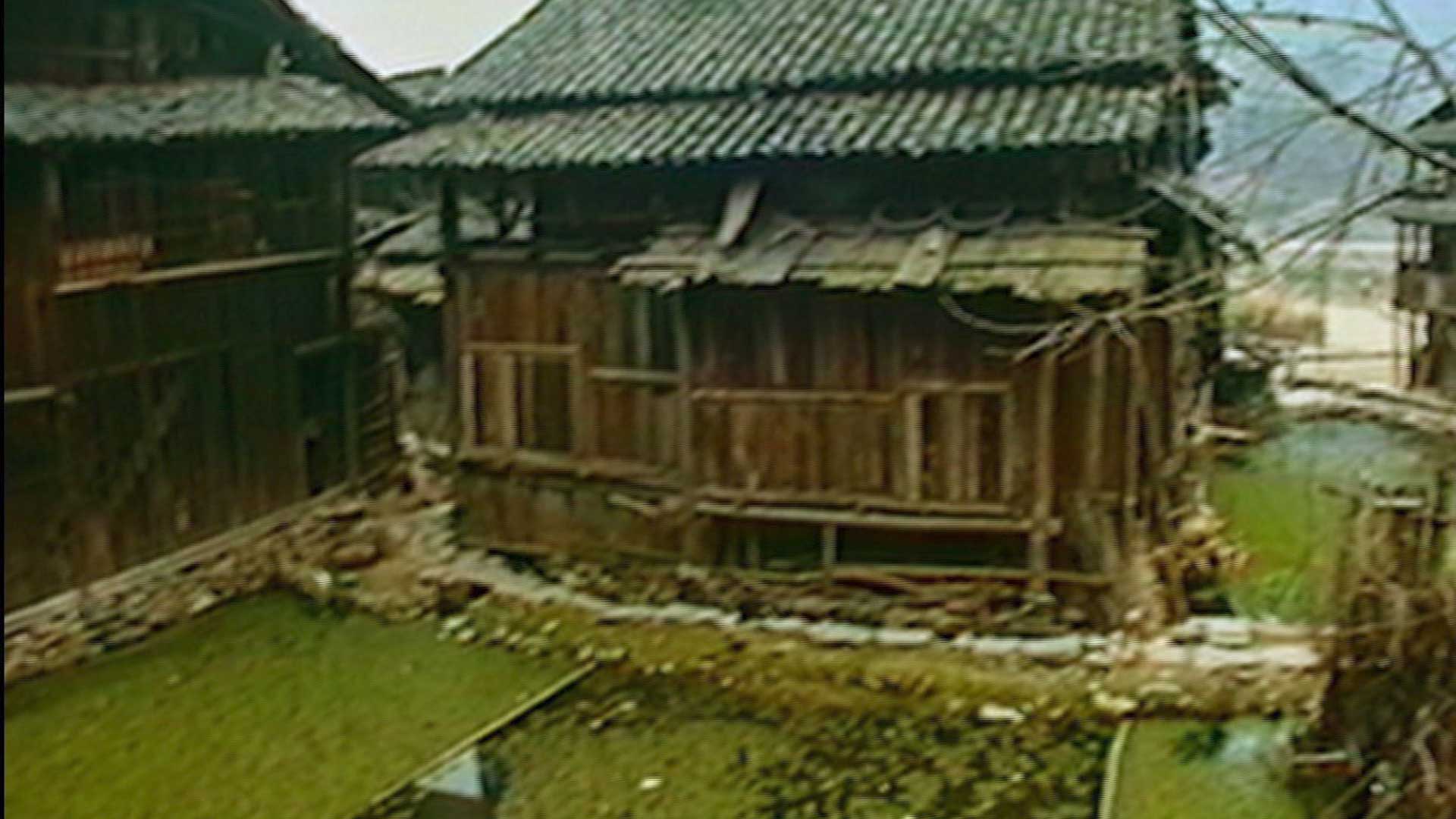
Trinh’s reflexivity can be subtly felt throughout the film, a gentle reminder that history is a construct, one in which she is taking part. Her zoomed-in camera roves slowly through Guo Xi’s paintings, bringing the viewer deliberately close, before zooming out to present the full work, the bigger picture. Guo XiaoLu recalls her father’s memory of spending many weeks physically laboring over wall-sized propaganda paintings. Once the Cultural Revolution was over, he returned to traditional landscape painting, but also painted “French Impressionism, landscapes without peasants or workers [as a way of] rejecting the social realist style.”10 These intimate first-hand experiences provided by Guo, peppered throughout the film, root Trinh’s poetic meditations to historical accounts of a Maoist China. As China began opening to the West in the 70s, the import of European modernism for the first time behind the red curtain gave French Impressionism a new, unexpected signification of rebellion.
At times I was reminded of Michelangelo Antonioni’s three-part documentary series, Chung Kuo, Cina (1972), and the films of Jia Zhangke. As we acclimatize to Trinh’s China from 1993, stepping into the round community compound of the Hakka Han mountain folks, she recalls the year to be “the return of the amateur film in China…the emergence of an underground movement known as the sixth generation.”11 The PRC no doubt invited Antonioni to make a documentary to share with the western world the strides gained from The Cultural Revolution towards communism; the resulting Chung Kuo, Cina was denounced by both the Chinese and Italian governments, and the series was rarely seen for the next two decades after its initial broadcast on Italian TV in 1973.12 What about Antonioni’s observations of the working class resulted in such backlash from the party? As for the films of Jia, his debut Hometown Trilogy (XiaoWu [1997], Platform [2000], Unknown Pleasures [2002]) follows the lives of his rural protagonists as they wade through the fallout of the Cultural Revolution amidst the swiftly urbanizing nation. Despite international acclaim, Jia’s films have often been banned in China; a cheeky character in Unknown Pleasures asks a petty criminal if he can buy any pirated DVDs of Jia’s earlier works. When viewed relationally to the grander scheme of Chinese cinema since Mao, What About China? adds to understanding just what, how, and why China is being disappeared.
My own father, who just so happened to be studying abroad at UBC during Tiananmen Square, which led to the immigration of our family here — here, which the three of us were assimilated into knowing as “Vancouver,” “Burnaby,” “Richmond,” “British Columbia,” what we have been relearning over the last decade as the unceded territories of Coast Salish peoples — has reflected over the course of the pandemic, “This isn’t the China I knew. What happened to China?” Every few days, my parents share footage with me over social media of the oppressive, violent, and at times inhumane lockdown measures taken by government workers in hazmat suits. These faceless health-worker-police euthanize pets, violently restrain the elderly, board up front doors of homes. This is the China happening now, but as Trinh shows us, the China she encountered in the near-distant past only 30 years ago is still deeply rooted to the ancient China that the state preserves, trades, and exports as proof of its longstanding greatness.
Part 1 ends with Trinh’s voice guiding us through a brush painting, reminding us that how one looks factors greatly in what one sees. “So dear to the Chinese ancient heart” she whispers, “a manifestation of the vital breath in the medium void.” I wonder what can be achieved by this emptiness. What hope lies implicit in this awareness of perspective?
Part 2?
Notes:
- “Trinh T. Minh-ha: Films”, e-flux, accessed May 12, 2022, https://www.e-flux.com/announcements/309334/trinh-t-minh-hafilms/.
- Trinh, T. Minh-ha, dir. What About China? 2021.
- Ibid.
- Guo reads from her Nine Continents. A Memoir In and Out of China (New York: Grove Press, 2017).
- Shen reads from her chapbook, How Often I Have Chosen Love (Portland: Frontier Poetry, 2019).
- In What About China?, Trinh explains the Chinese mobile perspective achieved through landscape brush painting in Guoxi’s theory of three distances in depth: “深原/shēnyuán — the panoramic view from above, distancing height; 高原/gāoyuán — the view up from below and distance in flatness; 平原/píngyuán — the view in proximity that spreads freely to infinity.”
- Trinh, 2021.
- Ian Johnson, “China’s Great Uprooting: Moving 250 Million Into Cities” New York Times, June 15, 2013, https://www.nytimes.com/2013/06/16/world/asia/chinas-great-uprooting-moving-250-million-into-cities.html/.
- Trinh, 2021.
- Ibid.
- Ibid. The sixth generation of filmmakers in China include Jia Zhangke, Wang Xiaoshui, Zhang Yuan, and others, in response to state censorship following Tiananmen Square. See: https://en.wikipedia.org/wiki/Cinema_of_China.
- Nick Pinkerton, “Journey to the East”, Artforum, January 5, 2018, https://www.artforum.com/film/nick-pinkerton-on-michelangelo-antonioni-s-chung-kuo-cina-china-73370/