
The Sun is silent, in a sense, existing far beyond our auditory reach, 150 million kilometres from earth in the near emptiness of space. Still, we can summon its sound, conceptually, artistically: hear the fiery star roaring in a chaos of flares, a radio’s dry crackle in a sweltering apartment — or perhaps the last vestige of humanity on a too hot planet.
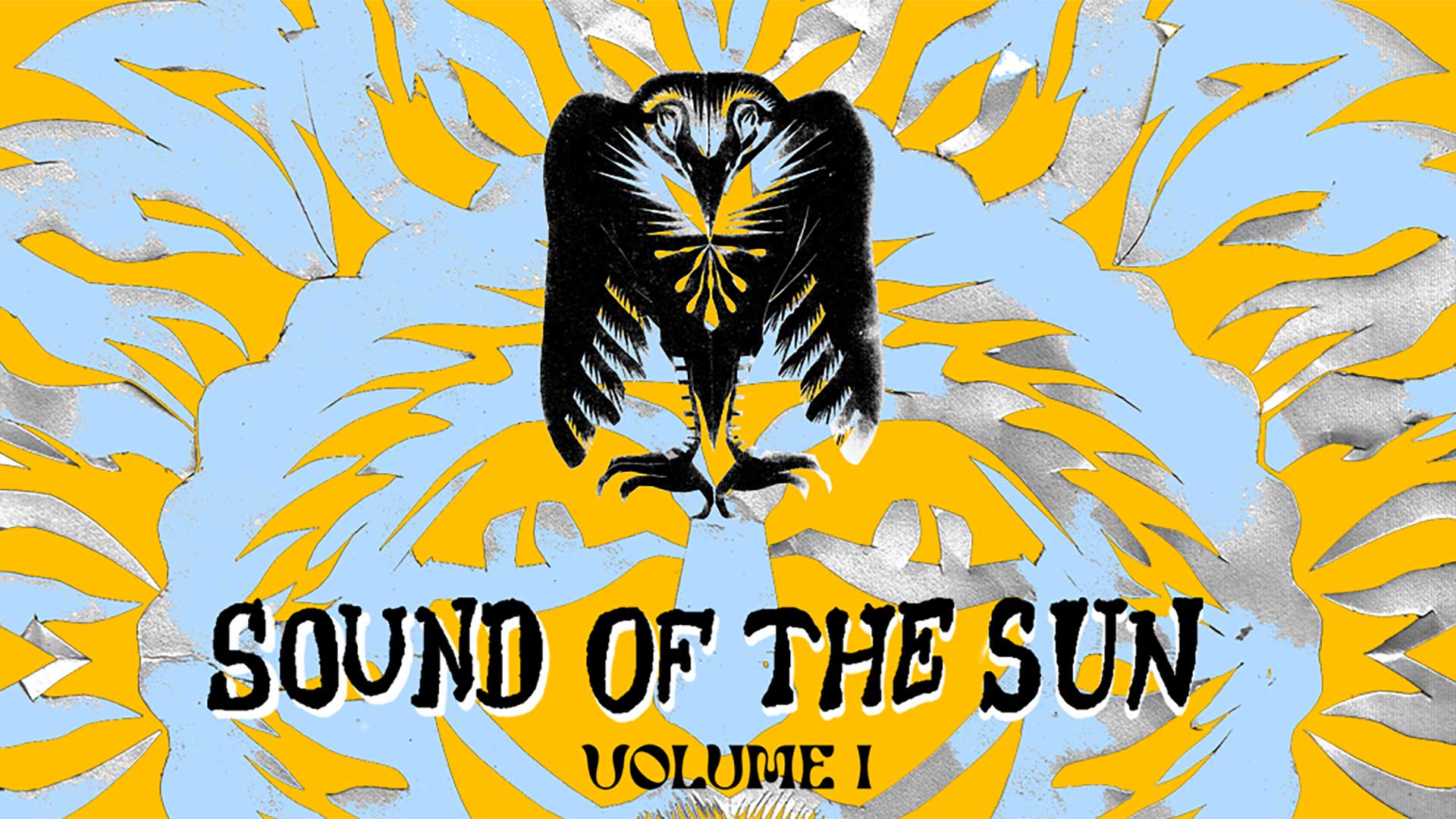
At the height of summer, UNIT/PITT released the mixtape Sound of the Sun Volume 1, a varied sonic interpretation of solar movements and aestival acoustics — in all their potential euphoria and tumult. Produced during the leadup to solstice, as the air warmed and days stretched, the project features ten artists’ tracks curated by UNIT/PITT’s newly appointed director, Catherine de Montreuil, and Marisa Kriangwiwat Holmes, a multidisciplinary artist and musician formerly based in Vancouver. In line with the organisation’s mandate to support emerging artists, the co-curators created a space in which “artists at different stages of their career could intermingle”1 and cross-pollinate. Contributors range from established recording musicians to visual artists working in sound for the first time.
De Montreuil’s background in horticulture and gardening is apparent in this project inspired by changing seasons and the “emotional, psychological, and environmental [effect] of the lavish amounts of sun that are present around solstice.”2 Stepping into the role of director earlier this year, de Montreuil said her vision for UNIT/PITT is to guide programming towards connecting “celestial rhythms [and] intersections between the landscape and cultural production”3 as we learn to navigate the intensifying effects of climate change. These curatorial shifts come as the organisation settles into a new physical location — what used to be Unit 17 in Kitsilano — inheriting a large garden.
Kriangwiwat Holmes was invited to collaborate on account of her artistic sensibility, vibrant energy, and knowledge of the type of support that would be the most meaningful to the artists as an artist and musician herself who has played in the local scene for years. The result of this curatorial collaboration — invested in the relationships between the environment and cultural production — is an eclectic assortment of audio works swinging frenetically from poppy summer ballads to chilling acoustic odysseys. While only one of the artists explicitly acknowledges extinction as a theme in their track, I found the strongest pieces were those which audibly address the waxing and waning of an existential planetary anxiety or the obscure relationship between humanity and the superterrestrial. I was frequently aware of the sounds of human detritus in the works — disquieting static, buzzing, and droning — confronting more sensuous acoustics.
*
I first listen to the compilation at the beach — late in the afternoon, early in the evening — weeks before the smoky skies arrive from inland. The tape’s opening track, “A radiant resonance” by Pari rises swiftly in an extolment of birds, oms, and Bīja mantras to set a devout foundational tone, which then moves swiftly through Atama Itai’s poppy composition, “Osaka Sun” and B.Michael’s conceptual “21/21.” Ogheneofegor Obuwoma’s track, “In conversation with time,” takes the form of a conversational narrative on the impermanence of life. “I am stacking my body like a prayer,” says one of the narrators amidst a background of flutes and animal noises. I pause to appreciate the sensation summoned by this phrase, in this moment: body stacked on hot stone, underneath wisps of cloud against flat blue sky.
The following track, Jane Harms’ “Weekend of the Year,” comes in direct opposition to the narrative immediacy of Obuwoma’s work, and the overall peppiness of the collection thus far. Harms describes the work as a documentation of “Angel Time”4 influenced by mediaeval occult texts. At first, I found myself mesmerised by its hypnotic persistence, and then caught in an understated hellscape between the track’s sharp edges and the increasingly oppressive late-July heat. But despite the clanging metal and evocation of sharp solar flames, the work resonates as sensual.
In a headspace juggling extinction with desire, Lisa Pawliuk’s cover of the 1983 pop hit “Cruel Summer” conjures the sweaty pleasure of the inescapable city heat — vision wavering, blue popsicle dripping on softened grey asphalt. “Circuits that wake up with the sun” by Absolute Value of Noise (Peter Courtemanche) returns the listener to a planetary composition which alludes to human presence through transmissions: a radio without clear signal, the static of a picture-less television. Fourteen-minutes long, the piece provides ample time to receive and reflect on artist Peter Courtemanche’s mysterious dispatches from another realm. I imagine a post-apocalyptic planet, humanity’s acoustic detritus polluting the atmosphere still. Through glitching noise, a deeper, rounder set of acoustics emerge, which, if not human exactly, return the listener to an inhabitable territory, nearing melodic. Courtemanche collected these “sounds when the transmission [was] most fragile”5 near dusk and dawn, with broken clouds above, the condition for the most transfixing twilight skies.
Continuing to zoom out of terrestrial experience, Stefana Fratila’s “I Want To Leave This Earth Behind,” takes the approach of a sci-fi radio-drama. Spitting the listener from the glimmering rainforests on Earth to the pearlescent orbit of Jupiter and its many moons at near light-speed, Fratila collapses the entire solar system into a frantic 9-minute journey which releases us into Manuel Munoz’s piece, “Distorty’s Like a Melody in My Head.” Buzzing with indiscernible chatter and a cacophony of songs and banter, this work feels like every moment of the summer — or human existence — layered and folded in on itself.
Finally, the listener arrives at Jami Reimer’s “Lost in the antiphon.” Excerpted from a longer project investigating “amphibian choruses, bioacoustics, and ‘speculative choral music,’”6 the work addresses amphibian endangerment by combining recordings of living and recently extinct frogs. Ambient sounds fade and shift, transforming into more distinctly musical configurations, at times verging on orchestral. Reimer leads us from brittle grass at the edge of a marsh — drum machine scuttling — through a forest, to the symphony. Further into the composition an ethereal, syrupy voice emerges, circling the audio-scape like an auditory apparition. The listener eventually finds oneself subterranean, or rather nocturnal, and certainly, as the title of the piece suggests, lost. Reimer’s work depicts an absence of the sun rather than its sound, foreshadowing the long nights to come as our planet tilts southward — or perhaps something more menacing.
A gust of wind passes and I open my eyes as the last chirps and clucks of the track fade and the waves in front of me take over again. My eyes adjust to the light glittering across the sea, as the sun draws nearer the horizon. I remove my headphones and pack up my things.
*
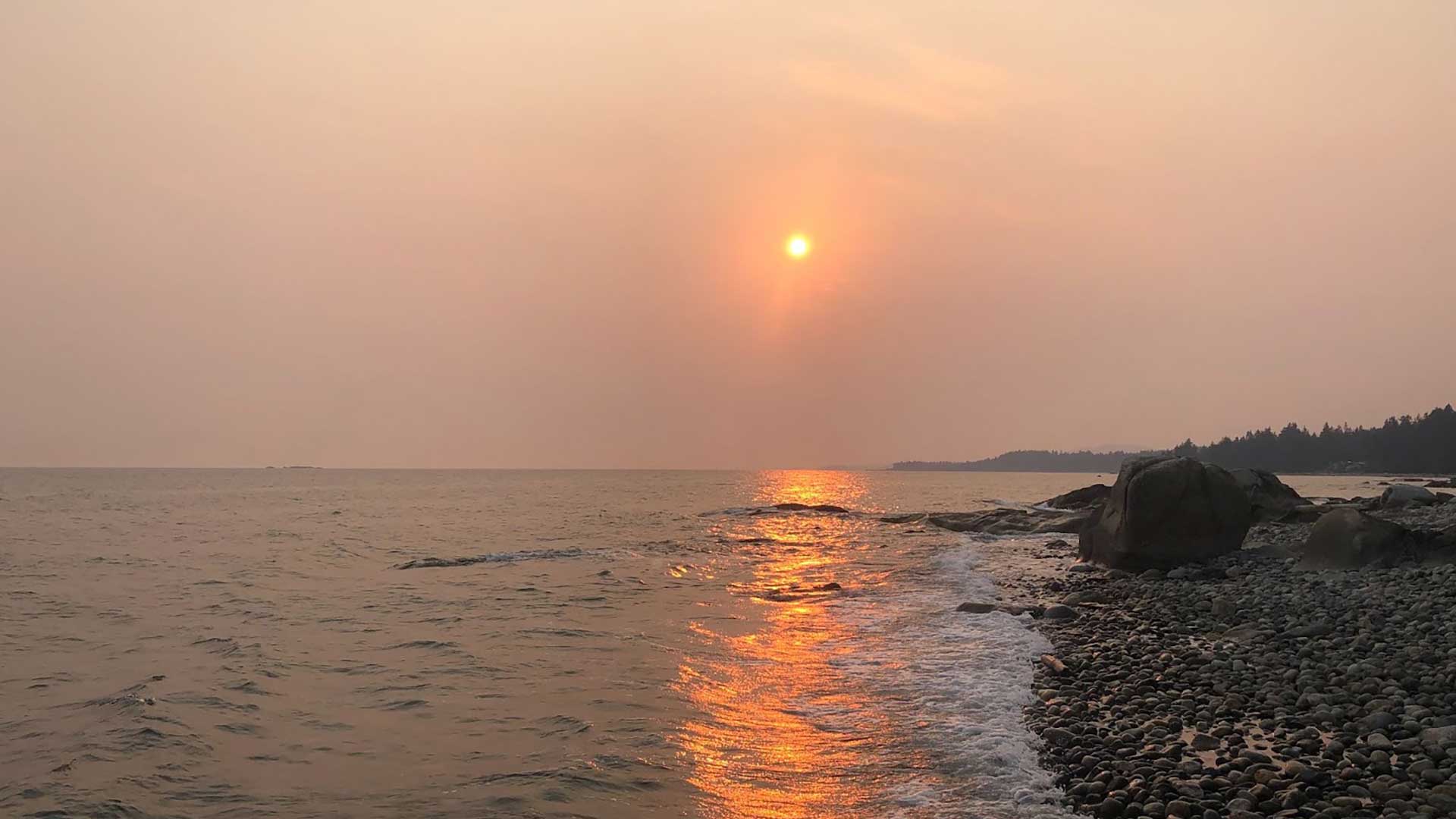
Weeks later, well past the solstice, nearing the equinox, I sit at the beach again. The forest fires are burning now and the days are shortening conspicuously.
Eating a handful of nearly spoiled blackberries, I listen to the Sound of the Sun once more and recall my previous listen when the water was warmer and the air was fresh: a summer poised precariously at the edge of normal.
As I watch that looming neon pink star descend, I can’t help but perceive some of Sounds of the Sun’s tracks as scores for the end of the world. These days, we have warnings — on the coast they manifest as eerie twilight skies and long droughts — but what might the near future hold? An ocean too acidic to swim in, irreversible soil erosion, and smoky skies that linger for months, or longer. Aligning cultural production with nature and its cycles is a soft gesture in face of such changes — but still, a step.
The last sliver of the sun vanishes, and my attention returns to planetary rhythms, human intervention, and the meeting point of these two realms in a mixtape.
More information about the Sound of the Sun Volume 1 can be found here. Listen to the mixtape here.
Notes: