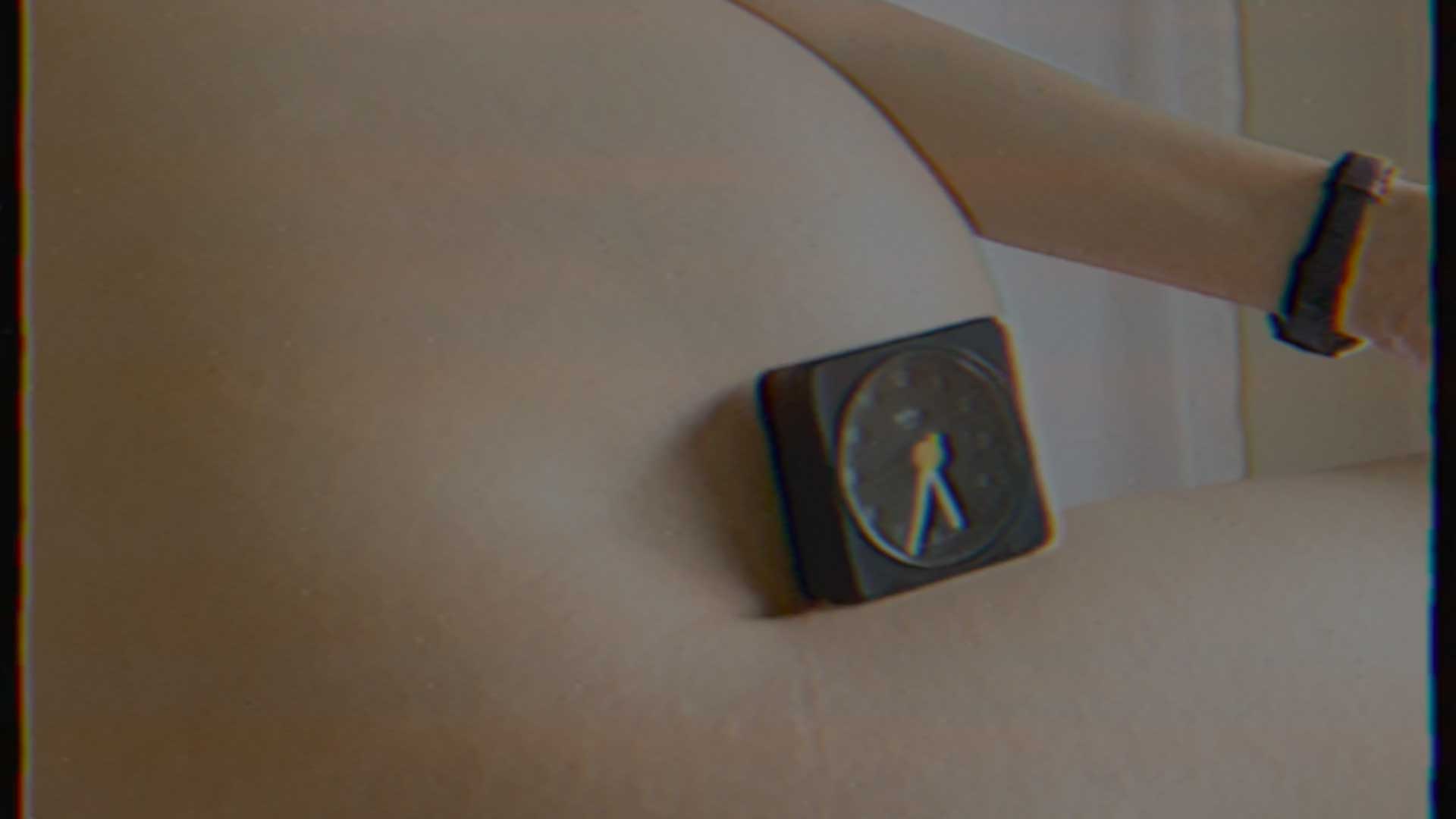
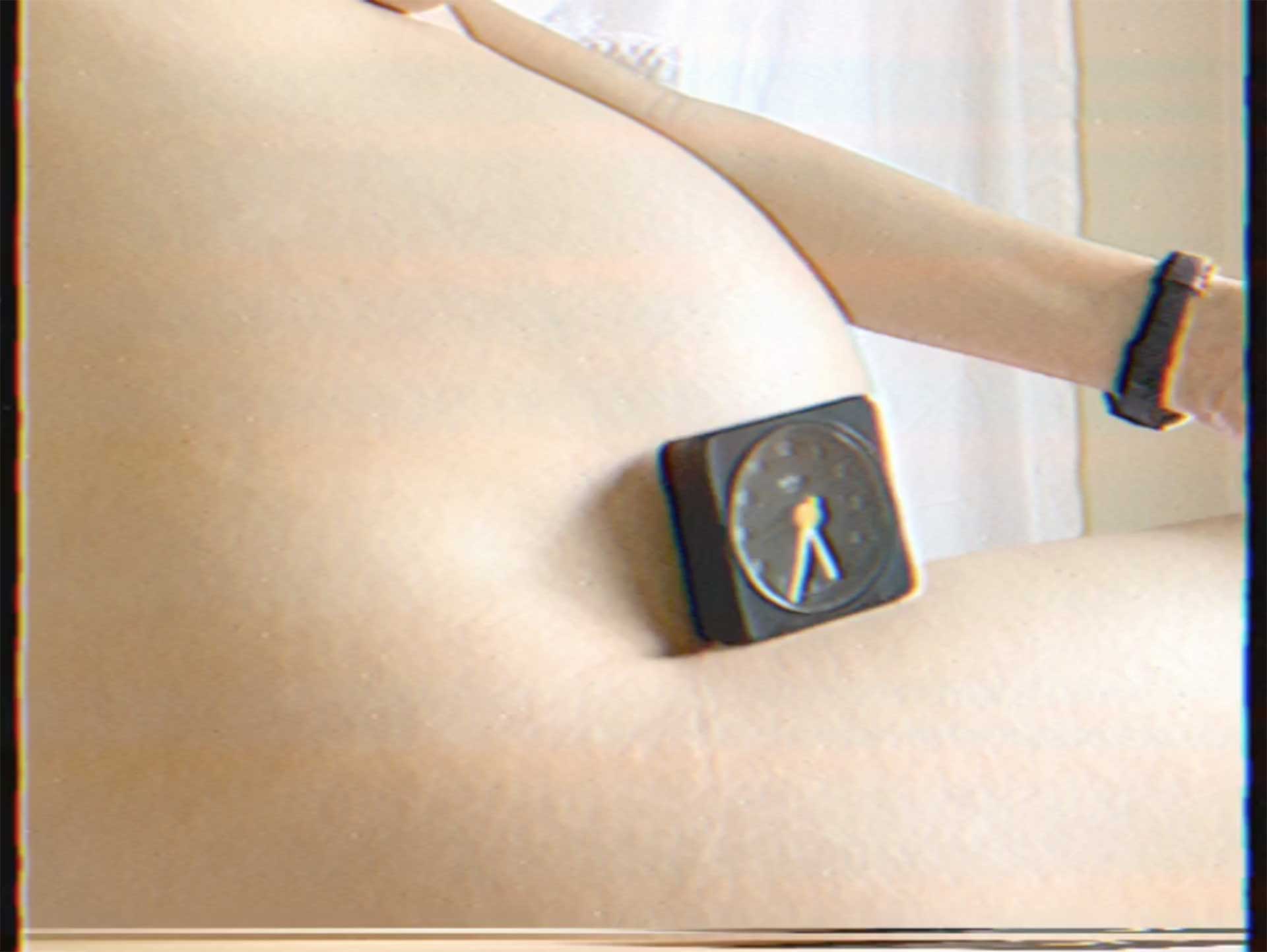
10:00 It felt like time would stop, like new seasons would not come.
11:45 I have words on the tip of my tongue.
13:30 I watch Akerman’s Chantal Akerman by Chantal Akerman:
I’m up against a black hole. It’s worse than the period in between two films,
when I don’t know yet what the next one will be. I look back at my previous films and think, ‘It was a stranger who was able to make those. I’ll never be able to do it again, to make any more. I don’t want to. Leave me alone.’ And everyone leaves me alone, except myself. People ask about the next film, but only out of curiosity. And me, I have my habits, they’re difficult to break. So I am doomed to keep making work, again, and again, and always.1
18:35 I am six months pregnant. I am not sure what working means to me.
18:36 My partner and I split up.
20:12 I am not sure if not working makes me happy, or unhappy. I look up the meaning of the saying, ‘the devil finds work for idle hands.’ Someone on Reddit writes, “It means that if you’re not doing something useful, you’ll end up doing something annoying, destructive or just plain stupid, out of boredom.”
21:03 My work has made me good at waiting.
Now I am waiting for the baby to come.
Now I am waiting to see if the words will come.
Now I am waiting to see if I will be able to make work again.
23:14 What it comes down to, I think, is putting words to paper. But the pain has been too great and too sprawling. Not enough time has passed to make it into something.
02:00 I ruminate. I go in circles.
03:12 I borrow the words of others, because I cannot yet put words to my pain.
The words of Sarah Kane in 4:48 Psychosis:
I would rather have lost my legs pulled out my teeth
gouged out my eyes
than lost my love.2
04:18 And elsewhere, in the same play:
I don’t know who I am
tongue out
thought stalled
the piecemeal crumple of my mind
Where do I start? Where do I stop? How do I start?
(As I mean to go on)3
05:07 I think of Euripides’ Medea:
Do not grieve so much for a husband lost that it wastes away your life.4
11:33 To avoid working through my pain, I do housework.
I do the laundry.
I do the dishes.
I fluff and shake the pillows.
I clean the tub.
13:59 I wipe the dust. It comes back a few days later. I wipe it again.
14:32 I pick any hair I see on the floor and I throw it out the window.
14:49 I use a lint roller on my bed sheets to remove any dust or dirt or sand or hair.
15:17 I wipe the table and the counters.
16:44 An older woman on YouTube who vlogs her daily activities says, “Cleaning is like going to the gym. It makes you feel calm.”
She also says,
“You need time to look inside of you.”5
18:35 I cook.
20:00 I vacuum.
21:45 I do laundry again.
23:00 I do all this until there is no time left for anything else — no time for leisure (which makes me feel guilty) and no time for work (which remains ambiguous).
11:00 I keep myself in a cycle of household tasks.
11:15 One day, I film myself doing these tasks.
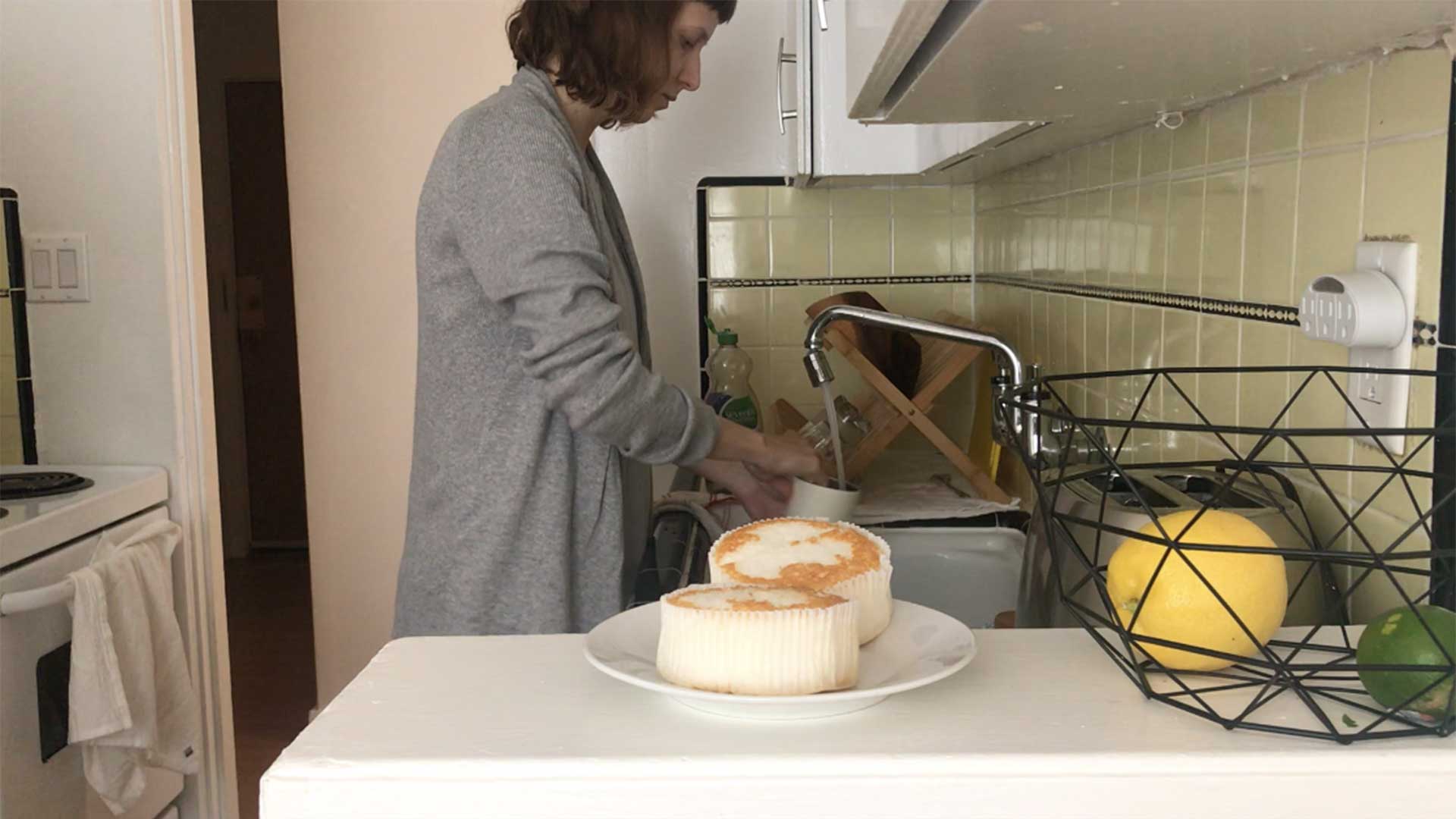
13:02 Filming my routine feels important, as if I am transcending my situation in some way. I feel proud for a day. I tell myself that I am back to work.
09:30 The next day, however, I put off editing the footage. I put it off the day after that, and the day after that, and the day after that. Days and weeks go by and the work of putting the film together hangs over me like a heavy, dirty, shameful blanket.
16:13 I watch Chantal Akerman’s film Sloth. She made a film about being lazy, but in the end, she made it.
18:27 Akerman says that in order to make cinema, one has to get up.
23:00 I blame my laziness on my pain but deep inside I fear that it isn’t the pain that is blocking me. I fear that I am lazy just because. I wish I could cut my laziness out of myself like a tumor.
10:33 I throw myself into more household tasks.
12:00 Weeks go by. The household tasks give me the illusion of doing something.
I suffer. The video editing hangs over me each day.
I put it off, I put it off, I put it off.
14:07 My home is spotless.
My video is unfinished.
My pain is unprocessed.
17:55 My experience is undocumented, until I decide to take a break and go to the park and spontaneously write this all down.
19:02 Satisfied, I go home and watch a short film called Clotheslines by Roberta Cantow. It is a film about women and laundry.
19:20 The film is good so I stop watching it and invite my mother to come over and watch it with me.
One of the women in the film says:
“Women who don’t consider themselves artistic put a great deal of themselves into their household tasks.”6
21:10 My mother loves the film. She often laments her inability to stop cleaning. Now that she lives alone, she would like to stop cleaning and do more pleasurable things, like painting.
But she cannot begin until she has finished all of the tasks of the house.
And therefore she hasn’t begun in the last ten years.
She does, however, write poems. She writes them in the hours which are off the clock: three, four am, five. In these hours the house lies in the dark. In these hours, domestic tasks are obscured by the night.
22:10 We talk about laundry. Since I am about to become a mother, I will therefore have to do a lot more of it.
22:20 I remember the linen closets of my grandmother: everything stacked in neat grids. And then I remember Hanne Darboven’s work: rows and rows of rectangular frames, also stacked in a satisfying grids.
In 1968, she wrote:
Action interrupts contemplation, as the means of accepting something among many given alternatives, for accepting nothing becomes chaos. A system became necessary: how else could I in a concentrated way find something of interest which lends itself to continuation?7
08:45 I too want to stack everything neatly: my poems, my towels, my projects, my thoughts.
My own linen closet is psychotic.
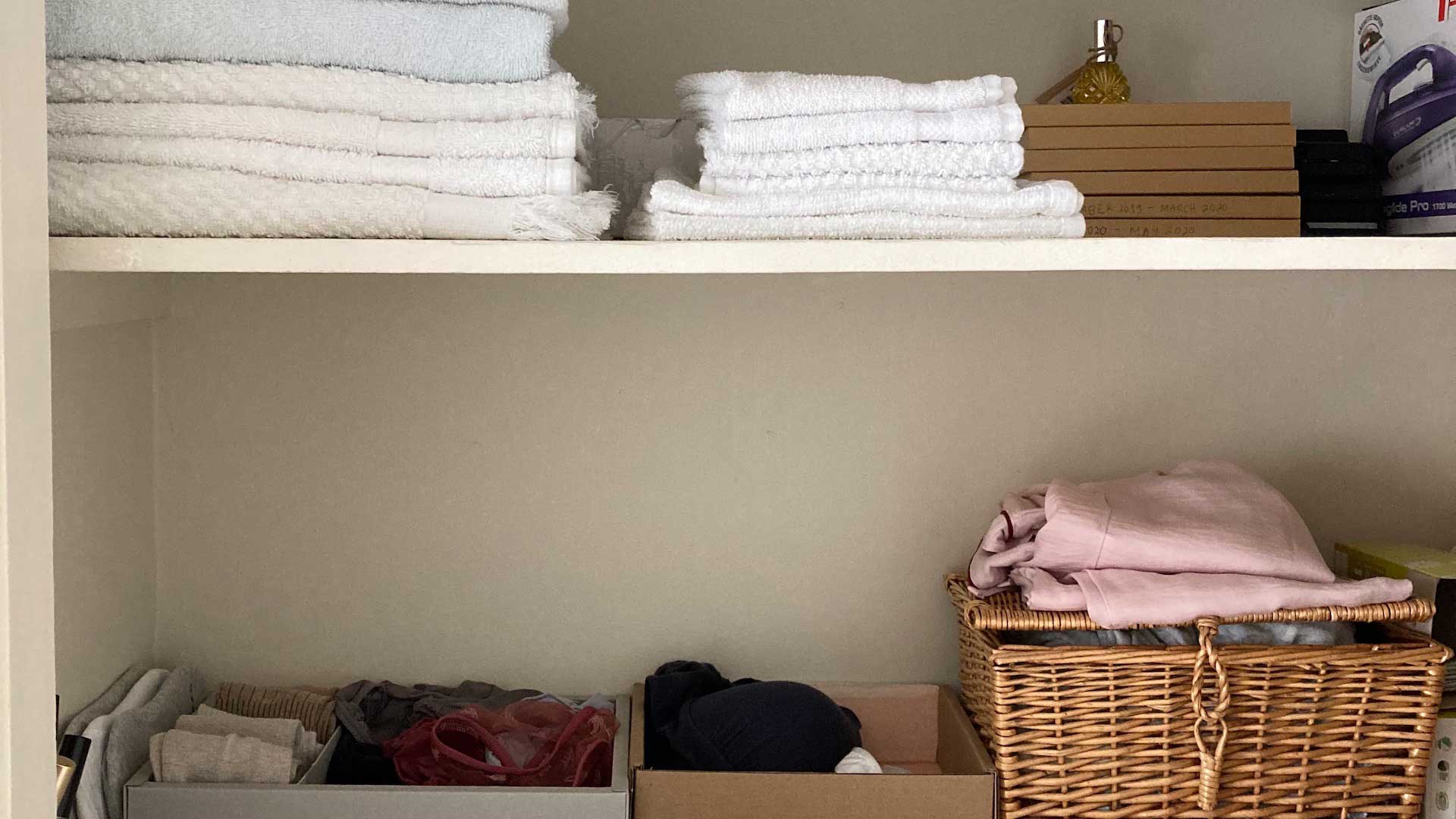
09:45 I get caught up in the folding; I fold each thing just so, even when I promise myself to stop, even when I want to walk away, even when I want to do other things.
14:30 Here is Kane, again:
“Please . . .
Money . . .
Wife . . .
Every act is a symbol
the weight of which crushes me”8
21:00 There is a sub-genre on YouTube of housewives who film themselves cleaning their houses, cooking for their families, tending to their gardens.
Before bed, I watch them cleaning their homes.
Sometimes, the housewives add little messages in the form of subtitles to their videos.
Tonight’s message:
There is a limit to completely removing the dirt.
I repeat this to myself, and I fall asleep.
Notes:
- Director Chantal Akerman, Chantal Akerman par Chantal Akerman (1996; Paris: Cinéma, de notre temps, 1997), Documentary.
- Sarah Kane, 4:48 Psychosis (London: Bloomsbury Methuen Drama, 2000), 28.
- Ibid, 23.
- Euripides, and Diane J. Rayor, Euripides’ Medea: A New Translation (Cambridge: Cambridge University Press, 2013), 33.
- A message of consolation to you in the face of frustration,” video file, 9:14, YouTube, posted by Milanonna, March 13, 2020, https://www.youtube.com/watch?v=iLn5m8i4kKw.
- Director Roberta Cantow, Clotheslines (1981; New York: Buffalo Rose Production, 1981), DVD.
- Hanne Darboven, “Artists on Their Art,” Art International 4 vol. XII, 20 April 1968, p. 55.
- Sarah Kane, 4:48 Psychosis (London: Bloomsbury Methuen Drama, 2000), 24.