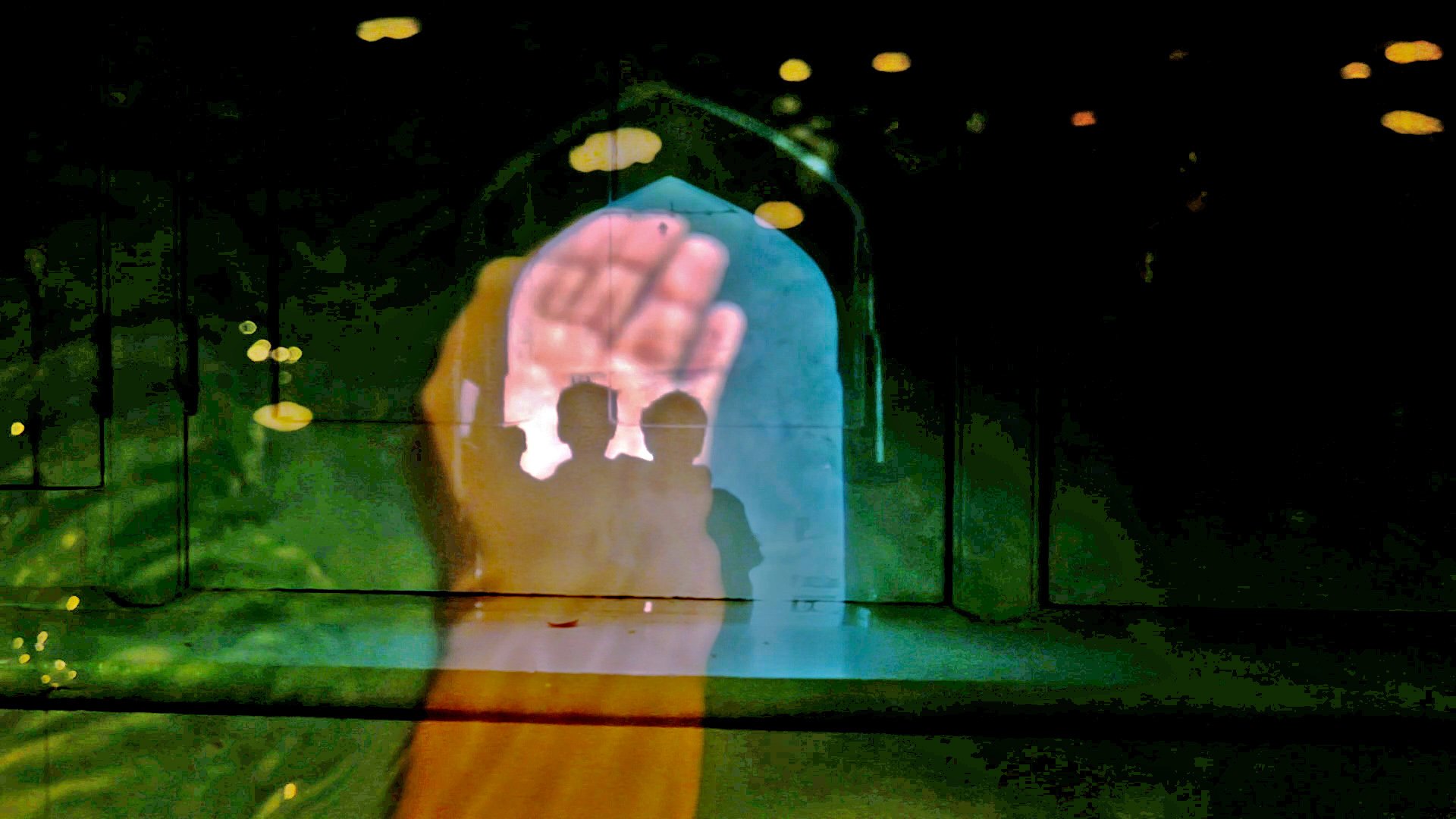
I got my first dose of Antimatter just a few long years ago in 2019 when I attended an evening screening of Barry Doupé’s Distracted Blueberry (2019). At the entrance of Deluge Contemporary Art, I passed the nighttime glow of Carousel by Annie Briard looping in the transom window before I took a seat under the dimmed gallery lights. Although I wasn’t able to sit through the whole four-and-a-half hour long fever dream of gay sex and death that is Distracted Blueberry, the ethos of Antimatter as a channel for stunning and provocative media work lodged itself firmly in my brain.
Antimatter [media art] is an annual media arts festival born in 1998 and operating out of Deluge Contemporary Art on Lekwungen territories in Victoria, BC. I got to sit down with Todd Eacrett, Antimatter’s Festival Director, who has been with the festival from the beginning, to chat about the festival’s 25th anniversary, programming the behind-the-scenes Automat series, and what it’s like to adapt in a rapidly transforming media arts landscape. Todd is joined in his work by Curator and fellow founder Deborah de Boer, and Live Event Coordinator Paul Pedrosa.
Paolino Caputo (PC): I have a question about the Automat.1 We’re entering into its third year offering a “self-serve” option for presentations, where the audience can watch short videos by the filmmakers about their work through the Antimatter website, and I’m interested in these corners of your program that fall outside of the conventional screening format. What’s it been like coordinating the Automat behind the scenes and through the pandemic? Is there a future for it as we shift out of pandemic-response mode?
Todd Eacrett (TE): Previously, during the festival, we would have a number of filmmakers here and they would introduce their work, have a little Q&A afterwards, or an informal gathering after the screening down the street at a bar. It’s a social thing! Since the pandemic, we’ve missed that and found from talking to some of the artists, they missed that a lot.
So we had this idea to repurpose some funding that was specific to live events and it worked out really well. Some things have adapted very well to online and of course media art is one of them. It’s almost meant to be that way, you know? Instead of having your talk about your work, why don’t you make work about your work? You have the background anyways, and the equipment. It’s been really gratifying to see people really engage with the idea and just do whatever the hell they wanted—which is what we told them to do! Some people make a whole new film out of outtakes, there are people working with found footage or other bits, and in a couple cases there have been things people made for Automat that then showed at other festivals as standalone works.
It’s a funny thing, but we hope to continue it, because it’s a way for people to engage: see a few people’s work and then take a look at their Automat videos and get a good idea of where they’re coming from and their process—the conceptual ideas.
“When we started Antimatter in the mid-to-late 90s, we were seeing visual art and media art come together in a new way. Here’s someone working in actual film as opposed to video, and we’re seeing more people from that world showing in galleries or museums. Work from the 60s, 70s, and onward was getting rediscovered and acknowledged in the larger art world.” —TE
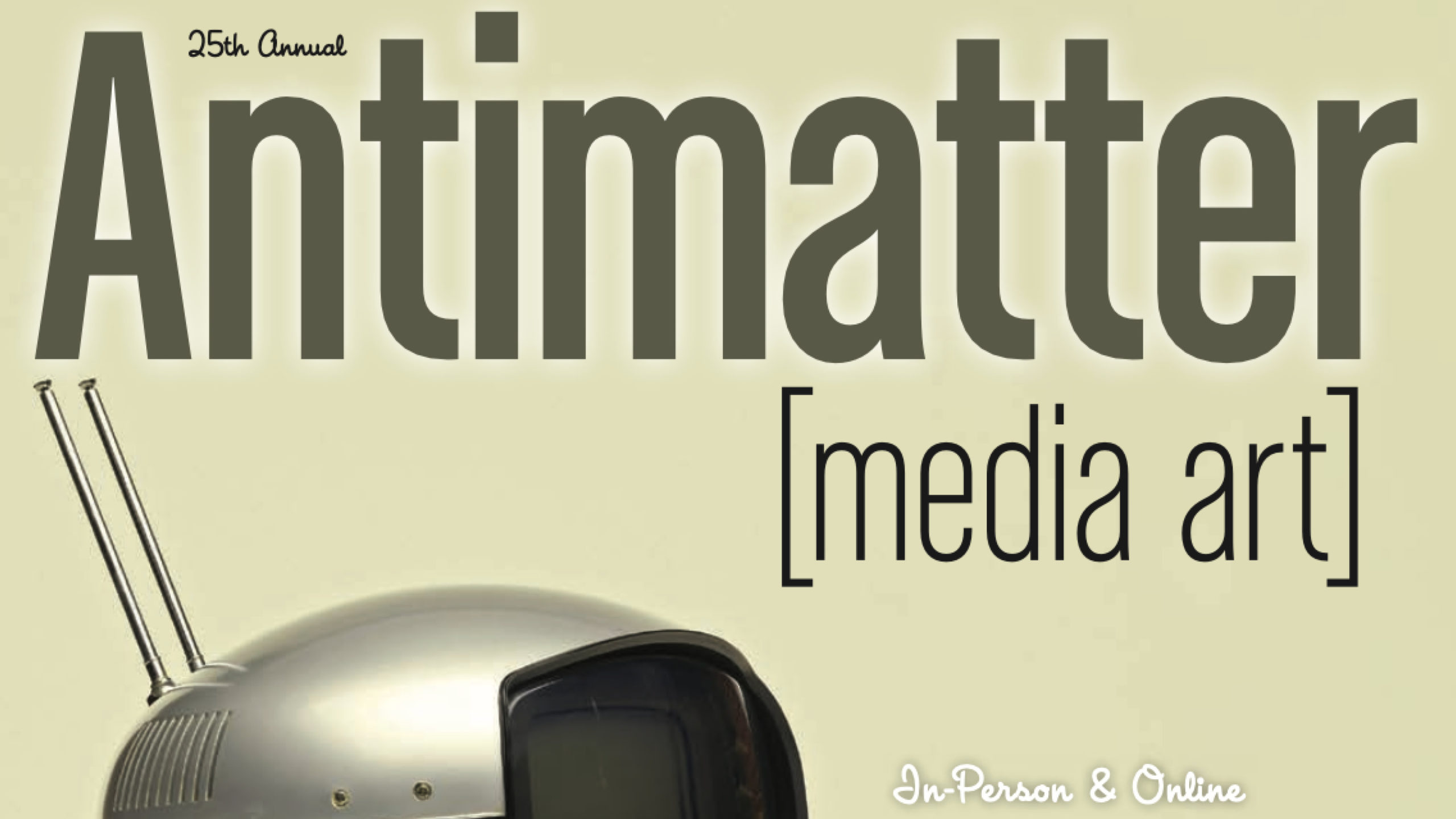
PC: Happy 25th, Antimatter!
TE: [Laughing] It’s so Anti-climactic! With Deluge, which turned 30 years old a year or so ago, we didn’t really do anything. We didn’t do a show, we didn’t have a big event. It was sort of a time to take stock and look back at some shows—we’ve been doing some social media posts over the last year or so—and also work backwards to rebuild our archives. It was much more of a reflective/reflexive process than a celebration. It’s the same thing with the festival. Things have changed over the years, but we don’t want to get too nostalgic.
When we started Antimatter in the mid-to-late 90s, we were seeing visual art and media art come together in a new way. Here’s someone working in actual film as opposed to video, and we’re seeing more people from that world showing in galleries or museums. Work from the 60s, 70s, and onward was getting rediscovered and acknowledged in the larger art world. At the same time, a number of artists who had reached some kind of stature in the art world were turning to media. Some were obviously working in film for a while, which of course includes artists all over the place, but including some in the Vancouver school.
This crossover was what we wanted to focus on with Antimatter. It started out more in the underground film tradition, which was a very DIY punk aesthetic—there’s a real “sex, drugs, and rock & roll” kinda thing with that scene. A lot of it was fun, a certain amount of it was pretty transgressive, but it was able to encompass a lot of communities. It was problematic, but I think we’ve become a lot more serious. The work that we’re showing now is a lot more serious, it’s a lot more art-based, it’s a lot more conceptual.
We’re always humbled by the work and by people’s trust in sharing it with us. It’s not like, “Okay it’s been 25 years, oh we’re so established and everything!” Every time, every year we do this, it’s exciting. We’re seeing stuff that’s like “Wow!” We’re still having that experience, and feeling so grateful to these people for trusting us, or giving us the honour to select that work and put it together into what some people might think are some odd juxtapositions.
That aspect [of programming] is something we’ve gotten relatively successful with in most cases. It’s one of the things we do hear feedback about, whether it’s from the audience or artists in the program — “Thank you for putting my work in such a beautiful program,” or in a program where you get it; it makes sense with these other films or this other work. Obviously we’re doing it for audiences but we’re mostly doing it for the artists.
PC: You wanna support the arts ecosystem itself.
TE: Oh completely! And you know, that ecosystem is fairly small. It’s a biodome or something like that. Within Canada it’s even smaller. Whether it’s production, or distribution, or presentation, there’s funding in place for that, so we have a real structure.
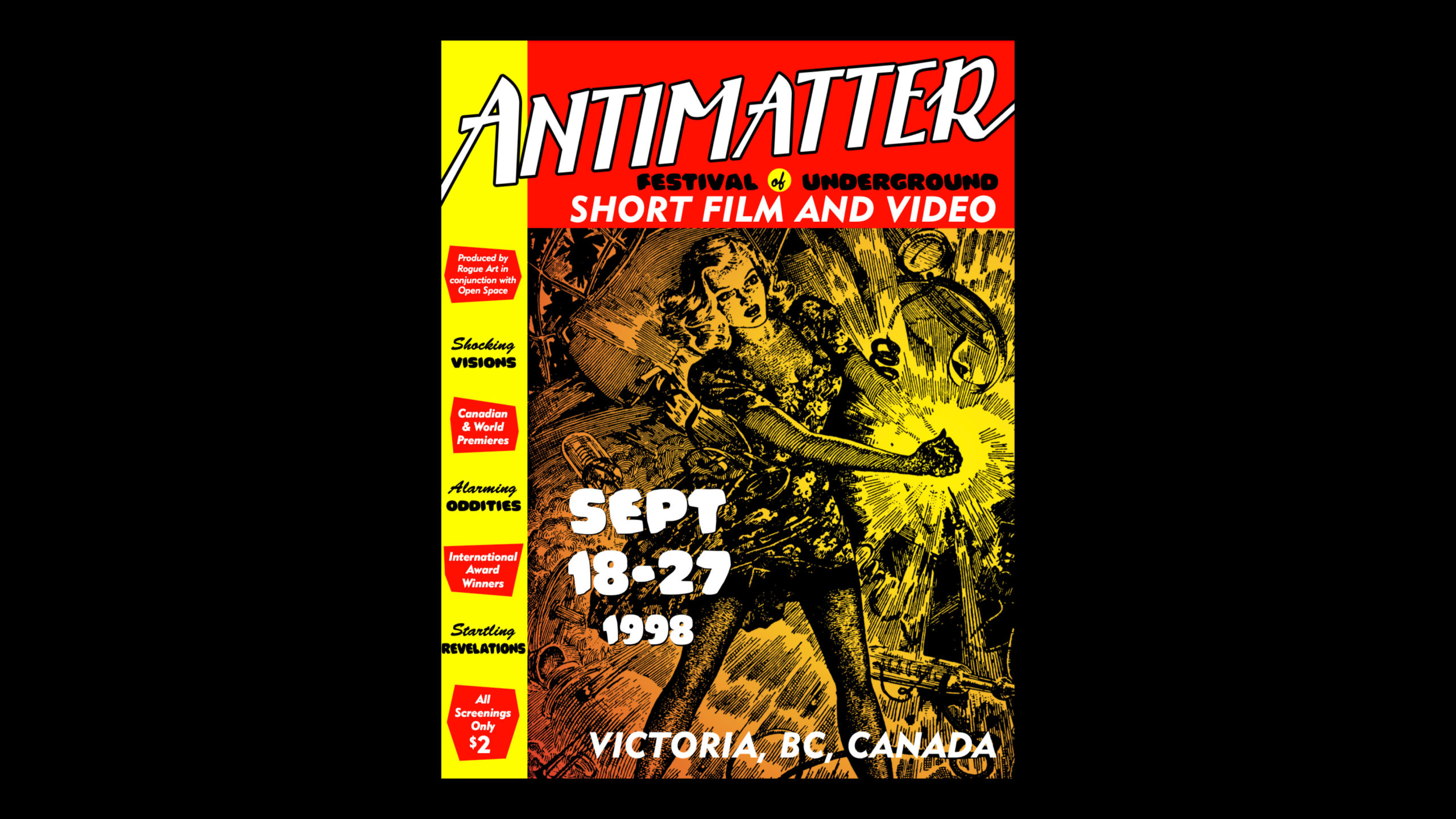
PC: So I ended up looking back at the inaugural ’98 program…
TE: Wow! You expect me to remember that?
PC: There’s a lot of really interesting stuff in there! I got really excited thinking about how much Antimatter has evolved over the years. I was wondering, from your perspective, what are some of the ways it’s evolved in your 25 years of running the show?
TE: Well, we’ve all gotten older! As I was suggesting earlier, we have grown up. I think the curatorial focus has become a little more serious and refined, but at the same time, there’s work that’s pretty critical in the sense that we’re dealing with a lot of artist filmmakers from different parts of the world, different communities, addressing some of the important issues of the day.
From early on, we’ve always tried to bring in these other parts of the world that we didn’t necessarily get to hear as much here in “lovely colonial Victoria.” Around the year 2000, we started some outreach to specific cooperatives or collectives from other countries—sometimes just an individual or two who were programmers—to build programs of work from that culture that may not ever have been seen in this context. We’re still talking about experimental work in media art as opposed to just documentaries or narrative work. We had programs from what we’d call the Global South, some Asian countries, places where it was always hard to find or connect up with people. You’d go “I know somebody’s making interesting work there!”
That was I think a pretty successful initiative, though it kind of petered out when it became much more difficult to focus on specific regions or communities because of digital culture opening those areas up anyways.
“It’s gotten to the point now where we’re seeing a resurgence of people making film and finishing on film; actually making a print and sending it around to festivals. Even with that there’s so much work in the festival that was made on film but shown on digital, but it has a look. It has a grit, it has a grain.” —TE
PC: That brings me to my last question. I’m curious about how changing media landscapes and also artists’ interests in both new and old technologies have pushed the way you change and present work. How do you see that shifting in the future?
TE: The first year we did this, pretty much everything was on film, like 16mm. We’ve existed through the decline of analog and the rise of digital media, and of course in the middle of that there was analog video for years.
God, when I think about how much money we spent as early adopters because we had to… at the time it was ridiculously expensive to rent a video projector so you bit the bullet, you scraped together the money, and you spent probably five grand on the first one. By today’s standards you could buy a monster theatre projector with ten thousand lumens and 4k definition.
It’s easy to get bogged down in it, like artists do, because it’s like “Oh we’ve got to have the newest, the bestest, the fastest, the shiniest,” and that’s something we need to keep up with and it’s been difficult. This shit’s expensive and we’ve been lucky because we grant funds specifically for purchasing new equipment.
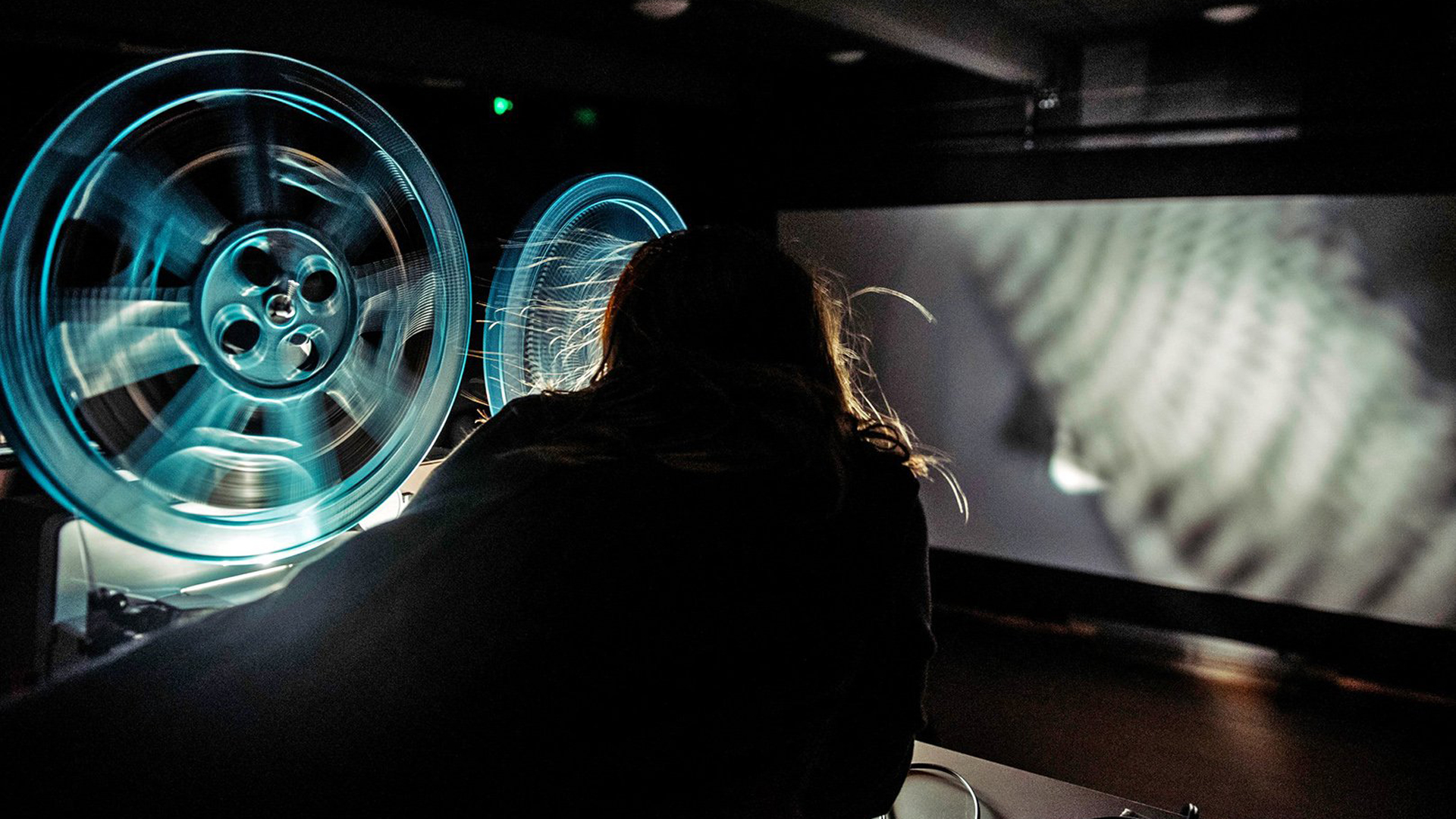
Like I said, we started showing everything on film and then of course, a few years ago, almost everything was on digital. We are one of the few festivals — especially smaller festivals — in cinema. They all switched to digital. We’ll show 16mm and Super 8, and we’ll do it as long as we can.
It’s gotten to the point now where we’re seeing a resurgence of people making film and finishing on film; actually making a print and sending it around to festivals. Even with that there’s so much work in the festival that was made on film but shown on digital, but it has a look. It has a grit, it has a grain. It doesn’t have the high polish of that 6k Red camera that everyone gets so excited about, but people with ideas can go and make a better film using Super 8, a phone camera, or even a Pixelvision toy camera.
At the same time, we are always trying to move forward into new possibilities — into new tech. We are supposed to be getting some VR headset systems. It’s sort of earmarked because we do get people offering some projects that are done that way.
One of the things we are returning to this year is live performance. For people working in expanded cinema, they might want a pair of matching projectors, and for people doing loops, they often want a very specific type of projector: something that’s a slot-load. It’s very easy to stick a loop straight into the channel and turn it on… so I have a pair of those.
PC: Just in case.
TE: Just in case! When we have someone coming here to do that, if they are coming from any distance or on a plane, they’re not going to want to fly with their projectors… Although this year Melissa Ferrari and her assistant are coming to do a magic lantern show. She has to bring those.
PC: One of the things you mentioned before we even started recording — we were talking about the democratization of this technology and how easily accessible it is for people to make film or make media works now, but then you start introducing this threshold of polish that people hold themselves to or other festivals do… and I really see a value in, as Deborah wrote back in that ’98 program, “work that has guts.”2
TE: You know, Craig Baldwin was the godfather of the festival. He’s a filmmaker who’s made a lot of found footage work but also self-shot stuff. He’s also run a screening series in San Francisco, Other Cinema, for like thirty years now. In some of his very early works, he has this attitude, where when asked why he uses found footage or “appropriated imagery,” he’d say, “Well, the fucking industry has the money and they can make the shit and you’re never going to do it as well as they do, but you can just steal their shit and use it.” And it’s brilliant.
I think that’s always been something that’s stuck with us and been part of our aesthetic. You know, let’s make it look as good as it can, but the polish isn’t the important thing. There’s a lot of work out there that doesn’t have to look good to be good. It’s got the ideas, it’s got the smarts, it’s got the heart.
Antimatter 2022 runs in Victoria from October 20th to 30th with screenings and performances each night at Deluge Contemporary Art and online access to each program for 24 hours the following day. You will also find media installations at Deluge, Legacy Art Gallery, and the Ministry of Casual Living. View the full program, catch the programs online, and visit the Automat on Antimatter’s website.
Notes:
- The name Automat is derived from a form of fast food restaurant where customers access food and drink via vending machines. Since the onset of the COVID-19 pandemic in 2020, Antimatter has invited select artists participating in the festival to make a short video about their work, which were intended as a kind of substitute for artist talks. The curated selection of videos is available for streaming on the Antimatter website during and after the festival.
- From the inaugural Antimatter program: “The range of work shown here was defined as much by the individuals drawn to Antimatter’s manifesto, as the manifesto itself. The tone of this festival is complex: work did not need to obviously shock, offend or reach a certain level of depravity to be accepted; gorefests and nudity are not mandatory, (although present, in context, in certain works), nor did any political posturing ensure a berth. We were looking for work that had guts, whether it was successful in telling a story, however brief, or recontextualizing the ordinary world around us. And it sure as hell didn’t have to be Bright and Shiny. Personally, Bright and Shiny always makes me wonder what, if anything, is underneath. You’ll notice that some of our invited films are NOT shorts. Besides being generally undisturbed by nonconformity, we’re showing them because to do so will expand comprehension of the art form, and because every year we wish to feature some part of the ouevre of a pioneering, TRULY underground filmmaker whose influence will be felt into the millennium.” (De Boer, “Welcome,” in Antimatter Festival of Underground Short Film and Video program, Sept. 1998, p. 3, https://static1.squarespace.com/static/5f78dc6faa3c2d3994d45bfe/t/60d6538f1deeb4053826f325/1624658845908/antimatter+1998.pdf)